

Wood Putty vs. Wood Filler: Which to Use For Your Next Project

by Andrew Saladino
June 4, 2024
Walking down the aisles of your local hardware store can be extremely intimidating if you’re new to the world of do-it-yourself projects. Not only are there so many choices when it comes to products ? from different brands to varying sizes ? but there are many products that can be easily confused with others if you don’t know exactly what you’re looking for.
If you’re taking on a woodworking project for the first time, you’ve probably read on various blogs that you may need wood putty or wood filler to help fill in gaps, cracks, and imperfections in wood surfaces. But how do you know which product is right for your project? It can be extremely confusing and overwhelming!
To help ease your mind as you begin your project, Kitchen Cabinet Kings has put together a quick guide explaining the difference between wood putty and wood filler. We’ll explore the differences between these two products and help you determine which is best for your next home project.
Wood Putty: What It Is & When to Use It

Wood putty may remind you of your childhood days when you used to play with playdough. It is a pliable, dough-like substance that is made from a combination of wood fibers and a binder, such as epoxy or latex. It is common in woodworking projects because it comes in a variety of colors that allow you to find the perfect match for the wood tones in whatever you’re working on. With the right color match, it makes repairing small cracks, nail holes, and surface imperfections a seamless fix. All you need to do to apply the putty is smooth it out with a putty knife (or your fingers!) over the affected area for a beautiful finish.
One reason many woodworkers rely heavily on wood putty is its versatility. Depending on the needs of your project, you can use wood putty on both finished and unfinished wood surfaces. This allows you to stock up on wood putty knowing you’ll be able to use it again for a variety of projects. Plus, it dries quickly which allows you to keep moving through your project without losing any time waiting for it to dry (so you can have your completed bathroom in no time!).
Here are a few common uses for wood putty during your next project:
- Filling nail holes in trim and molding
- Repairing cracks or gouges in wooden furniture
- Smoothing out surface imperfections in woodwork
- Patching knots or voids in wood panels
- Sealing gaps or joints in woodworking projects
Wood Filler: What It Is & When to Use It
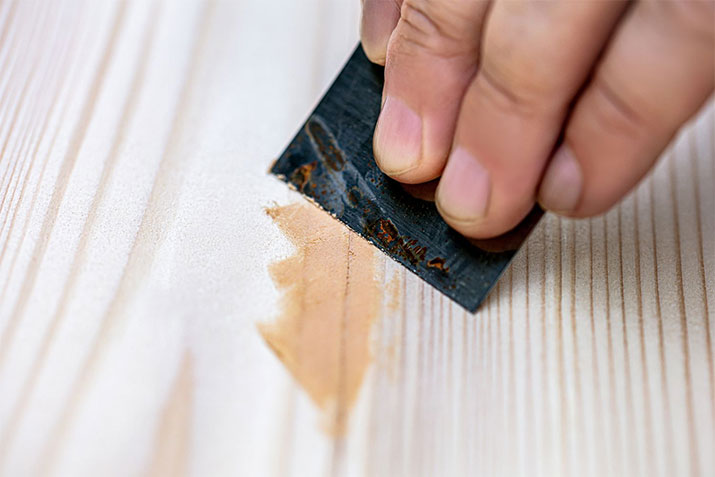
Unlike wood putty, wood filler is a more rigid compound that is made from a combination of wood fibers and a binder, such as cellulose, gypsum, or epoxy. Because of its rigidity, filler is optimal for projects where you need to fill larger gaps, holes, and voids in wood surfaces, providing structural support and stability. Unlike wood putty, wood filler is not typically tinted and is meant to be covered with paint, stain, or another finish once dry.
Wood filler is a popular choice amongst woodworkers because of its durability. Once the filler cures, it creates a hard, solid surface that can withstand heavy use and exposure to the elements. Because of this, wood filler is a great choice when repairing large, damaged areas or filling in deep gouges and knots in wood. However, it is important to keep in mind that wood filler does not flex with wood’s expansion and contraction due to temperature changes, which is why it isn’t recommended for use in your outdoor woodworking projects.
Here are a few common uses for wood filler in do-it-yourself projects:
- Repairing dents, gashes, and gouges in unfinished furniture
- Patching holes in wood flooring
- Concealing scratches or cracks in unfinished trim
- Restoring damaged woodwork on doors and cabinets
- Concealing nail holes in trim and molding
- Preparing unfinished wood surfaces for painting or staining
Deciding Between Wood Filler & Wood Putty for Your Project
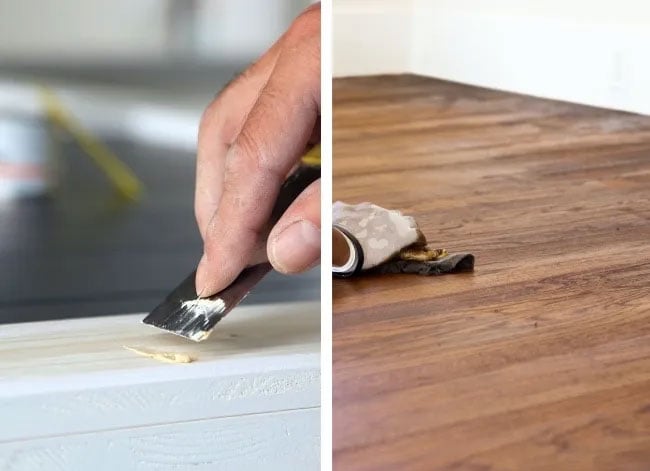
When deciding between wood putty and wood filler for your next home project, consider the following factors:
Size & Severity of Damage
If you’re dealing with small surface imperfections such as nail holes or minor cracks, wood putty is likely the best option. For larger gaps, holes, or areas of damage, wood filler provides a stronger, more durable repair.
Finished vs. Unfinished Wood
Wood putty is suitable for both finished and unfinished wood surfaces, while wood filler is typically used on unfinished wood that will be covered with paint, stain, or another finish.
Color Matching
If color matching is important for your project, we recommend choosing a wood putty that closely matches the color of your wood. Wood filler is not usually tinted and is best used when it is covered with a finish, so color matching may not be as critical.
Application Method
Consider how you plan to apply the product. Wood putty can be smoothed out with a putty knife or your fingers, while wood filler may require more effort to achieve a smooth finish.
Frequently Asked Questions
Can wood putty be stained or painted?
Yes, wood putty can be stained or painted to match the surrounding wood. However, for best results, you should make sure that the putty is fully dry before applying the finish or you may not end up with the desired results.
How long does wood filler take to dry?
When using wood filler, make sure to thoroughly read the manufacturer’s recommendations and instructions on the packaging since every brand may be slightly different. The drying time for your wood filler may vary depending on temperature, humidity, and the thickness of the application. In most cases, you can expect it to be dry to the touch after 30 minutes but it won’t be fully cured for several hours.
Can wood putty be used outdoors?
Most wood putty on the market is suitable for indoor use, however, not all types are recommended for outdoor use. You should take the time to review all of your options and choose a wood putty that will not degrade over time and is used outdoors and exposed to the elements.
Is wood filler waterproof?
Some wood fillers are water-resistant or waterproof once fully cured, but not all are. If this is important for your project, make sure you read the manufacturer’s notes to determine if the wood filler is suitable for use in wet or humid environments.

Andrew Saladino
Andrew Saladino co-founded Kitchen Cabinet Kings in 2010, and the company has since delivered cabinets for more than 110,000 kitchens. Named to the NKBA 30 Under 30 in 2013 and 2014, he writes about cabinet styles, construction, finishes, costs, lead times, and the ordering details that are easy to miss until the cabinets arrive.