

The Most Durable Kitchen Cabinet Materials Ranked (2026 Update)

by Andrew Saladino
November 24, 2025
If you’re planning a kitchen renovation, you’re probably wondering which cabinet materials will stand the test of time. After all, you don’t want your beautiful new kitchen to look worn and tired just a few years down the road, especially considering that the average kitchen renovation costs $26,966.
The truth is, not all cabinet materials are created equal. Some can handle decades of daily use while others start showing their age much sooner. We’ve ranked the most popular cabinet materials based on durability, maintenance needs, and long-term value to help you make the best choice for your home.
How We Ranked the Most Durable Cabinet Materials
As we compared the most durable kitchen cabinets, we looked at five key factors that determine how well materials hold up over time.
Our ranking criteria include:
| Criteria | Weight | What We Measured |
| Moisture Resistance | 25% | How well the material handles humidity and spills |
| Impact Resistance | 20% | Ability to withstand dents, dings, and scratches |
| Structural Integrity | 20% | Long-term stability and sag resistance |
| Maintenance Requirements | 20% | Ease of cleaning and repair needs |
| Lifespan | 15% | Expected years of service with proper care |
With these criteria in mind, we considered each material in terms of how well it holds up in real-world kitchen conditions: steam from cooking, occasional water splashes, the inevitable door slam, and everyday wear and tear from busy families.
The results are below, and they might surprise you!
1. Solid Wood Cabinets: The Top Durable Choice
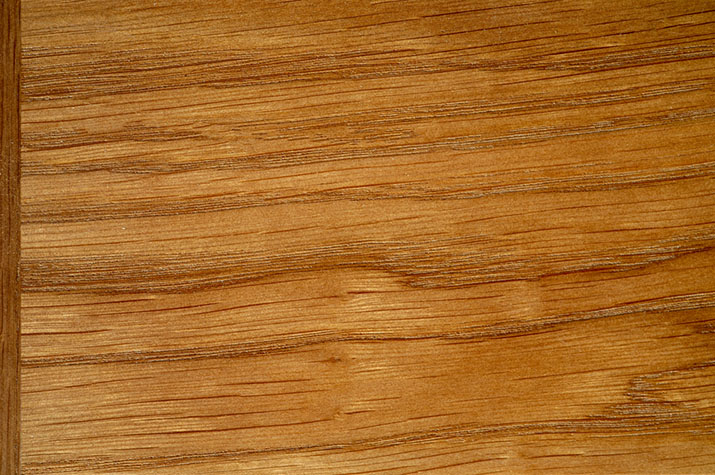
Solid wood takes the crown as the most durable kitchen cabinet material, and for good reason. Hardwoods like maple, oak, and cherry can last 50 years or more with proper care, which is likely why you still frequently see these cabinets in older homes.
What exactly makes solid wood so tough? For one, the natural grain structure provides incredible strength. These cabinets can handle heavy pots, aggressive door closing, and even minor kitchen accidents without showing significant damage. When scratches or dents do occur, you can often sand and refinish the surface to look like new.
The best kitchen cabinet materials in the solid wood category include:
- Maple: Exceptionally hard and dent-resistant
- Oak: Classic choice with prominent grain that hides minor scratches
- Cherry: Ages beautifully and becomes richer over time
- Walnut: A premium option with stunning natural patterns
The only major downside to solid wood is that it does require some maintenance to keep it looking and functioning well. Changes in temperature and humidity can cause solid wood to expand and contract slightly, which is completely normal, but you’ll need to make sure your installer accounts for this natural movement.
You’ll also need to clean up water spills quickly and refinish every 10 to 15 years. The investment pays off, though, since quality wood cabinets often increase your home’s value.
2. Plywood Cabinets: Engineered Strength for Kitchens
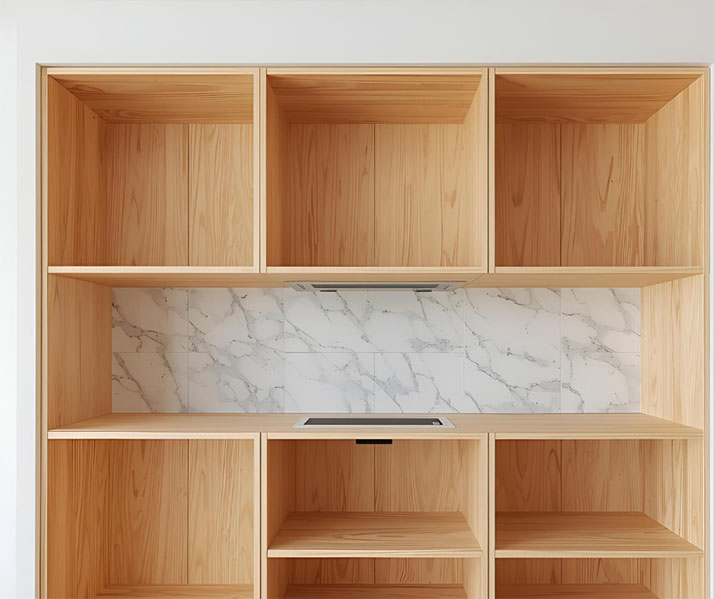
Plywood deserves serious consideration in any cabinet material comparison. This engineered wood combines multiple thin wood layers glued together with alternating grain directions, creating impressive strength and stability.
Unlike solid wood, plywood won’t warp or crack as easily because the cross-grain construction counteracts natural wood movement. This makes plywood cabinets a particularly smart choice for kitchens with varying humidity levels. It also offers a benefit in terms of screw retention, since the hardware stays tighter longer with particleboard.
Quality plywood cabinets use hardwood veneers on the exterior surfaces, giving you the beauty of solid wood with enhanced durability. The inner layers typically use less expensive woods, keeping costs reasonable while maintaining structural integrity.
The main drawback of plywood is that the edges can show the layered construction unless the cabinets are properly finished; generally, manufacturers will use solid wood edge banding or thick veneer to solve this issue. When you’re shopping, always look for plywood cabinets with formaldehyde-free adhesives and hardwood face veneers at least 1/16 inch thick for safety, sturdiness, and aesthetics.
3. MDF Cabinets: Budget-Friendly, Painted Finish Specialist
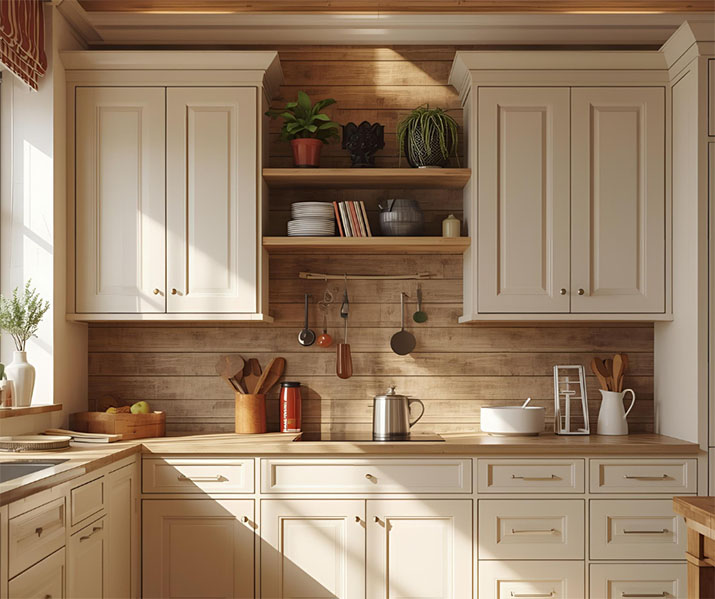
MDF (Medium Density Fiberboard) might not sound the fanciest, but this engineered material offers surprising durability for painted kitchen cabinets. MDF is made by combining wood fibers with resin under high pressure, creating a dense, uniform surface.
The biggest advantage of MDF? It takes paint beautifully. The smooth, non-porous surface accepts primer and paint evenly, creating that perfect showroom finish that’s hard to achieve with natural wood grain.
MDF cabinets work particularly well for contemporary kitchens where clean lines and smooth surfaces are desired, as well as for cabinets that will be painted (vibrant paints look absolutely stunning on MDF). It is also typically less expensive than solid wood.
However, like solid wood, MDF has moisture as enemy number one. Standard MDF can swell and deteriorate if it’s exposed to water regularly. Fortunately, many manufacturers now offer moisture-resistant MDF specifically designed for kitchens and bathrooms.
When you’re considering MDF cabinets, pay attention to edge sealing. Exposed edges need proper priming and painting to prevent moisture infiltration. Again, quality cabinetmakers use solid-wood edge banding on high-wear areas, such as door edges.
MDF cabinets typically last 15-20 years with proper installation and care. They’re an excellent choice if you prioritize smooth painted finishes over natural wood grain.
4. Particleboard Cabinets: Cost-Effective But Shorter Lifespan
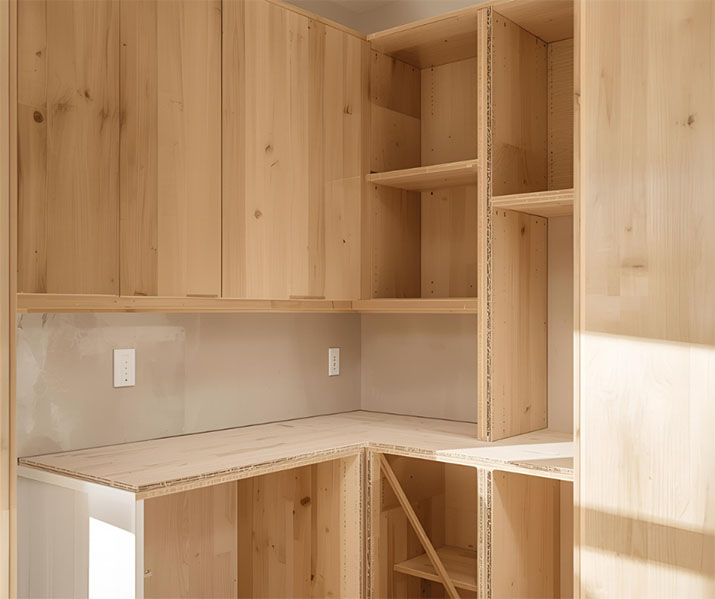
Of all the cabinet materials we’ll discuss in this post, particleboard is by far the cheapest and most budget-friendly option, but it doesn’t offer a clear durability advantage. Its longevity varies depending on manufacturing quality and construction. Nevertheless, made from wood chips, sawdust, and binding agents, particleboard can work well for certain applications.
Higher-grade particleboard uses larger wood particles and better adhesives, resulting in stronger panels. These premium versions often feature melamine or thermofoil surfaces that resist moisture and scratches better than basic particleboard.
Even so, particleboard tends to work best for cabinets that don’t see heavy use (like upper cabinets) or that will be replaced within a decade or so.
Remember, standard particleboard can struggle mightily with kitchen conditions, sagging under weight, chipping easily, and swelling due to moisture. That said, it’s a good option for lighter-use applications.
Best Cabinet Finishes for Durability
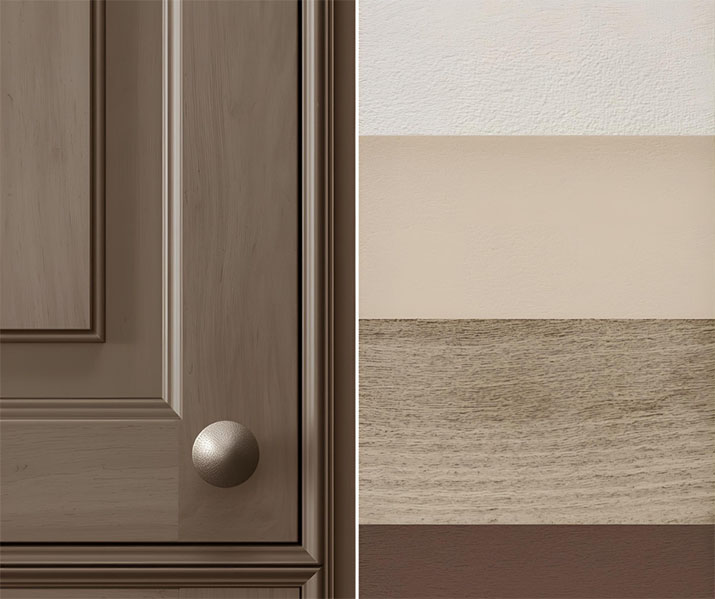
Even the most durable kitchen cabinet materials need proper finishing to reach their full potential. Some options?
Catalyzed lacquer tops our list of durable cabinet finishes. This professional-grade coating forms an incredibly hard, chemical-resistant surface that handles kitchen grease, steam, and cleaning products without yellowing or deteriorating.
Conversion varnish offers a similar level of durability with excellent scratch resistance. This finish bonds chemically rather than just sitting on the surface, helping to create a long-lasting protective layer.
For painted cabinets, high-quality acrylic paint systems with proper primers should be your go-to. Look for paints specifically formulated for kitchen use with antimicrobial properties.
Polyurethane finishes work nicely for natural wood cabinets, though they may yellow slightly over time. Water-based polyurethanes stay clearer but require more coats for equivalent protection.
How to Choose a Long-Lasting Cabinet Finish
There’s no single best formula for the most durable kitchen cabinets, but it’s important to remember that proper installation and quality hardware matter just as much as material choice. Even the best cabinet materials can fail with poor installation or cheap hinges and drawer slides.
Consider your kitchen’s conditions, usage patterns, and long-term plans. A busy family kitchen needs something entirely different than a vacation home. Match your material choice to your lifestyle for the best results, and you’ll enjoy the finished product for years to come.
Frequently Asked Questions
What is the most durable kitchen cabinet material?
Many experts agree that solid hardwood is at the top of the list, with plywood as a close second, thanks to superior moisture and impact resistance.
How long do kitchen cabinets last by material type?
Lifespan varies significantly: solid wood cabinets can last 50+ years, plywood up to 20-30?years, while lower-grade particleboard may need replacement much sooner.
Are plywood cabinets more durable than MDF or particleboard?
Yes. Plywood offers better structural stability, holds screws tighter, and resists warping compared to MDF or particleboard in moisture-prone kitchens.
What cabinet material is best for a high-humidity kitchen?
In high-humidity environments, engineered options such as marine-grade plywood or high-pressure laminate (HPL) outperform standard particleboard or untreated MDF.
Do durable cabinet finishes matter as much as the material?
Absolutely. Even high-quality materials underperform if paired with weak finishes. Finishes like catalyzed lacquer or conversion varnish improve scratch, heat, and moisture resistance.

Andrew Saladino
Andrew Saladino co-founded Kitchen Cabinet Kings in 2010, and the company has since delivered cabinets for more than 110,000 kitchens. Named to the NKBA 30 Under 30 in 2013 and 2014, he writes about cabinet styles, construction, finishes, costs, lead times, and the ordering details that are easy to miss until the cabinets arrive.




I found this article really useful—your ranking of durable cabinet materials is clear and practical. Great tips for anyone planning a long-lasting kitchen build. Thanks for sharing!