

Pantry Shelf Spacing: Optimizing Storage for a Well-Organized Pantry

by Andrew Saladino
August 11, 2024
Do you often find yourself rummaging through your pantry, trying to locate that elusive can of tomatoes or the spice jar hiding behind a mountain of cereal boxes?
If so, it might be time to rethink your pantry shelf spacing.
Optimizing your pantry storage can transform a chaotic space into a well-organized haven, making meal prep smoother and, hopefully, more enjoyable.
In this guide, we’ll walk you through practical tips to help you master the art of pantry shelf spacing.
What is the Standard Pantry Shelf Spacing?

Before jumping into customized solutions (and our top recommendations), let’s start with some basics.
There’s no one-size-fits-all pantry shelf configuration – it will vary depending on your needs and the space you have available to use. However, standard pantry shelf spacing is typically about five by five feet for walk-in pantries. These can be lined with U-shaped open shelves or cabinets and may include a countertop for added convenience.
Adjustable shelves offer a bit more flexibility, allowing you to tailor the space to your needs. For bulky items, start with bottom areas that have a pantry shelf depth of 16 to 18 inches deep and are about 18 to 24 inches apart.
Shelves at eye level can be 12 to 14 inches deep and spaced 14 to 16 inches apart, which is perfect for fitting cereal boxes and canisters. For spices and cans, you might only need 6 inches front to back.
Just remember, when you’re planning any shelf, you’ll want to add two inches to that pantry shelf height so you can easily tip or slide things in and out.
10 Pantry Shelving Guidelines to Follow
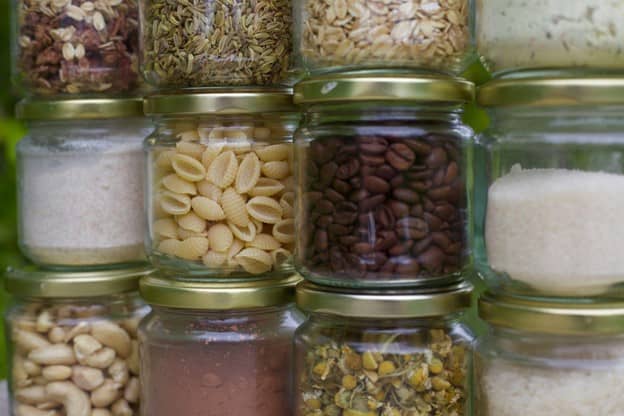
Now that you know the ideal pantry shelf width and depth, here are some tips to help you maximize the space you have available – no matter how much space that actually is.
1. Figure Out What You Want to Store First
When planning your pantry, the first step is to figure out what you intend to store.
Are you a baking enthusiast with numerous jars of flour and sugar? Or perhaps you buy canned goods in bulk?
Ultimately, your storage needs will dictate your shelf configuration. For instance, if you have a large collection of spices, dedicate a shallow shelf specifically for them, ensuring they are easily accessible and visible.
Take an inventory of your pantry items and group them by category. This way, you can plan your shelves around your specific needs, making it easier to find what you’re looking for and reducing clutter.
2. Decide if You Need to Build Afresh or Can Work With What You Have
Next, think about whether you need a complete overhaul of your pantry or if you can work with what you already have. You don’t have to do a major renovation project, either.
A renovation will admittedly give you a fresh start, but it’s not the only option. You can also annex an existing space, tap into a recess, repurpose a closet, put one in the basement, or even make a bump-out to create additional storage.
If you’re working with an existing pantry, consider how you can optimize the current layout. Maybe you can add additional shelves or replace fixed shelves with adjustable ones to better suit your needs.
3. Don’t Make the Shelves Too Deep
While it might be tempting to install deep shelves to fit more items, this can actually make it harder to find things. Shelves that are too deep can lead to items getting lost in the back.
4. Give Yourself Some Floor Space Underneath
Don’t forget to leave some floor space underneath your bottom shelf. This area can be used to store heavy and bulky items like bags of rice or potatoes. Keeping these items on the floor rather than on a shelf makes them easier to access and frees up shelf space for smaller items.
Consider using bins or baskets to keep this floor space organized. Label the bins for easy identification and to maintain order.
5. Light it Up
A well-lit pantry helps you quickly locate items and ensures you don’t overlook anything. Consider installing LED strip lights or motion-sensor lights inside your pantry. These options are energy-efficient and easy to install.
Good lighting also enhances visibility in deeper shelves and lower spaces, making it easier to see and access items stored there.
6. Go for Wire Shelving
Wire shelving is a fantastic option for pantries. Open wire shelves are sturdy and can hold anything from canned goods to small appliances. They also allow for better air circulation, which can be beneficial for keeping food items fresh.
Wire shelving is versatile and can be easily adjusted to accommodate different types of pantry items. Plus, it’s generally more affordable than solid wood shelves.
7. Think About What You’ll Store…
When planning your pantry, always think about what you’ll store and how frequently you’ll need to access these items. Allocate space based on the size and type of items.
Here are some general guidelines:
- Allow 6.5 to 7 inches for a shelf of canned goods.
- Allocate 14 to 16 inches for cereal boxes.
- Reserve 18 to 20 inches for large items like bins of potatoes.
One more tip is to establish zones. Having clear zones for each type of item makes organization simpler and more intuitive, helping to prevent your pantry from becoming cluttered or overwhelmed.
8. … Then Measure, Measure, Measure
Measurements are key when you’re optimizing your pantry shelf spacing. Always allow at least two inches of clearance above the tallest item on the shelf. This will make each item easy to access and help cut back on wasted space.
Use a tape measure to ensure accuracy and mark your measurements before installing any shelves. Double-check your measurements to avoid mistakes and make sure you get a seamless fit for all your items.
9. Install a Sliding or Pocket Door to Get More Floor Space
Traditional swinging doors can take up valuable floor space in small pantries. Consider installing a sliding or pocket door instead. These doors save space and provide easy access to your pantry without obstructing the walkway.
Sliding or pocket doors also add a sleek and modern touch to your pantry, enhancing the overall aesthetic of your kitchen.
10. Feel Free to Edit and Rearrange
Your pantry needs may evolve over time, and that’s okay! Just be flexible and willing to make changes.
Don’t hesitate to edit and rearrange your shelves as needed. Periodically review your pantry organization and make adjustments to accommodate new items or changes in your storage needs. Set aside time every few months to go through your pantry, discard expired items, and rearrange shelves as necessary.
Maximize Your Pantry Organization With the Right Shelving

Optimizing your pantry space is all about finding the right shelving solutions. You have all kinds of options available to you, from adjustable wire shelves, pull-out baskets, and stackable bins.
Whatever you choose, remember that a little bit of planning goes a long way. With a little effort and creativity, you can turn your pantry into a practical (and stylish!) addition to your kitchen.
Frequently Asked Questions
How far apart should pantry shelves be?
A general guideline is to space shelves about 12 to 16 inches apart for larger items such as cereal boxes, canned goods, or bulk items, allowing ample room for easy access. For smaller items, such as spices or jars, you may reduce the spacing to 6 to 10 inches.
How far apart should pull-out shelves be in a pantry?
When installing pull-out shelves in your pantry, consider both the dimensions of the items you plan to store and the overall functionality of the space. The recommended spacing is generally 12 to 15 inches apart between pull-out shelves, which will give you enough room for taller items, like jars or canisters, while still allowing for easy access and visibility.
What is the best spacing for shelves?
General kitchen shelves intended for everyday items should typically be spaced between 10 to 14 inches apart, which allows for easy visibility and accessibility. If the shelves are meant for storing larger appliances or bulkier items, spacing them 16 to 20 inches apart might be more appropriate.
How many shelves are in a walk-in pantry?
Typically, a well-designed walk-in pantry features between five to ten shelves, depending on the size of the space and the specific needs of the household.

Andrew Saladino
Andrew Saladino co-founded Kitchen Cabinet Kings in 2010, and the company has since delivered cabinets for more than 110,000 kitchens. Named to the NKBA 30 Under 30 in 2013 and 2014, he writes about cabinet styles, construction, finishes, costs, lead times, and the ordering details that are easy to miss until the cabinets arrive.