

Standard Toe Kick Height and Depth: A Complete Breakdown

by Andrew Saladino
March 2, 2026
Have you ever noticed the little recess at the bottom of your kitchen cabinets? That recessed strip, called a toe kick, gives your feet somewhere to go when you step up to the counter. It sounds like a minor detail. It is not. The standard toe kick height quietly shapes how comfortable your entire kitchen feels, from morning coffee prep to a Saturday afternoon baking session.
When the toe kick is sized correctly, you barely notice it. You stand close to the counter, your posture stays natural, and everything from chopping vegetables to washing dishes feels effortless. When the dimension is off by even an inch, you feel it every single time: leaning forward too far, bumping your toes, or straining your lower back just to reach the sink.
Below, we break down the standard toe kick height and depth, explain why those numbers exist, and walk through the situations where adjusting them makes sense for your household.
What Is the Standard Toe Kick Height and Depth?
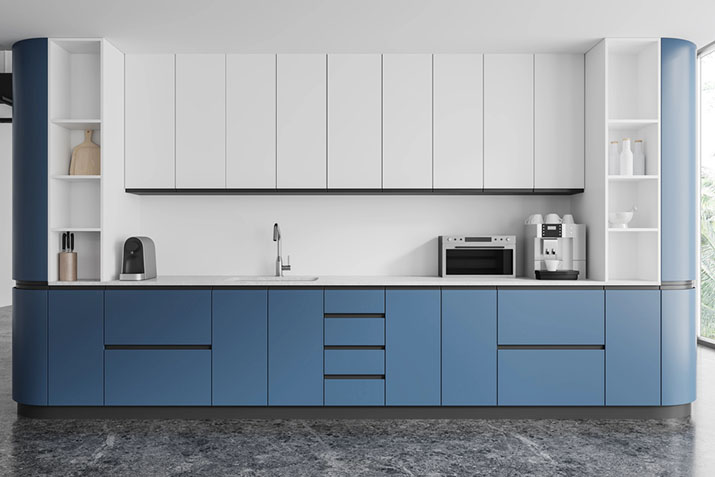
The standard toe kick height is 3.5 inches, and the standard depth is 3 inches. These measurements are not random. They are tuned to fit the average adult foot, creating just enough clearance for you to stand flush against the counter without your toes hitting the cabinet face.
That 3.5-inch vertical space clears most shoes (sneakers, slippers, even work boots), and the 3-inch recess gives your body room to shift its weight forward naturally. The result is a stance that keeps your spine straight and your shoulders relaxed. Without it, an activity like kneading bread dough would force you to stand back from the counter and lean forward, a recipe for lower-back strain before the dough even rises.
You will find these dimensions on virtually every stock and ready-to-assemble (RTA) kitchen cabinet sold in the United States. They represent the sweet spot between foot clearance and usable cabinet storage space, tall enough for comfort and shallow enough that you do not lose interior cabinet depth.
Why 3.5 Inches Is the Standard Cabinet Toe Kick Height
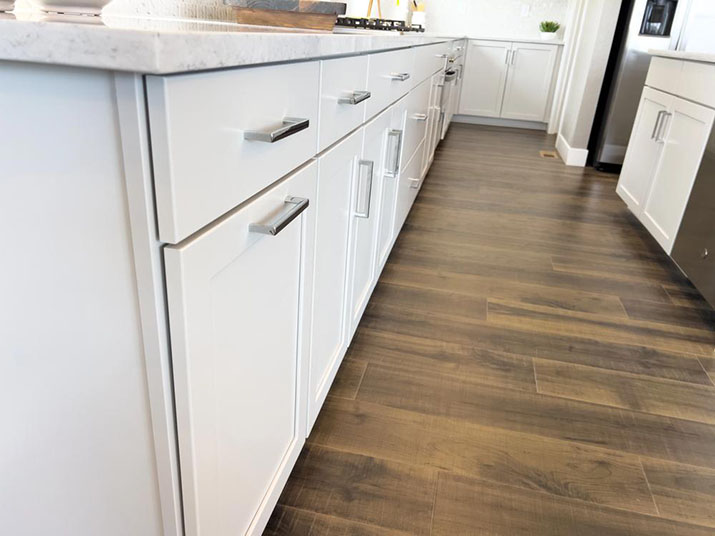
The 3.5-inch standard exists because of how base cabinet dimensions and countertop thickness work together. Most base cabinets stand 34.5 inches tall. Add a standard 1.5-inch countertop, and the finished counter height lands at 36 inches. That is the measurement nearly every kitchen appliance, design template, and building standard is built around.
The toe kick occupies a portion of that 34.5-inch base cabinet height. At 3.5 inches, it preserves the maximum amount of usable storage inside the cabinet while still giving your feet the room they need. Push the toe kick higher and you start losing interior shelf space. Shrink it and your toes have nowhere to go.
This consistency benefits everyone involved in a kitchen project. Cabinet manufacturers build to this standard, so different cabinet lines from different brands fit together seamlessly. Flooring installers know exactly where the transition sits. And when you slide a new dishwasher or trash compactor into the lineup, the toe kick dimensions match. No shimming, no custom trimming, no surprises.
Toe Kick vs. Cabinet Base: What Is the Difference?
People sometimes use “toe kick” and “cabinet base” interchangeably, but they refer to different things. The cabinet base is the structural bottom of the cabinet box, the platform or frame that supports the weight of the cabinet, its contents, and the countertop above. The toe kick is the recessed, finished strip that covers the gap between the cabinet base and the floor.
In some cabinet designs (common with frameless or European-style cabinets), the cabinet sits on adjustable legs, and a separate toe kick board clips or screws onto the front. In other designs, the toe kick notch is built directly into the side panels of the cabinet. Either way, the visible result is the same: a recessed space at floor level that lets you stand comfortably at the counter.
If you are comparing cabinet options online, pay attention to whether the toe kick board is included or sold separately. At Kitchen Cabinet Kings, our base cabinets come with toe kick material that matches your door style and finish, so everything looks cohesive right out of the box.
When to Customize Your Toe Kick Dimensions
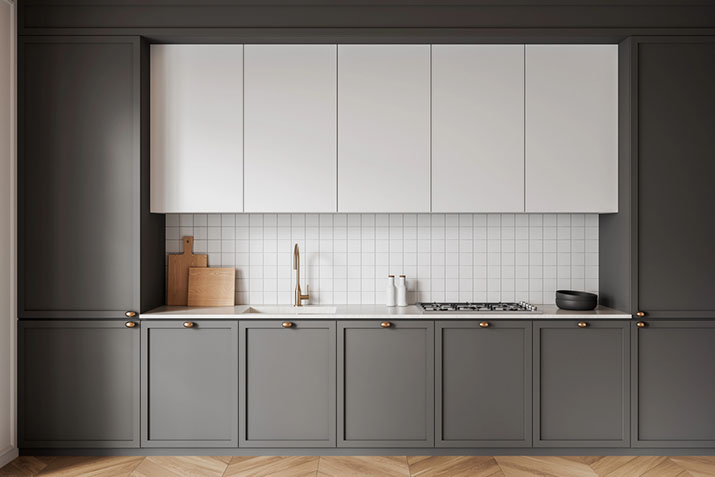
The 3.5-by-3-inch standard works for most households, but “standard” does not always mean “best for you.” There are a few situations where adjusting the toe kick height or depth makes a real difference in daily comfort.
Taller Households
If the primary cook in your home is over six feet tall, a 4-inch toe kick height with a 4-inch depth can make a noticeable difference. The extra half-inch of height accommodates larger shoes, and the deeper recess gives bigger feet more room. Some taller homeowners also raise their overall counter height to 37 or 38 inches, and the increased toe kick height supports that adjustment cleanly.
ADA and Wheelchair-Accessible Kitchens
For kitchens designed to accommodate a wheelchair, the toe kick requirements change significantly. ADA guidelines call for a toe kick that is at least 9 inches high and 6 inches deep. This allows wheelchair footrests to fit under the counter, giving the user full access to the countertop and sink. The overall counter height in an ADA-compliant kitchen typically drops to 34 inches as well, so the taller toe kick works in proportion with the lower counter.
If you are planning an accessible kitchen, the toe kick is just one piece of the puzzle. Counter clearance, cabinet height, and appliance placement all need to coordinate. Our free 3D design service can help you map out a layout that meets accessibility needs while still looking like the kitchen you have always wanted.
Uneven Floors and Older Homes
In older homes where floors slope or sag, the toe kick becomes an adjustment zone. Installers shim the cabinets level and then cut the toe kick board to bridge the gap between the leveled cabinet base and the uneven floor. In these cases, the visible toe kick height might vary slightly from one end of a cabinet run to the other. A trim piece or scribe molding along the bottom edge hides that variation and gives the installation a clean, finished look.
Toe Kick Design Ideas: Storage, Lighting, and Style
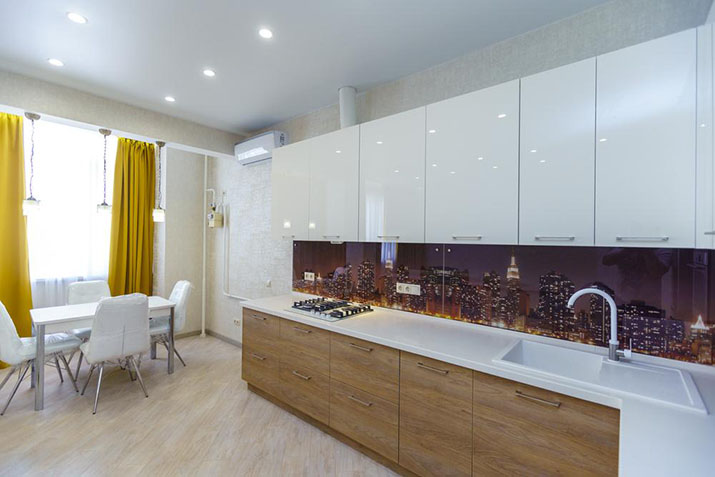
The toe kick does not have to be an afterthought. Plenty of homeowners are turning this small strip of real estate into a design feature, or even a functional one.
Match or Contrast
The simplest approach is finishing the toe kick in the same color and material as your cabinet doors. This creates a seamless, built-in look that is especially clean in modern and minimalist kitchens. The cabinets appear to grow right out of the floor.
For a bolder move, use a contrasting material. A dark navy or black toe kick under white Shaker cabinets creates the visual illusion that the cabinets are floating. It is a trick designers use to make a kitchen feel lighter and more open. Stainless steel toe kicks work well in contemporary or industrial-style spaces.
Toe Kick Drawers
That 3.5-inch-tall space is surprisingly useful. Toe kick drawers slide out from the base and are perfect for storing flat items: sheet pans, cutting boards, cooling racks, pet bowls, or cleaning supplies. In smaller kitchens where every inch of storage counts, a couple of toe kick drawers can be a game changer.
LED Toe Kick Lighting
Tucking an LED strip behind the toe kick creates a soft, downward glow along the floor line. It is practical for late-night trips to the kitchen (no overhead lights needed) and adds a layered lighting effect that makes the whole space feel warmer and more intentional. Motion-sensor LED strips take it a step further. The light activates when you walk into the kitchen and turns off when you leave.
How Toe Kick Height Affects Cabinet Installation
If you are planning a kitchen remodel, the toe kick height is one of the first dimensions your installer will confirm. Here is why it matters during the build:
Appliance alignment. Dishwashers, trash compactors, and under-counter refrigerators are designed to sit flush with standard 34.5-inch base cabinets. If your toe kick height deviates from the standard 3.5 inches without adjusting the overall cabinet height, appliances may sit too high or too low relative to the countertop.
Flooring transitions. Cabinet installers typically set base cabinets before the finish flooring goes in (with tile being the notable exception). The toe kick covers the gap between the cabinet base and the floor surface. If you change your toe kick height, your flooring installer needs to know so the transition is clean.
Island and peninsula consistency. Kitchen islands and peninsulas should have the same toe kick dimensions as your perimeter cabinets. Mismatched toe kicks between the island and the wall cabinets create a visual disconnect that is hard to fix after installation. Confirm the match before anything gets screwed to the floor.
If you are ordering cabinets online, double-check that your kitchen measurements account for the toe kick height, especially if your floor is uneven or you are installing over existing flooring.
Start Planning Your Kitchen
Getting details like the standard cabinet toe kick height right is what turns a decent kitchen into one that feels effortless to use. It is a small number, just 3.5 inches by 3 inches, but it affects your posture, your comfort, your appliance fit, and even your cabinet storage capacity.
Whether you are building from scratch, remodeling a dated kitchen, or swapping out worn cabinets for something that fits your style, the toe kick is a detail worth getting right.
Ready to start? Browse our full collection of kitchen cabinets to find the right fit for your space. If you want help mapping out your layout (including toe kick details, filler panels, and everything else), our free 3D kitchen design service pairs you with an NKBA-certified designer who will handle the measurements for you. And if you want to see and feel a finish before committing, order a cabinet door sample. It is the easiest way to make sure what you see on screen matches what you will see in your kitchen.
Frequently Asked Questions
How tall should a kitchen toe kick be?
The standard kitchen toe kick height is 3.5 inches. This measurement gives your feet enough clearance to stand comfortably at the counter without losing interior storage space inside the base cabinet. Heights up to 4 inches are common and work well for most households.
How deep is a standard toe kick?
The standard toe kick depth is 3 inches, measured from the face of the cabinet to the back of the recessed area. This depth lets you stand close to the counter with a natural, upright posture. Going below 3 inches reduces comfort, while going slightly deeper (up to 4 inches) can benefit people with larger feet.
What is the toe kick height for ADA-accessible cabinets?
ADA guidelines recommend a toe kick height of at least 9 inches and a depth of at least 6 inches. These larger dimensions allow wheelchair footrests to fit comfortably under the countertop, giving the user full access to the sink and work surface.
Can you add storage or lighting to a toe kick?
Yes. Toe kick drawers are a popular option for storing flat items like baking sheets, cutting boards, and pet bowls. LED strip lighting behind the toe kick creates a soft floor-level glow that works as both a design accent and a practical night light.
Does toe kick height affect kitchen appliance installation?
It can. Standard dishwashers, trash compactors, and under-counter appliances are designed to align with 34.5-inch base cabinets, which include a 3.5-inch toe kick. Changing the toe kick height without adjusting the overall cabinet height can cause appliances to sit above or below the counter line.
Do RTA and assembled cabinets include the toe kick?
Most do, but it depends on the manufacturer. At Kitchen Cabinet Kings, both our RTA and assembled kitchen cabinets offer matching toe kicks, so the finish and color are consistent with your cabinet doors.

Andrew Saladino
Andrew Saladino co-founded Kitchen Cabinet Kings in 2010, and the company has since delivered cabinets for more than 110,000 kitchens. Named to the NKBA 30 Under 30 in 2013 and 2014, he writes about cabinet styles, construction, finishes, costs, lead times, and the ordering details that are easy to miss until the cabinets arrive.