
MDF vs. Solid Wood Cabinets: Pros and Cons of Each
By: Andrew Saladino |  8 min
8 min
Last Updated: June 17th, 2024
The heart of any kitchen lies in its cabinetry. But when it comes to choosing the right material, the debate between MDF vs. solid wood cabinets can leave homeowners feeling stumped.
Both options offer distinct advantages and disadvantages, and the ideal cabinet material hinges on factors like budget, desired aesthetic, and lifestyle. This article will delve into the key characteristics of medium-density fiberboard (MDF) and solid wood cabinets so you can make the best choice for your home.
Table of Contents
MDF vs. Solid Wood Cabinets
MDF is a popular cabinet material made from wood fibers and resin. The wood fibers are pulped, then mixed with resin or another bonding material before being pressed and dried into planks that are used for construction.
Solid wood cabinets, on the other hand, are made from lumber without additives. Solid wood cabinets can be made from hardwood or softwood.
- Hardwood: Hardwood is sourced from broad-leafed trees like oak, maple, and walnut. It's preferred for its density and durability.
- Softwood: Softwood comes from cone-bearing trees like pine, cedar, and spruce. It's typically lighter and faster-growing than hardwood, so it's widely available and less expensive.

| Medium-Density Fiberboard (MDF) Cabinets | Solid Wood Cabinets | |
|---|---|---|
| Composition | Wood fibers and resin | Natural wood or lumber |
| Appearance | Smooth surface, no visible grain | Visible wood grain |
| Durability | Prone to moisture damage, less structurally sound | Durable and strong when properly finished |
| Workability | Easy to cut, shape, machine, and paint, but don't anchor screws well | Can be sanded, repainted, or refinished many times |
| Price | More affordable $100-$300 per linear foot |
More expensive $150-$1,200 per linear foot |
| Sustainability | Recycles sawdust and wood shavings waste | Less sustainable unless using reclaimed wood |
MDF Cabinets

When you see perfectly smooth painted cabinets, there's a good chance they're MDF cabinets. MDF cabinets are an engineered wood product offering a budget-friendly alternative to solid wood.
Its dense core makes MDF cabinets particularly suitable for painted finishes, providing a smooth, even surface that holds paint exceptionally well. MDF's resistance to warping and cracking also makes it a reliable choice for kitchen and bathroom cabinets where humidity can be a concern.
While not as luxurious as solid wood, MDF cabinets offer a versatile and affordable option for achieving a clean, modern aesthetic.
Pros and Cons of MDF Cabinets
MDF cabinets offer a compelling alternative to solid wood, but they won't benefit every kitchen. Consider their pros and cons before springing for the cheaper option.
Pros:
- More affordable: MDF cabinets are generally a more affordable option compared to solid wood.
- Smooth, uniform surface: When finished correctly, MDF cabinets have a smooth surface without a wood grain, making them ideal for painting, veneering, or laminating.
- Durable and stable: MDF resists warping and cracking better than solid wood, making it better suited for areas with humidity fluctuations.
- Eco-friendly: Depending on the manufacturer, MDF can be made from recycled wood fibers, reducing environmental impact.
Cons:
- Susceptible to water damage: MDF absorbs water readily, so proper sealing is crucial, especially around exposed edges.
- Lower strength: While durable, MDF isn't as strong as solid wood and may dent or chip more easily with heavy use.
- Difficult to repair: Scratches and dents are more challenging to repair on MDF than solid wood, which can be sanded and refinished.
- Potential for VOC emissions: Some MDF may release volatile organic compounds (VOCs), requiring proper ventilation after installation.
Pros
- Affordable
- Smooth, uniform surface
- Durable and stable
- May be more eco-friendly
Cons
- Susceptible to water damage
- Lower strength
- Difficult to repair
- Potential for VOC emissions
Solid Wood Cabinets

Solid wood cabinets are a classic choice in kitchens. They offer timeless elegance and undeniable quality, coupled with unparalleled durability that can last for generations.
Unlike MDF, solid wood can be finished with stains or paints, providing maximum design flexibility that can even be updated down the road. However, solid wood cabinets come at a premium price point and require more maintenance due to their susceptibility to warping and scratches.
Pros and Cons of Solid Wood Cabinets
Wood cabinets are typically the highest-grade options available, especially if you decide to splurge on exotic woods like mahogany or rosewood. Homeowners seeking an affordable, low-maintenance cabinet material may need to look elsewhere.
Take these factors into consideration when choosing between solid wood and engineered wood cabinets:
Pros:
- Long-lasting: Solid wood cabinets are very sturdy and can last for generations when maintained properly.
- High value: High-quality solid wood cabinets can actually increase the resale value of your home.
- Customizable: Solid wood can be stained or painted to achieve a variety of looks, allowing for customization to match your desired style.
- Repairable: Scratches and dents can often be sanded and refinished, restoring the wood's original beauty.
Cons:
- High maintenance: Solid wood cabinets require proper finishing and regular care to protect them from heat and humidity in a home.
- More expensive: Solid wood cabinets, especially hardwood cabinets, are generally the most expensive cabinet material.
- Susceptible to moisture and warping: Solid wood can warp or crack if exposed to excessive moisture or temperature fluctuations.
- Less sustainable: Depending on the wood source and harvesting practices, solid wood cabinets may have a greater environmental impact.
Pros
- Long-lasting
- High value
- Customizable
- Repairable
Cons
- High maintenance
- More expensive
- Susceptible to moisture and warping
- May be less sustainable
What To Consider When Choosing Between MDF and Solid Wood
MDF and wood cabinets offer distinct advantages, but navigating the ideal option isn't always easy. This section delves into the key factors to consider when comparing MDF and solid wood, like budget, desired aesthetics, lifestyle needs, and durability.
Aesthetics
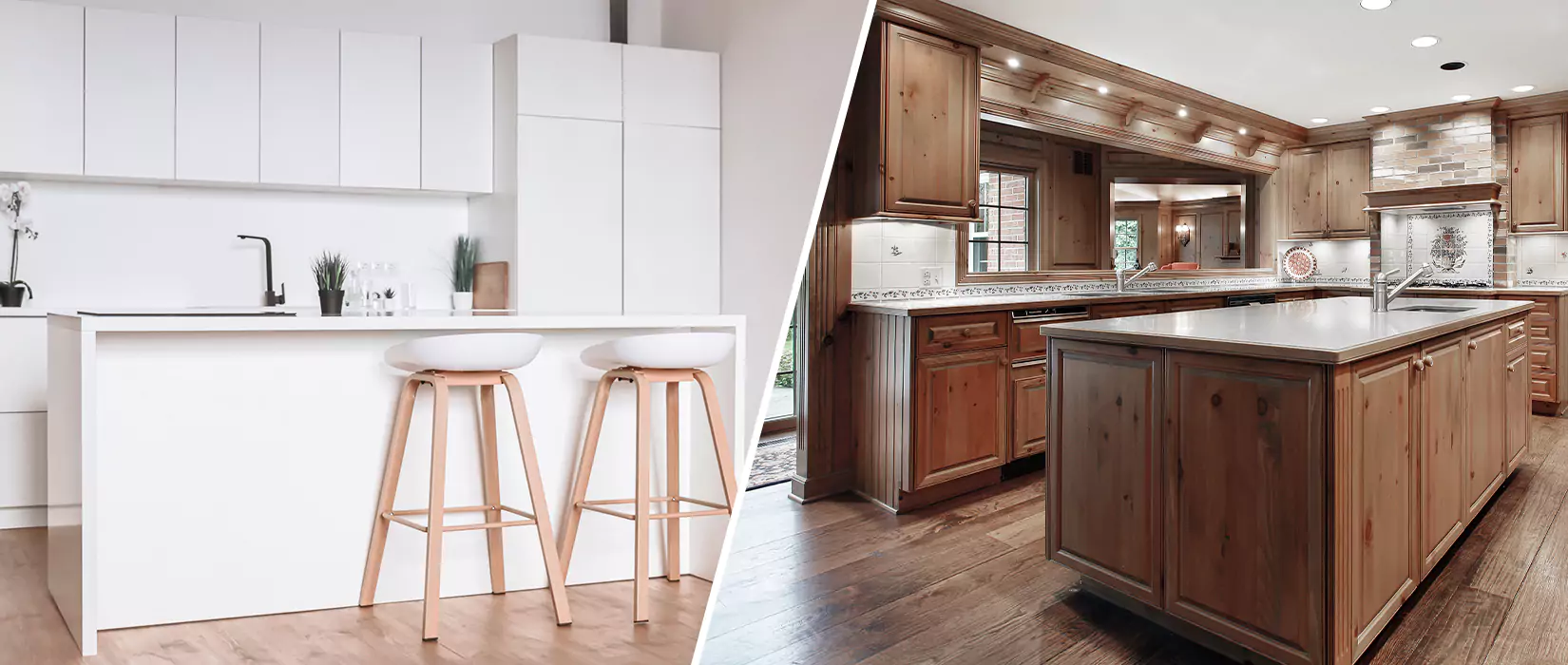
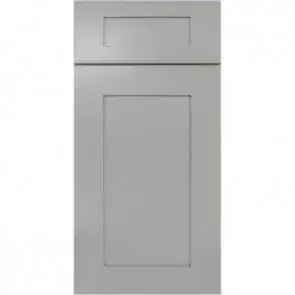
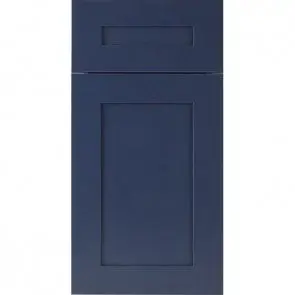
When it comes to aesthetics, MDF and solid wood cabinets present contrasting looks. MDF's smooth, uniform surface is ideal for painted finishes, allowing you to achieve a crisp, flawless look in any color imaginable. This makes MDF a perfect choice for modern kitchens or bathrooms where a streamlined aesthetic reigns supreme.
Solid wood, on the other hand, embodies timeless elegance and warmth. The natural wood grain adds a touch of organic character, showcasing the inherent beauty of the wood species. With stain finishes highlighting the grain patterns, solid wood cabinets create a classic or rustic feel, perfect for traditional or farmhouse-inspired spaces.

Durability
Durability is a key consideration when choosing between MDF and wood cabinets. While both offer good structural integrity, they handle wear and tear differently.
MDF's strength lies in its resistance to warping and cracking. Its uniform density makes it less susceptible to humidity fluctuations than solid wood, which can warp or crack in environments with fluctuating moisture levels.
However, MDF's Achilles' heel is water damage. Its dense core absorbs moisture readily, causing swelling and potential disintegration if not properly sealed, especially around exposed edges.
Solid wood, on the other hand, boasts great long-term durability with proper cabinet care. These cabinets are incredibly strong and can last for generations. However, solid wood is more prone to scratches and dents compared to MDF's smooth surface. It also requires more maintenance to prevent moisture damage and warping.
Installation
If you plan on installing your cabinets yourself, you may want to consider the weight differences between MDF and solid wood.
While MDF cabinets are often available pre-assembled, they come at the cost of increased weight. MDF's density makes it heavier than solid wood, which can make these cabinets more difficult to lift and install, especially for larger kitchens or complex layouts.
Solid wood cabinets, though often requiring more on-site assembly, benefit from their lighter weight, making installation just a bit easier.
Cost
Budget is often a primary concern when choosing cabinets, and MDF and solid wood cabinets fall on opposite ends of the cabinet price spectrum.
MDF is a top choice in terms of affordability. Made from engineered wood fibers, MDF is significantly lower in cost than solid wood. This makes MDF cabinets an attractive option for budget-conscious homeowners or those undertaking large renovation projects. The price difference can be substantial — solid wood cabinets can cost two to five times more than MDF cabinets.
Solid wood, however, represents a long-term investment. These cabinets are incredibly durable and can potentially last for generations with proper care. High-quality solid wood cabinets can also increase your home's resale value. So, while the initial cost is higher, solid wood cabinets may offer better value in the long run, depending on your priorities.
Environmental Impact
The environmental impact of MDF and solid wood cabinets is a complex issue with considerations on both sides.
MDF has some eco-friendly potential. Many MDF manufacturers use recycled wood fibers in their production process, diverting wood waste from landfills and reducing the need to harvest new trees.
However, the manufacturing of MDF often involves adhesives containing formaldehyde, which can emit VOCs)and impact indoor air quality. Choosing MDF cabinets with low-emission or formaldehyde-free certifications can help mitigate this concern.
Solid wood cabinets, on the other hand, are a natural and renewable resource. Sustainably sourced solid wood, harvested from forests with responsible replanting practices, can minimize environmental impact. However, traditional solid wood production still necessitates tree felling, which can contribute to deforestation if not done responsibly. Additionally, solid wood finishing products can also contain VOCs.
Eager to get a jump-start on designing your dream kitchen? Reach out to our NKBA-certified designers for pro tips, price quotes, and a free 3D kitchen design.
MDF vs. Solid Wood FAQs
Still have some questions about solid wood vs. MDF? Here are some answers to your top questions.
Is MDF as good as solid wood?
There's no simple answer to whether MDF is "as good" as solid wood for cabinets. MDF cabinets win on affordability and sleek painted finishes but can be water-sensitive. Solid wood offers timeless beauty and exceptional durability, though at a higher price and with more maintenance needs. The ideal choice hinges on your budget, desired look, and lifestyle priorities.
When should you not use MDF?
While MDF cabinets offer a budget-friendly and stylish option, they aren't perfect for every situation. Avoid MDF in high-moisture areas like bathrooms or laundry rooms where frequent exposure to water can cause swelling and damage.
Ultimately, the choice between MDF vs. solid wood will depend on how you prefer your kitchen to look and function. Solid wood cabinets will likely outlast a set of MDF cabinets, but the price and modern style of MDF cabinets may have you reaching for the cheaper choice.
Looking for a cabinet option that's as affordable as MDF and as durable as solid wood? Our cabinet boxes are constructed with Grade A plywood, so you can get the best of both worlds. Browse our selection of high-quality kitchen cabinets now to find the perfect fit for your remodel.