

L-Shaped Kitchen Layout: 21 Design Ideas and Tips
By: Andrew Saladino |  9 min
9 min
Last Updated: November 18th, 2024
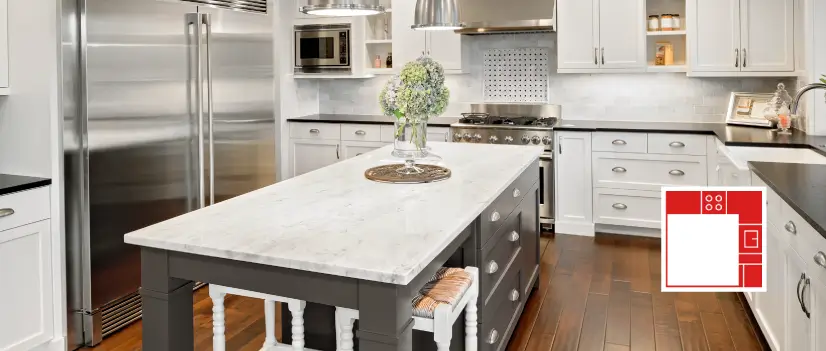
The L-shaped kitchen layout is the most widely used residential kitchen layout—and for good reason. It has the ability to take a small or medium-sized kitchen and make it functional for multiple family members, regardless of your kitchen's dimensions.
There are multiple design options for L-shaped kitchens, so you can adjust the layout based on your needs. Read through our guide to discover design ideas and considerations, pros and cons, and tips for creating the best L-shaped culinary haven tailored to your space.
Looking for an expert opinion? Our NKBA-certified designers can help you envision both options in your space with a free 3D kitchen design.
Start Designing Your Dream KitchenTable of Contents
L-Shaped Kitchen Design Ideas
L-shaped kitchens offer the perfect blend of style and function, no matter the size of your space. From incorporating an entertainment island to choosing the ideal countertop corner solution, check out our expert tips for making the most of an L-shaped layout.
1. Opt for Ceiling-Height Cabinets
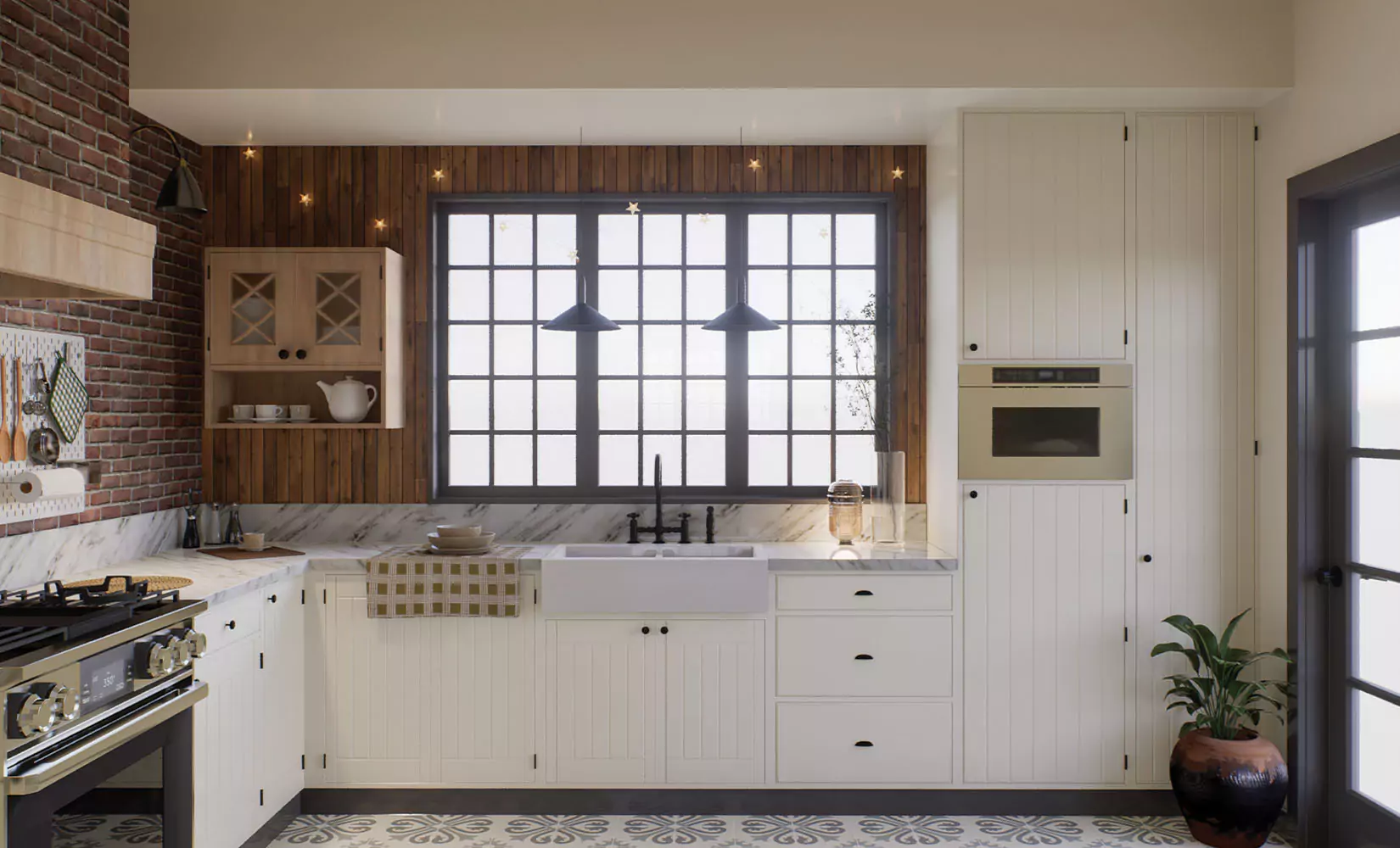
Make the most of your storage space while simultaneously making your kitchen appear taller with wall cabinets that extend to the ceiling. Place your least-used items, such as seasonal serving ware, on the top shelves so your more important kitchenware is accessible below.
2. Layer Your Lighting
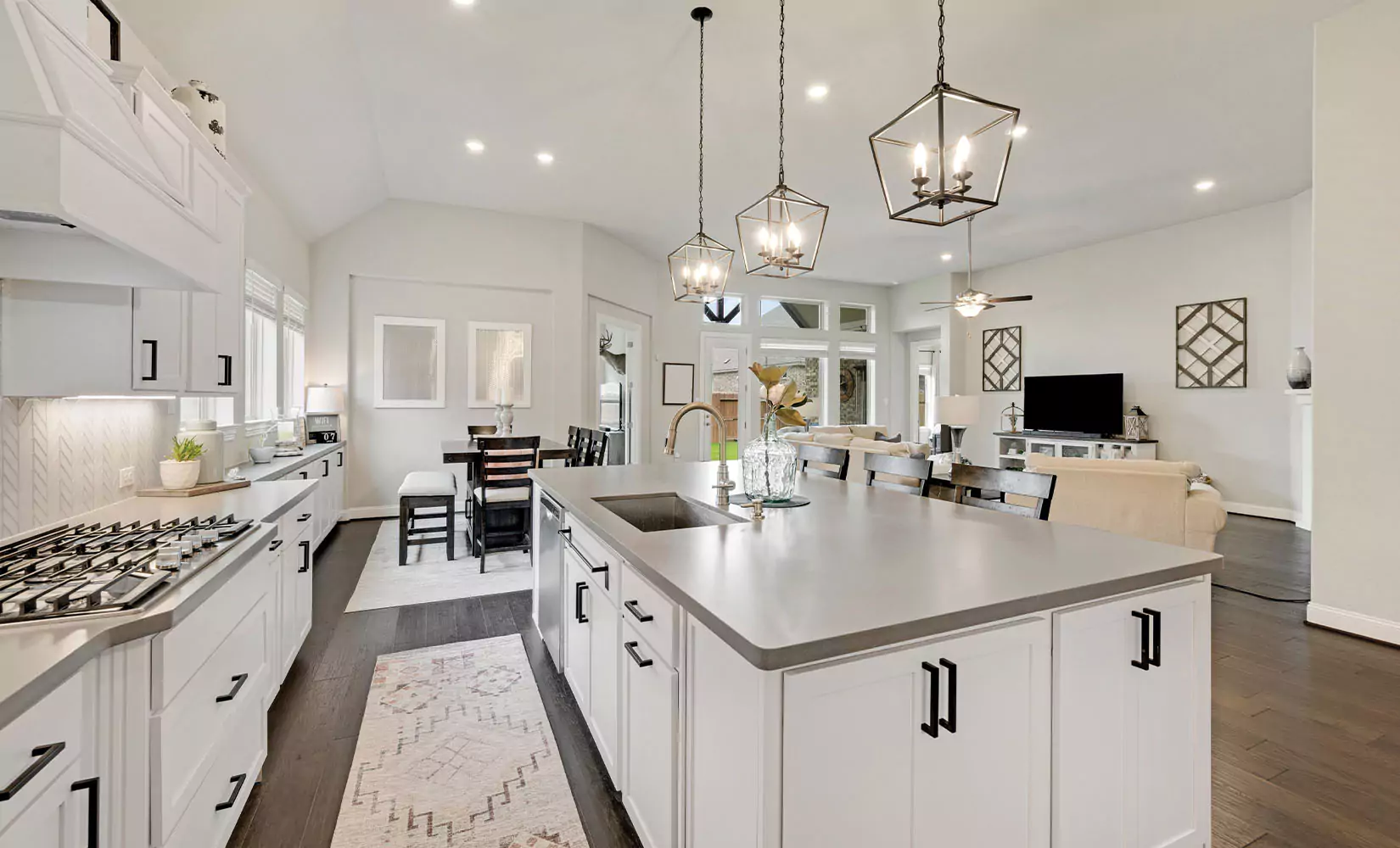
Layered lighting is essential to combat potential shadow zones and create a truly functional space. By incorporating all three lighting layers—ambient, task, and accent—you'll ensure overall brightness, illuminate work areas for precise chopping and cooking, and add a touch of style to your space.
3. Try a Bar Table
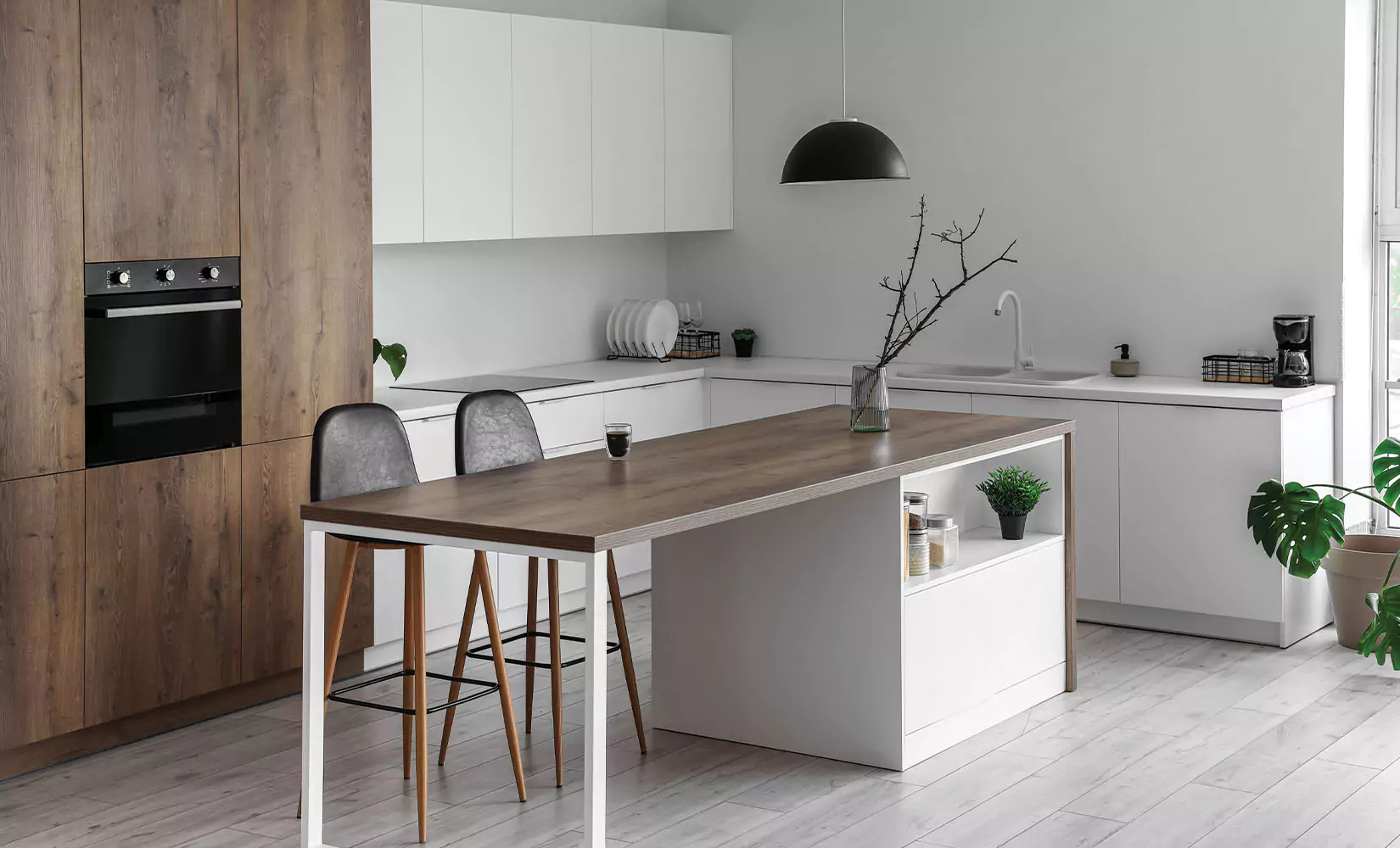
Keep your layout looking open and spacious by choosing a large bar table instead of an island. This is a great solution if you don't necessarily need the extra storage space but would still like a casual eating and entertaining area.
4. Highlight Your Island
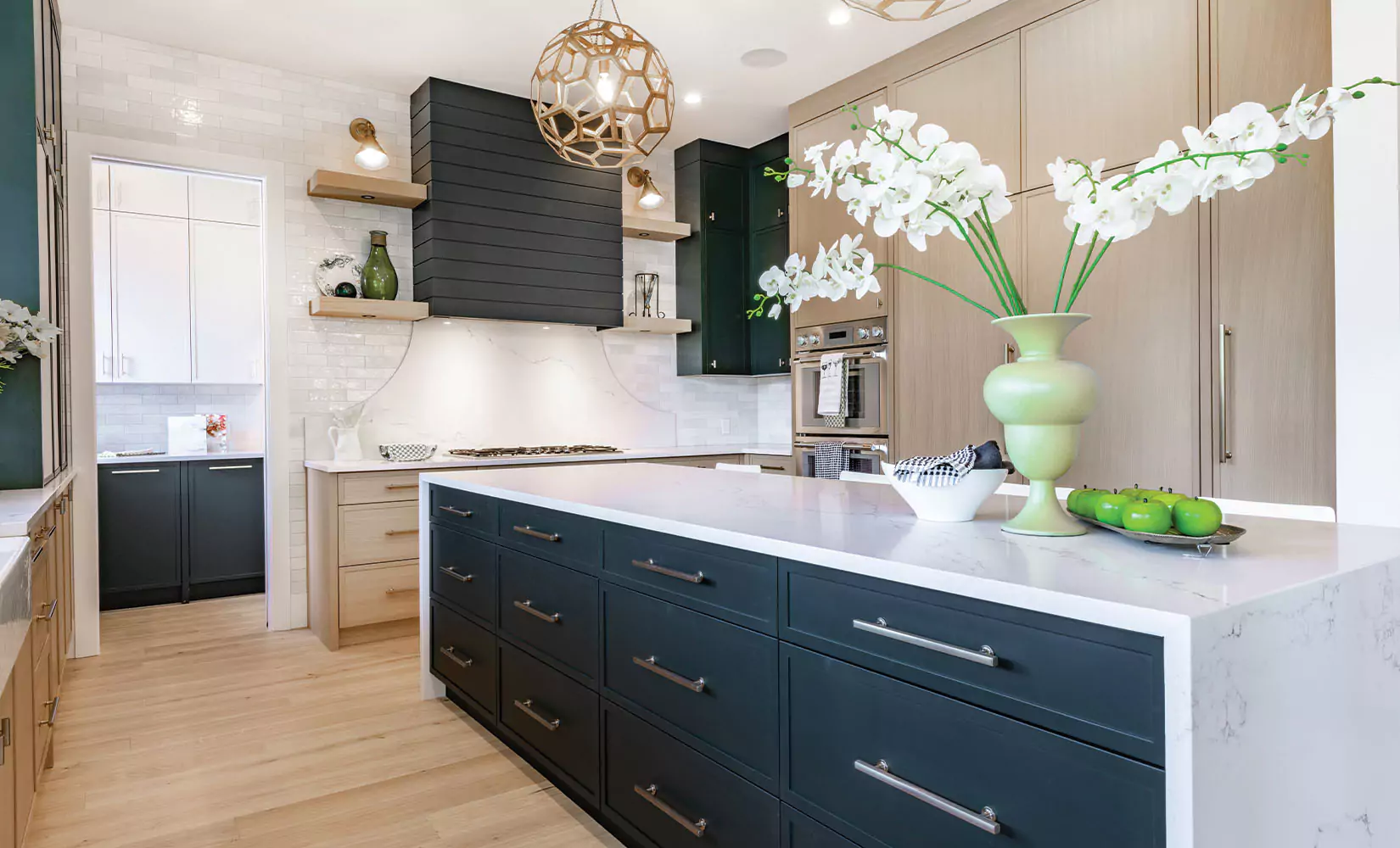
Make your L-shaped island your kitchen's main focal point by accentuating it with eye-catching statement lights, contrasting countertops, statement bar chairs, or colorful patterned tiles.
5. Mix and Match Cabinets
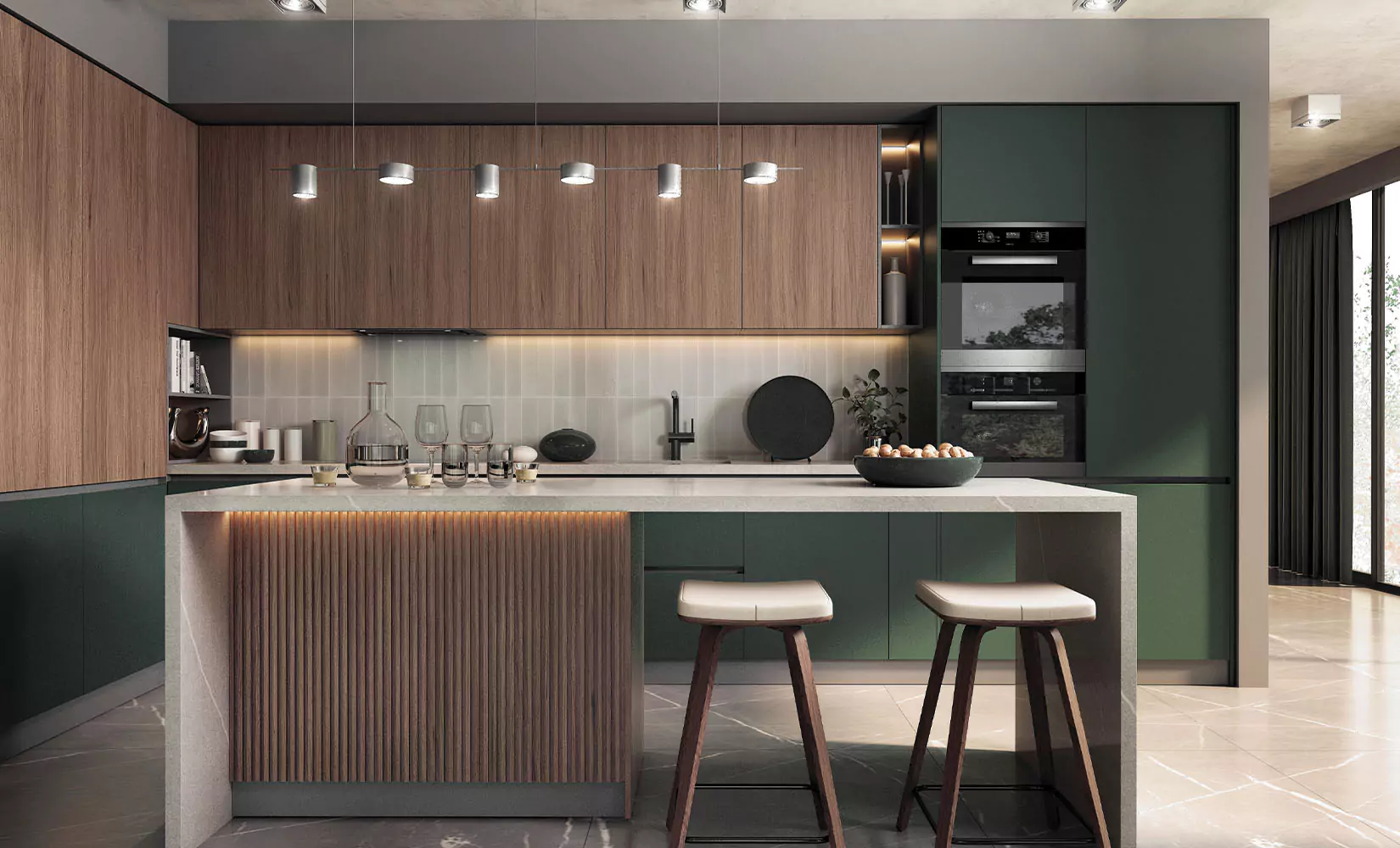
Want to experiment with bold cabinet paint colors without overpowering your entire design? Two-tone kitchen cabinets are one of the latest kitchen design trends that feature contrasting cabinet colors to help add visual interest to your space. Use a dark cabinet color for your base cabinets or kitchen island to ground your space while keeping your wall cabinets light to keep the room from feeling closed off.
See what our cabinets will look like in your home.
Order a Kitchen Cabinet Sample Today6. Add a Wall of Storage
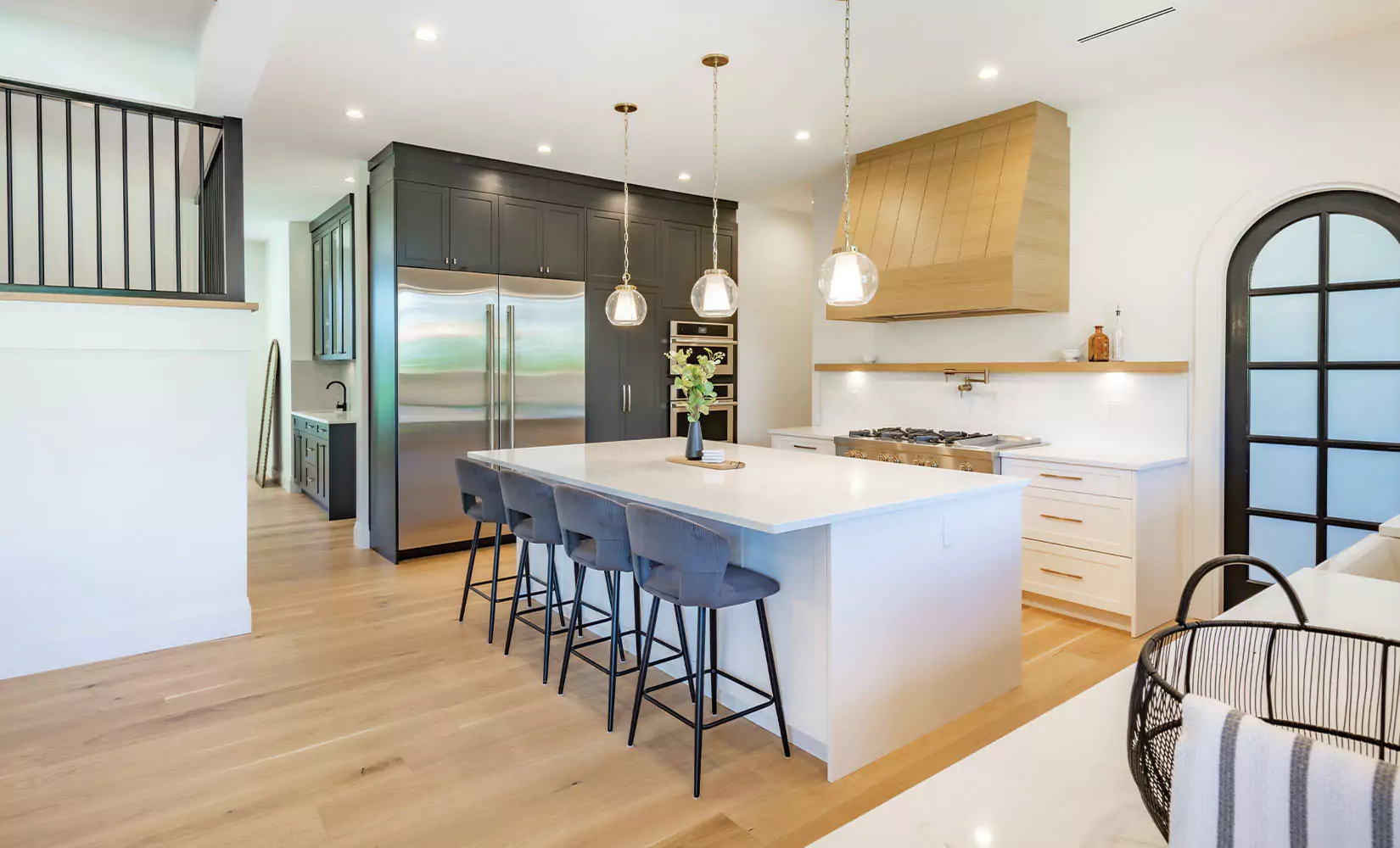
Accentuate the height of your space by adding floor-to-ceiling cabinets to one leg of the "L." These cabinets maximize storage capacity, eliminate wasted wall space, and provide ample room for cookware, dishes, and pantry staples. This creates a clean, streamlined aesthetic, especially when paired with integrated appliances.
7. Replace the Island With a Table
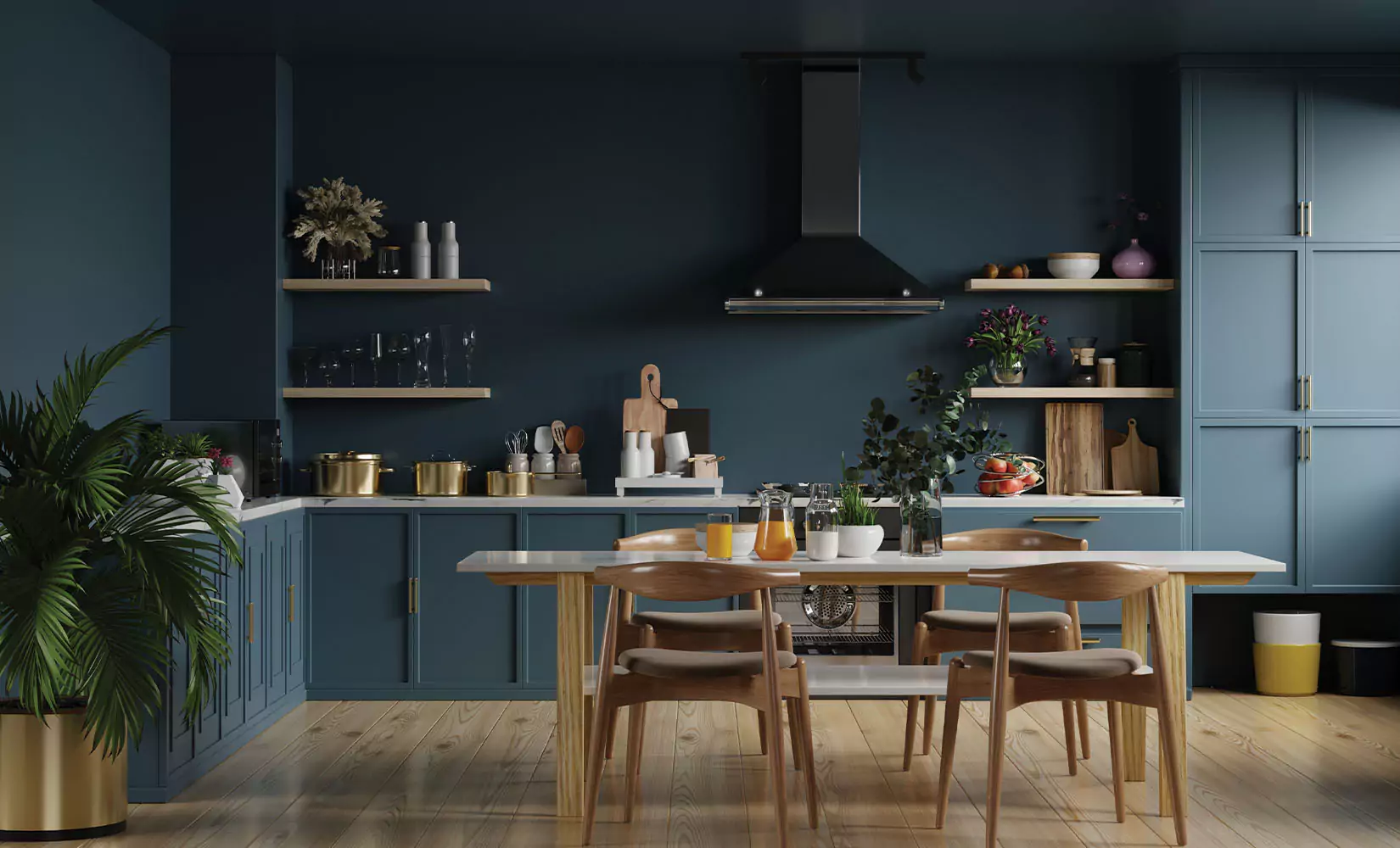
For a more traditional and intimate feel, consider opting for a dedicated dinner table over an island in your L-shaped kitchen. This frees up valuable floor space, promoting a clear traffic flow. The lower profile creates a cozy atmosphere for lingering over meals and conversation while still offering a designated dining area perfect for family gatherings or entertaining friends.
8. Opt for Open Shelving

Open shelving strategically placed along one or both legs of an L-shaped kitchen not only adds visual interest but can also improve accessibility. Open shelves keep your most-used dishes and cookware within easy reach, eliminating the need to open and close cabinets while you cook.
9. Integrate Appliances
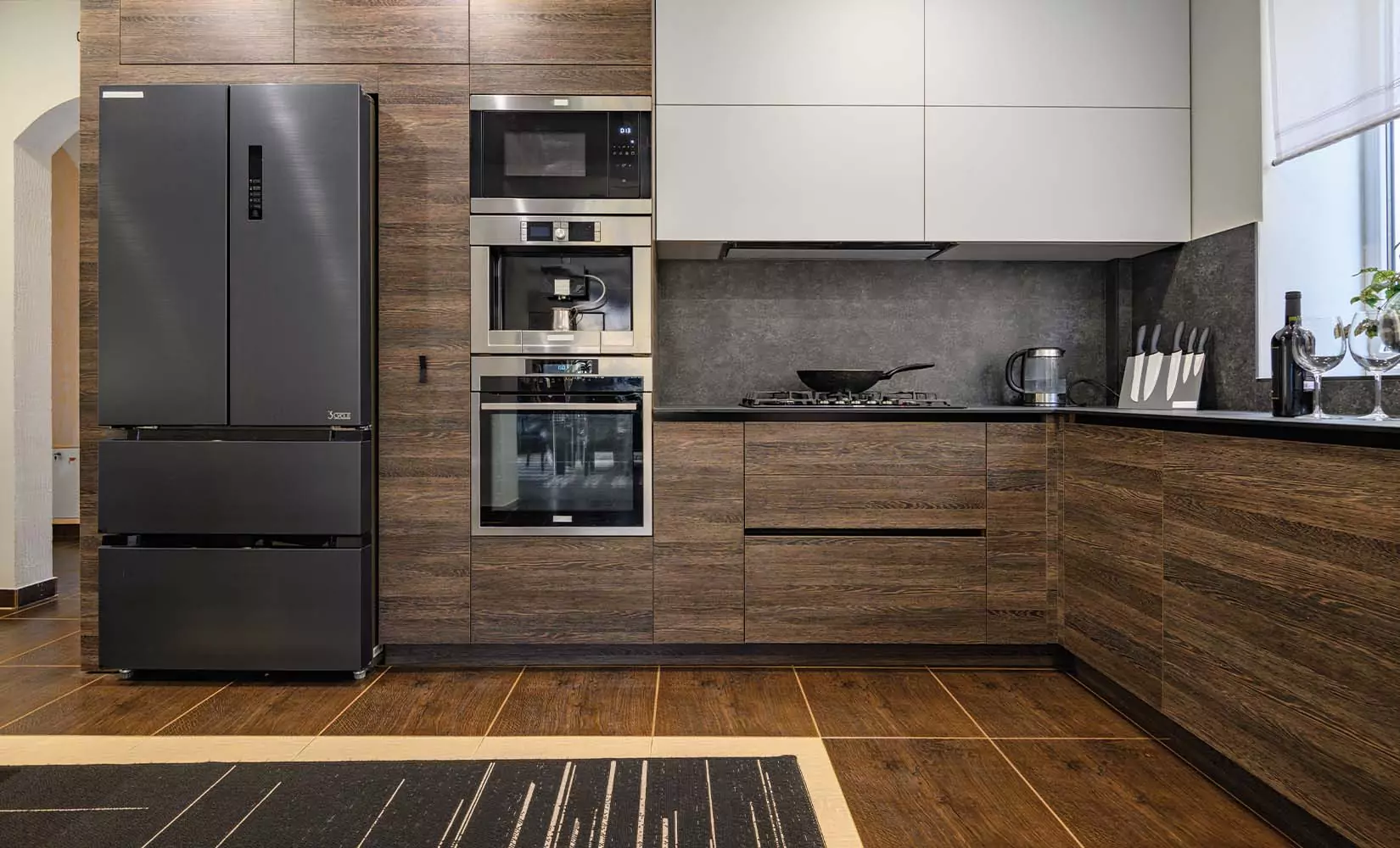
By seamlessly incorporating appliances within your cabinetry, you achieve a clean, streamlined aesthetic that maximizes precious counter space. This not only makes the kitchen feel larger but also promotes a more organized and efficient workflow.
10. Add Drama With Waterfall Countertops
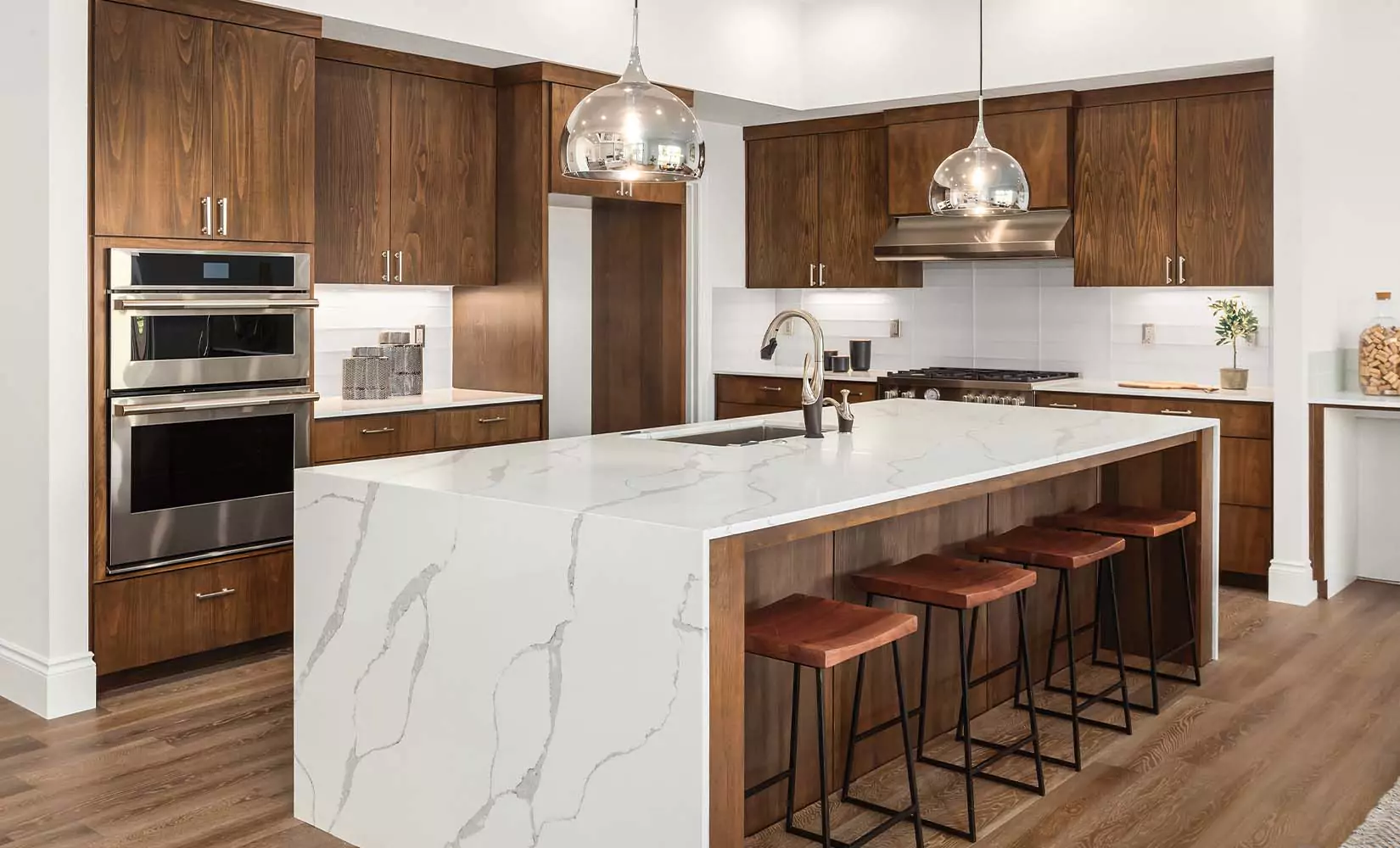
Sleek stone waterfall countertops are the envy of the kitchen design world, and a stand-alone kitchen island is the best place to put this feature on display. The continuous flow of material adds a sense of weight and solidity while disguising the base cabinets for a clean, contemporary look.
11. Create Multiple Work Triangles
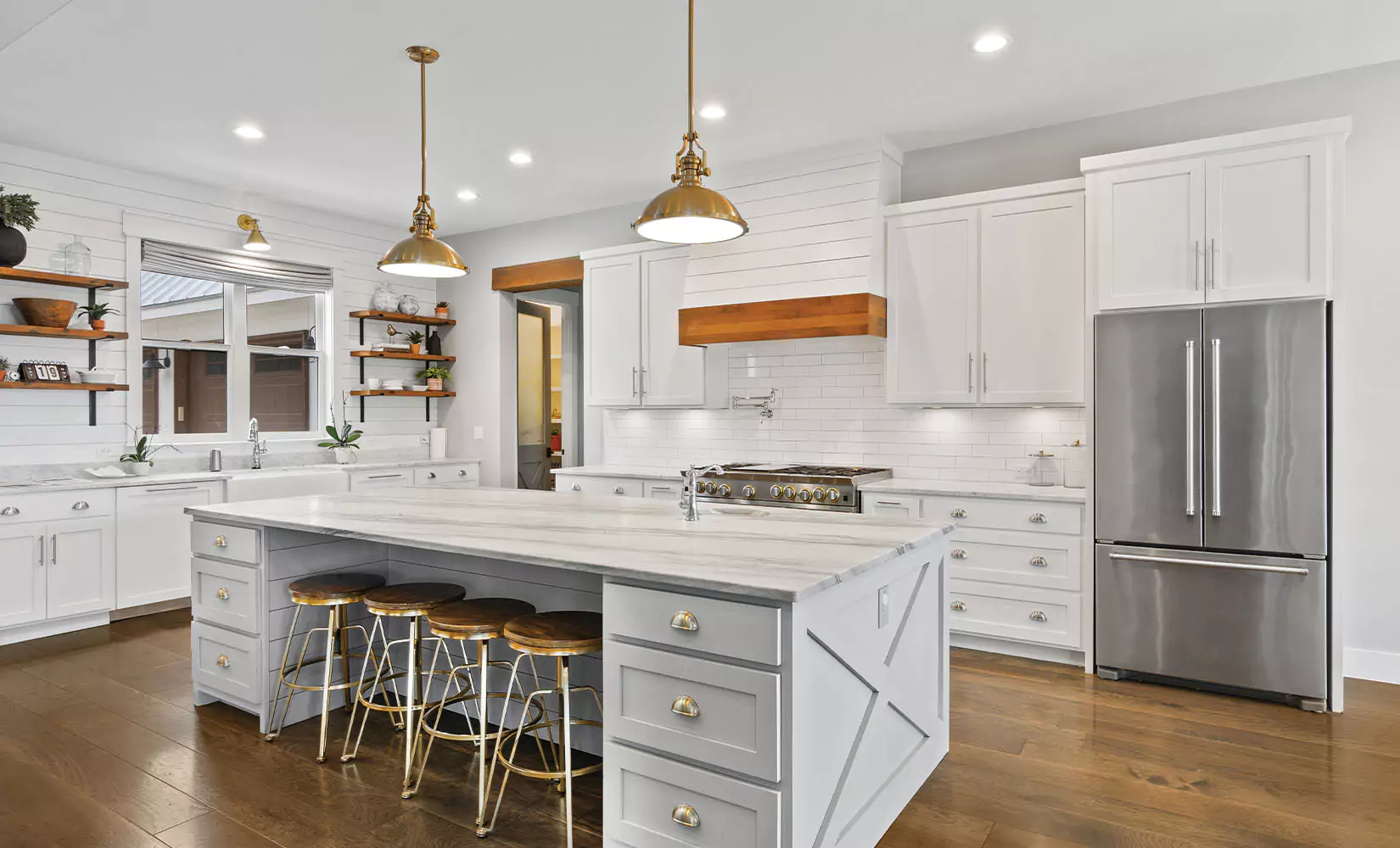
A large L-shaped layout means more opportunities to add not one but two work triangles! Installing a secondary sink in your kitchen island allows you to double the workflows to benefit multiple chefs.
12. Get More Out of Your Island

An L-shaped kitchen with a tiered island creates a distinct separation between the prep and dining areas, allowing you to dedicate specific zones for different activities. This ingenious design maximizes counter space, promotes a smooth workflow during food preparation, and fosters a comfortable dining experience—all within the footprint of your L-shaped kitchen.
13. Nix the Corner Cabinet
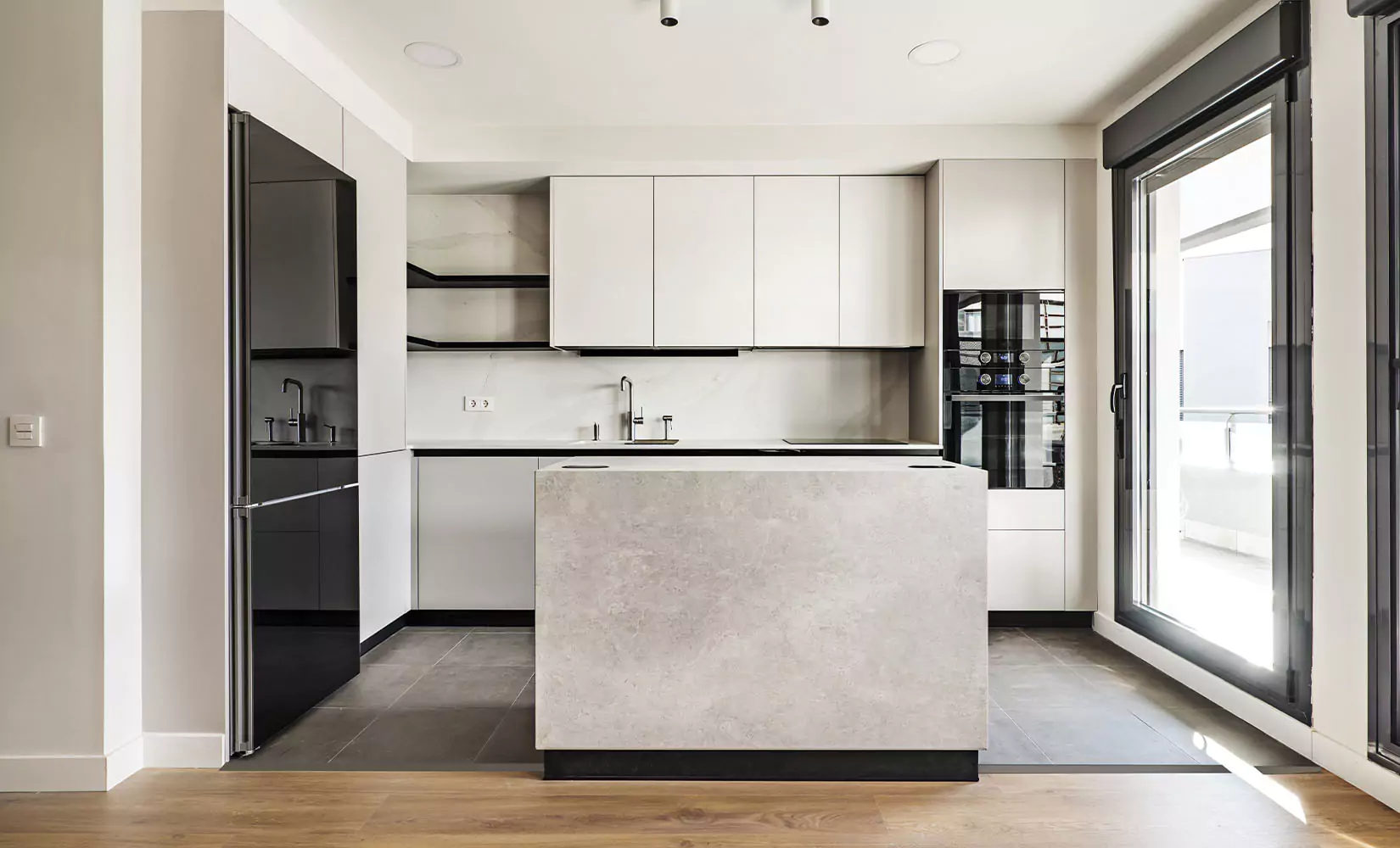
Consider ditching the bulky corner cabinets in your L-shaped kitchen for a more open and airy feel. This not only eliminates the awkward reachability issues often associated with corner units but also creates an opportunity to enhance the functionality and style of your space. In place of the cabinets, explore options like a sleek open shelving unit or a built-in spice rack for easy access while cooking.
14. Stay Flexible With a Rolling Island Cart
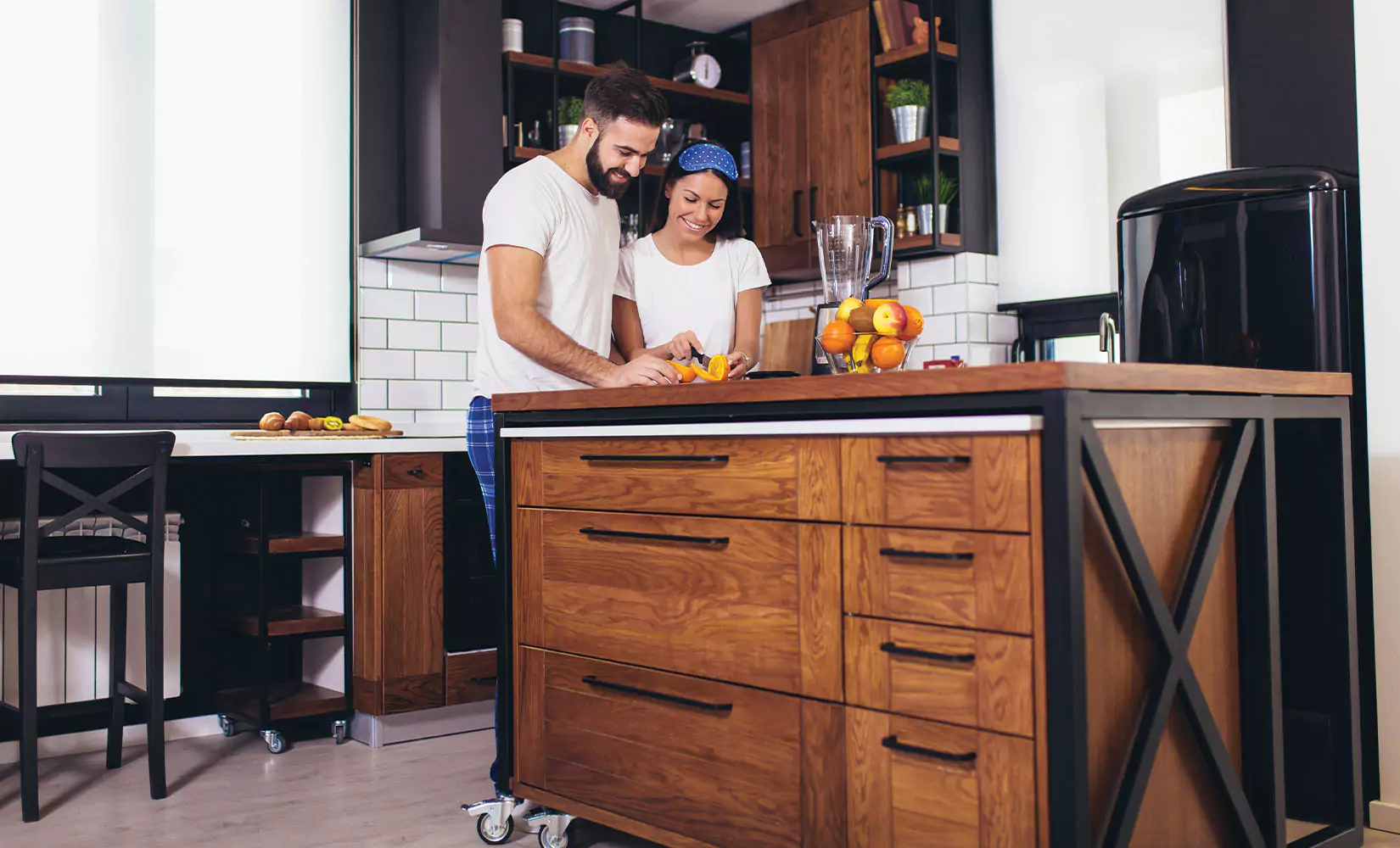
Keep the open-concept floor plan and get the extra prep and storage space by opting for a moveable kitchen island or cart. These affordable stationary island alternatives are a great solution for small L-shaped kitchens or rental kitchens.
15. Explore Storage Solutions
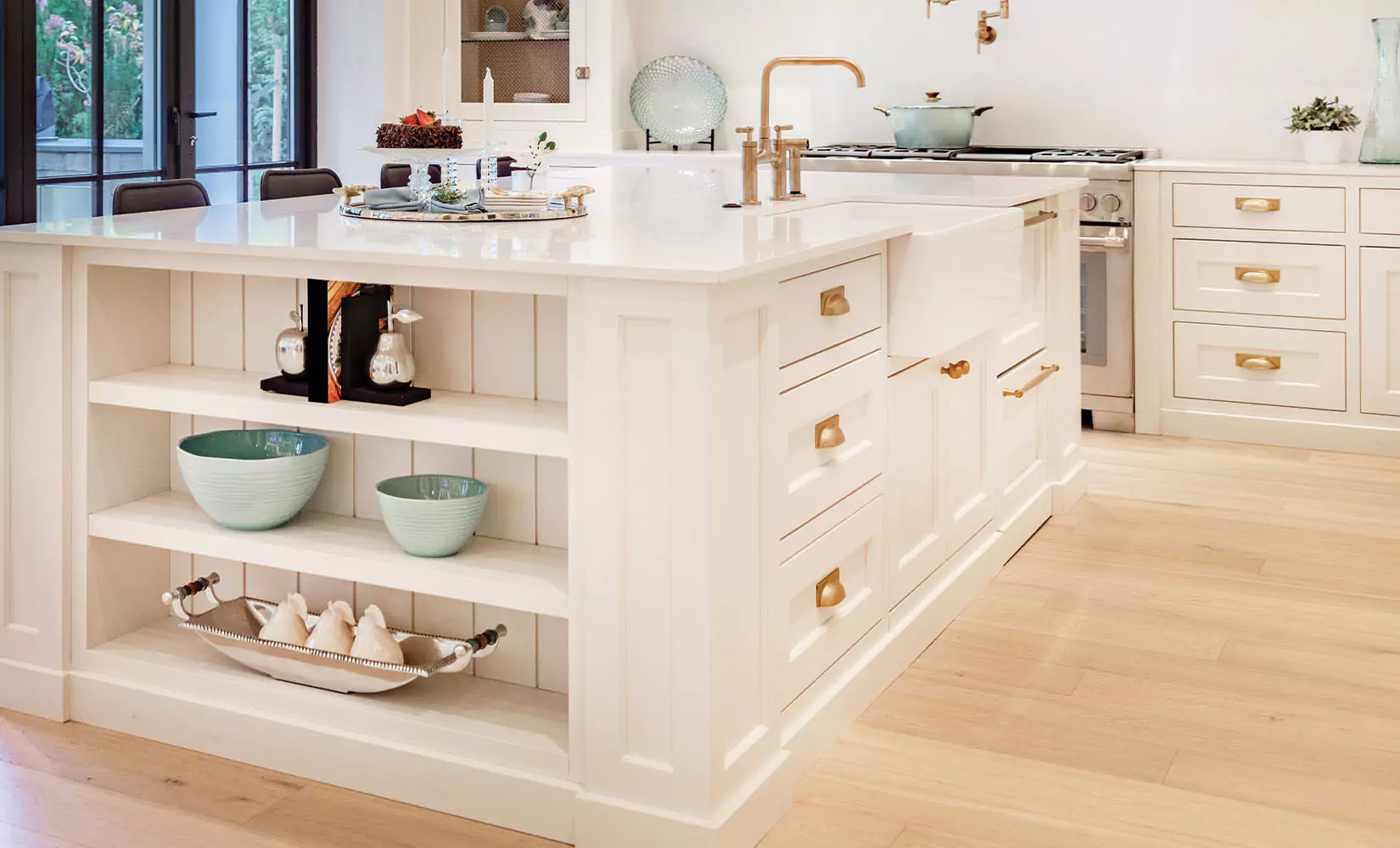
L-shaped kitchens offer a unique opportunity to get creative with kitchen organization. Don't just stick to traditional base cabinets! Consider adding open shelves along the sides of your island. This not only adds visual interest and breaks up the cabinetry but also provides additional storage space for cookbooks and decorative items.
16. Maximize Seating
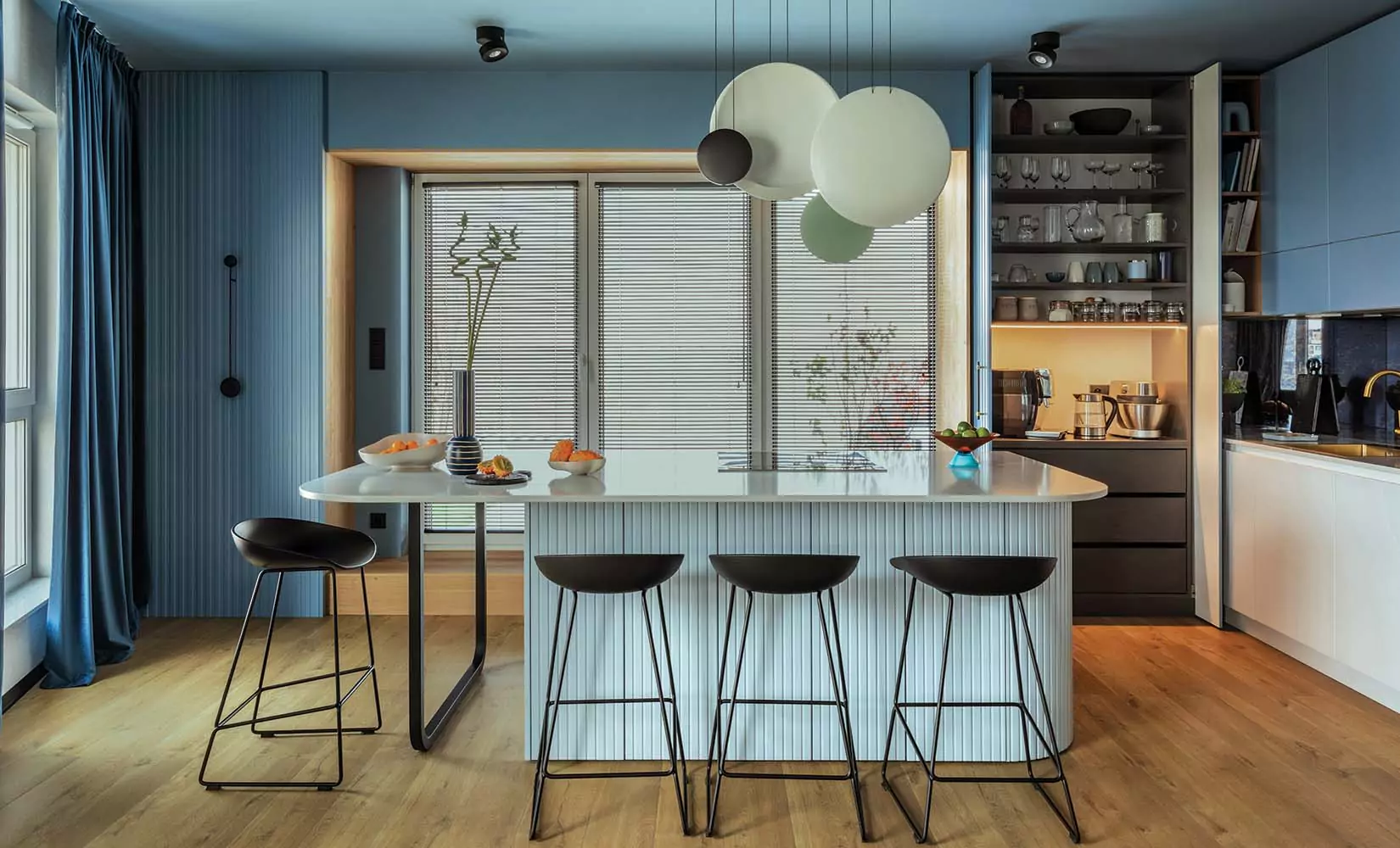
If you have a large family or you're someone who loves to entertain, create a wrap-around bar by adding seating to both legs of your L-shaped island. This type of kitchen island is ideal for open-concept living, seamlessly connecting the kitchen to the living area and promoting a more inclusive atmosphere.
17. Add an Island Range
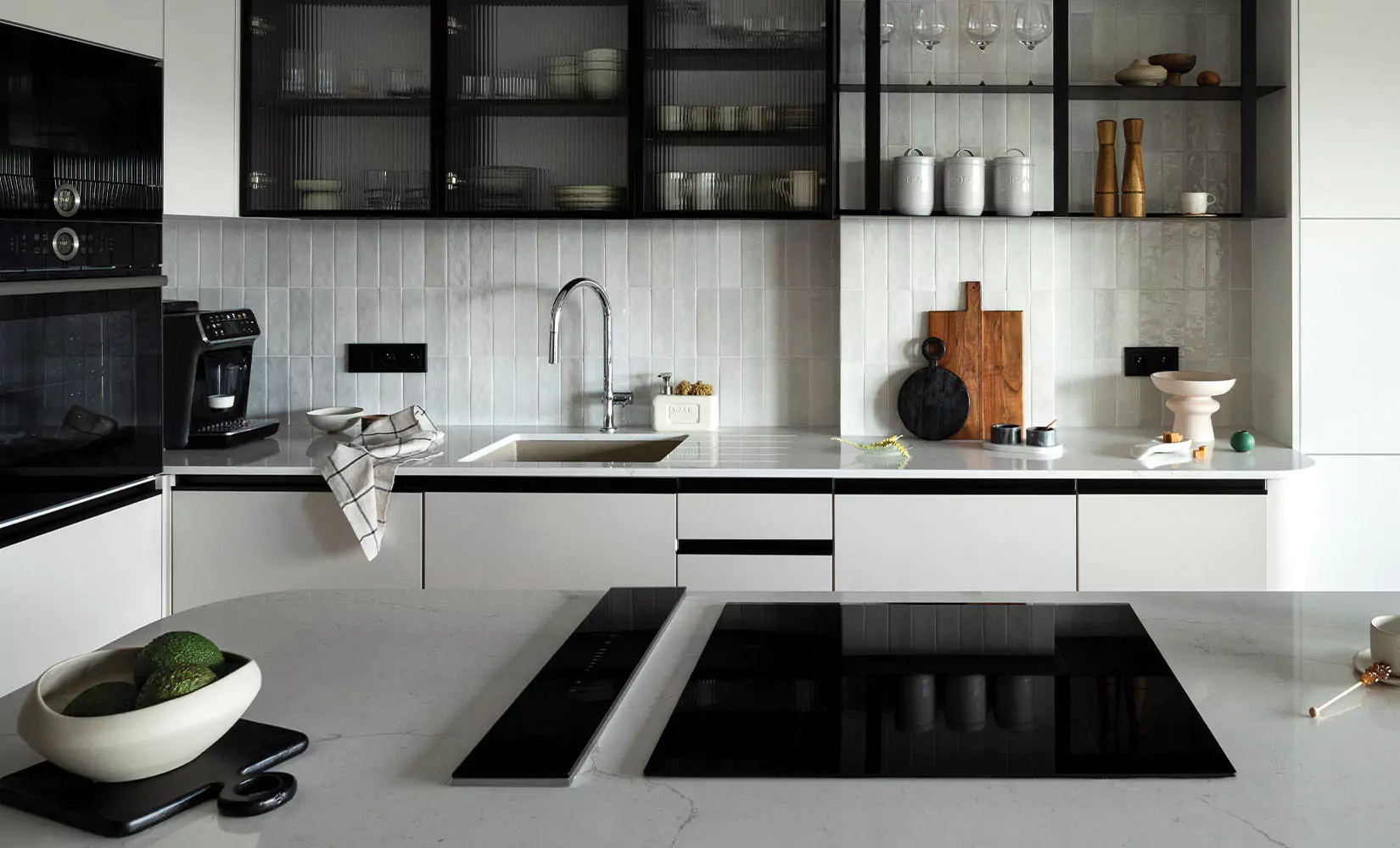
Channel hibachi-style dining with a kitchen island stovetop. Entertain family and friends with your stir-fry mastery and be part of the conversation while you prepare a meal.
18. Tuck Away Countertop Appliances
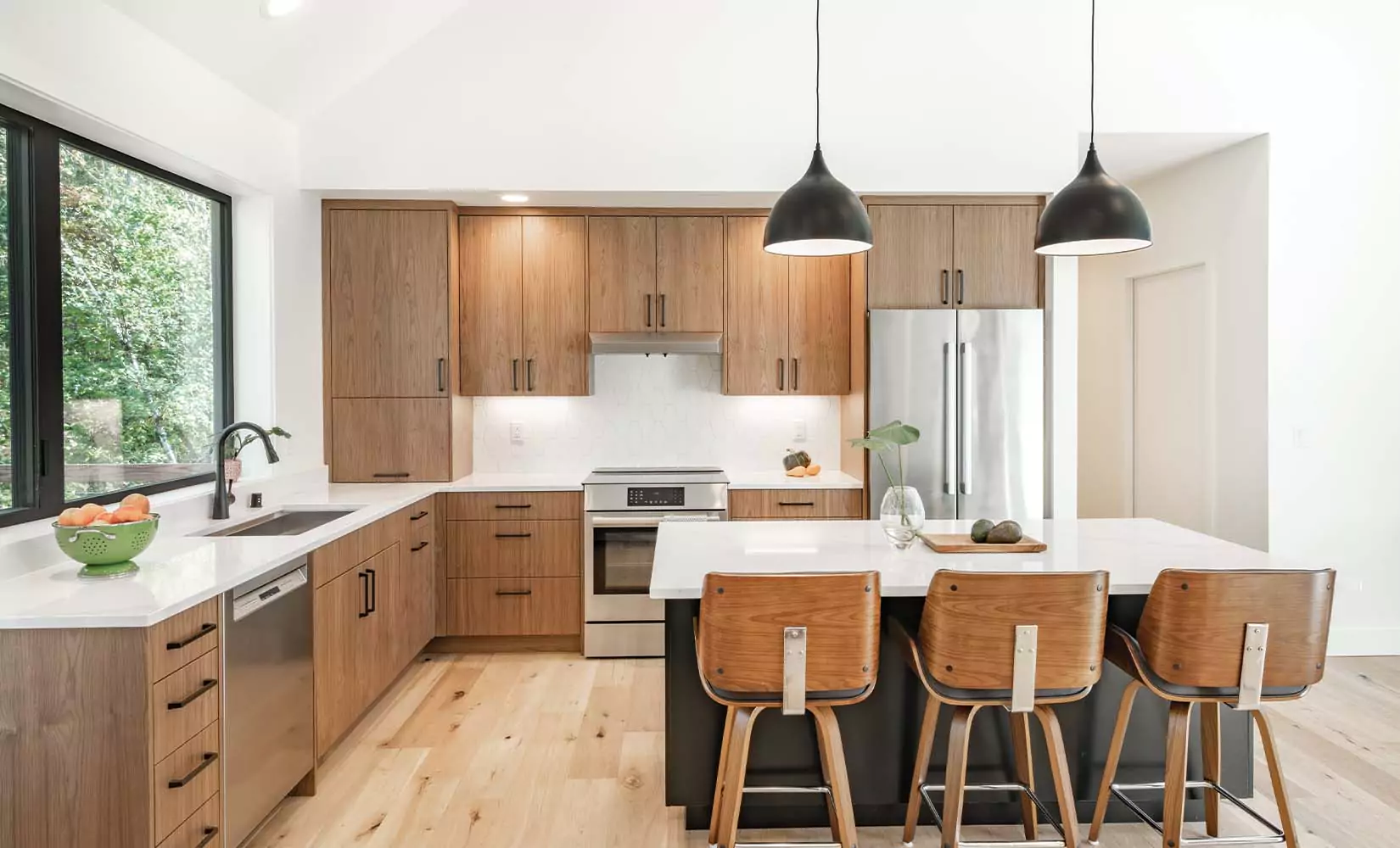
You likely won't have a lot of countertop space to spare if opting for an L-shaped kitchen design. To maximize your work areas, consider installing a small appliance garage to house your toaster, blender, or coffee maker when not in use.
19. Organize Your Corner Cabinets
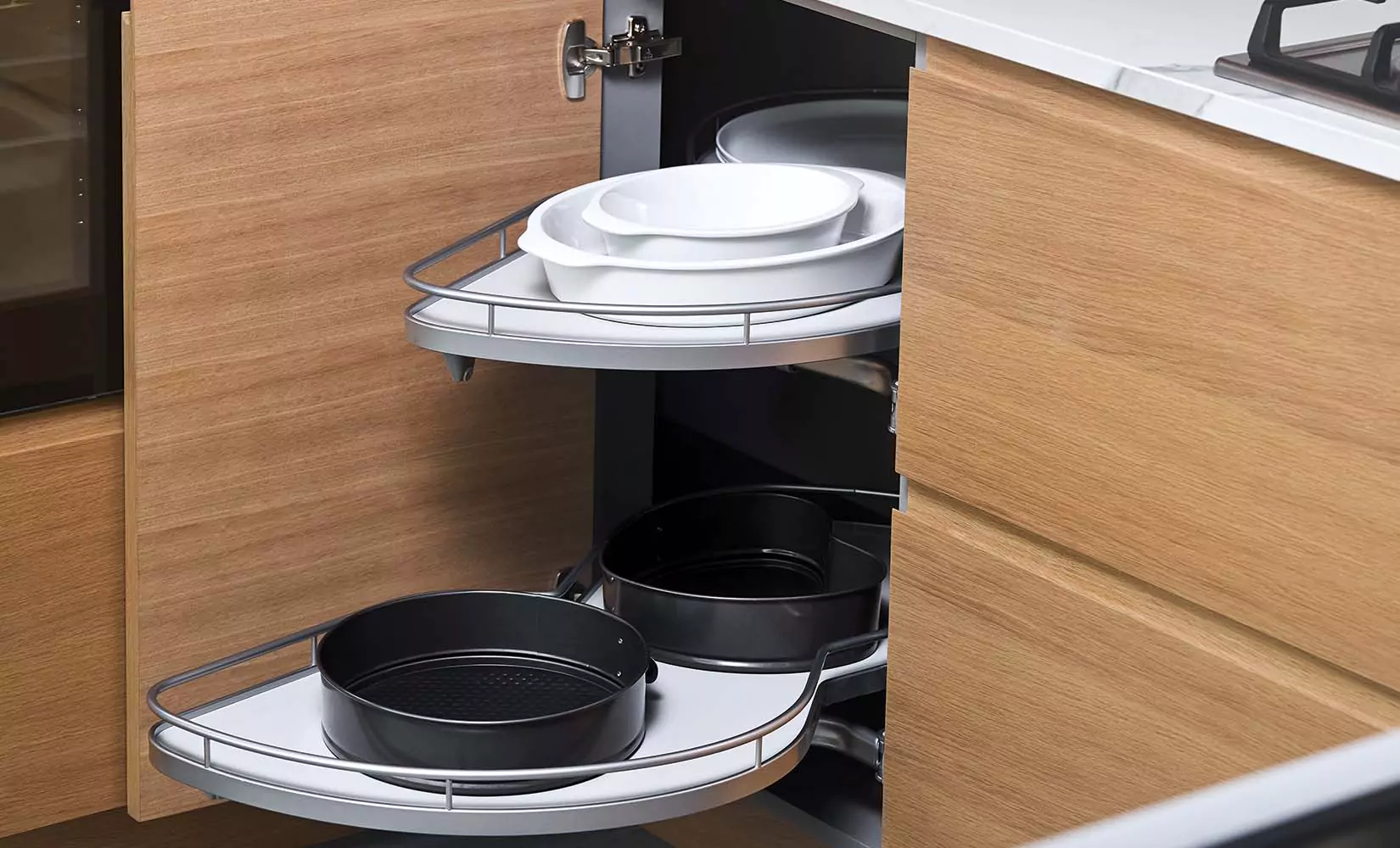
L-shaped kitchens don't offer as much storage space as some other kitchen layouts, so utilizing all existing cabinet space is essential. Install a carousel unit or pull-outs to improve the accessibility of your corner cabinets.
20. Keep Work Stations Away From the Door
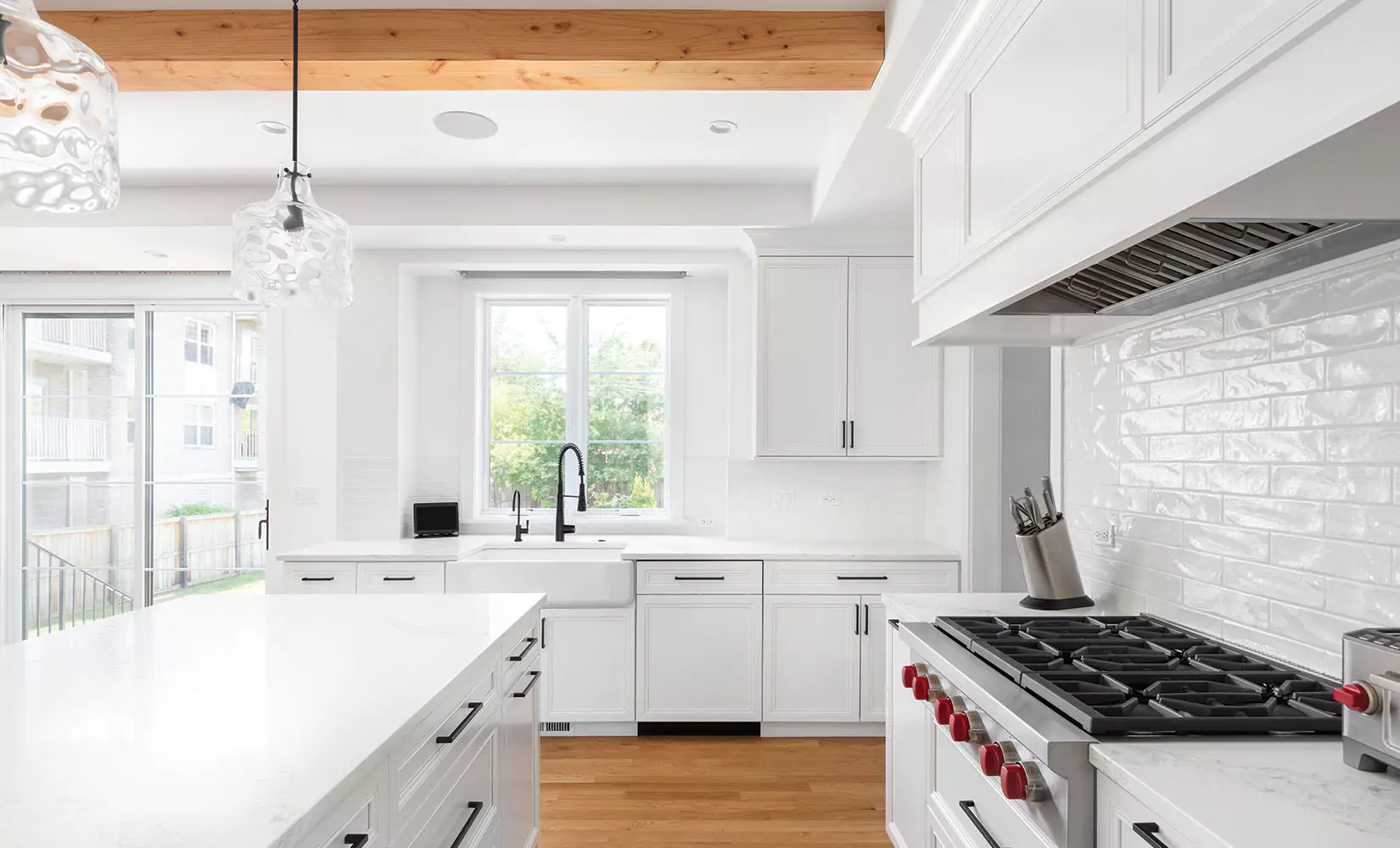
Broken L-shaped kitchens have multiple traffic flows, so it's essential you keep your food prep and cooking stations as far from the door as possible. We suggest placing your prep and cooking stations against the same wall so you won't have to cross traffic paths with pots of boiling water or sharp knives.
21. Customize Your Work Triangle
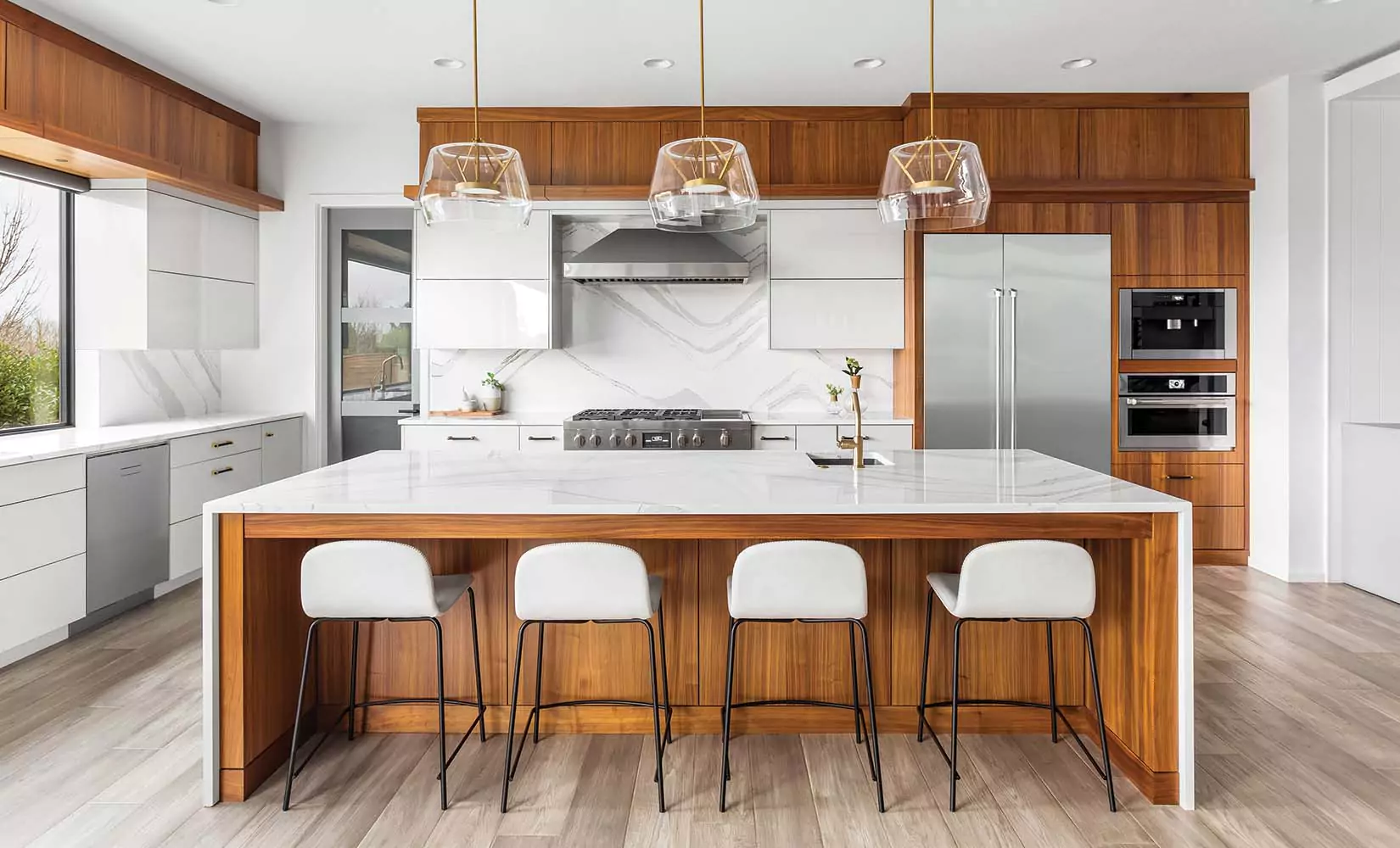
One of the most challenging aspects of L-shaped kitchens is where to place the work triangle. If you place your sink, fridge, and stovetop too far apart, walking back and forth between each station will only add more time and effort to your cooking routine. On the contrary, a small work triangle may lead to a cramped and congested workspace. When designing your layout, aim to have each side of the triangle measure between 4 and 9 feet.
Need to replace your old cabinets to achieve your ideal kitchen layout? Check out our extensive selection of stock kitchen cabinets to find a style that suits your space and budget.
Shop Kitchen CabinetsDesigning an L-Shaped Kitchen Layout
If you're looking to maximize space in a small area without sacrificing efficiency, L-shaped kitchens are a great option. This ergonomic layout is formed by two adjacent walls or runs of cabinetry, often referred to as the "legs" of the L.
L-shaped layouts are best for:
- Improving traffic flow due to their open-concept design
- Providing plenty of flexibility, no matter your room dimensions
- Promoting efficient workflows with dedicated food prep, cooking, and cleaning stations
- Combining cooking, living, and dining spaces for easy entertaining
Classic L-Shaped Kitchen

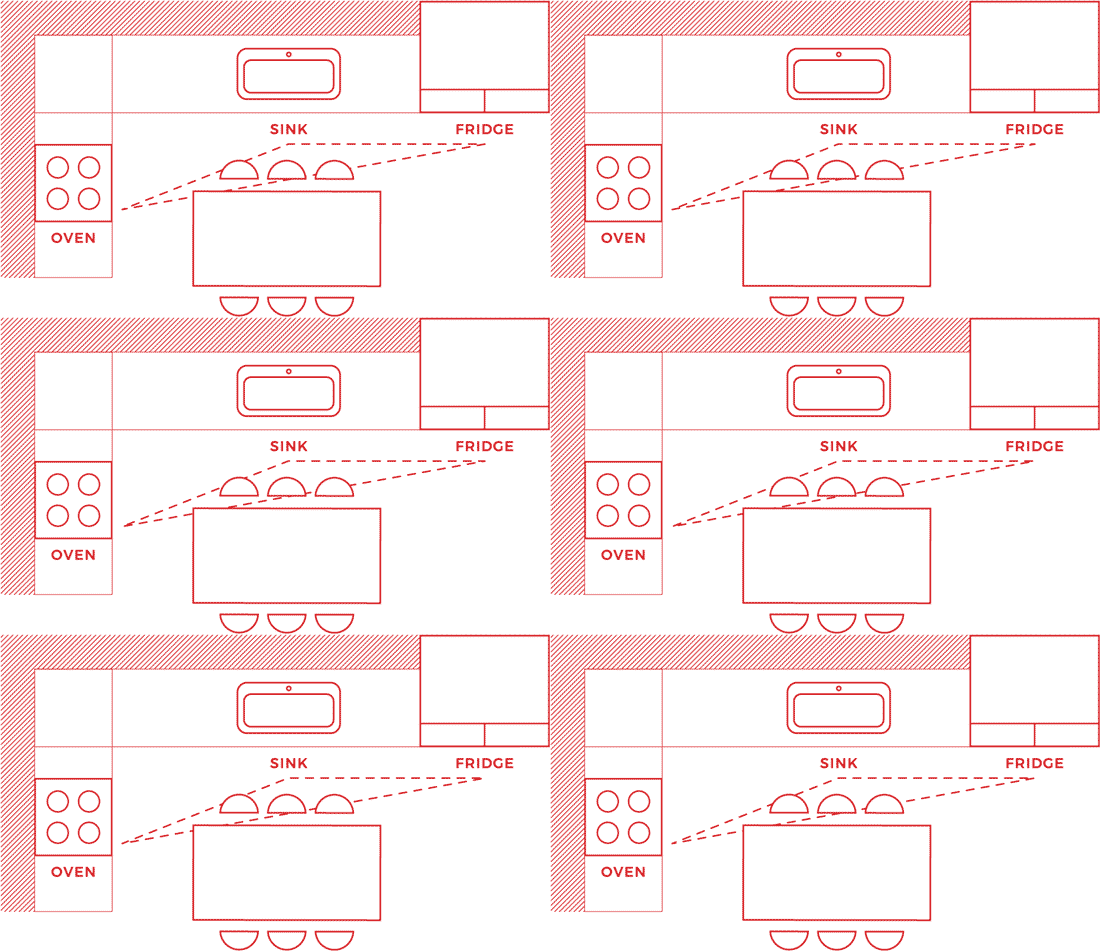
The classic L-shaped kitchen layout consists of two adjacent countertop legs that form a right triangle, with one typically longer than the other. In most cases, L-shaped kitchens utilize two walls at a right angle with countertops against each wall. However, the layout can also be formed with a countertop on one wall and the other countertop protruding outward, creating a peninsula perfect for a breakfast bar.
Double L-Shaped Kitchen
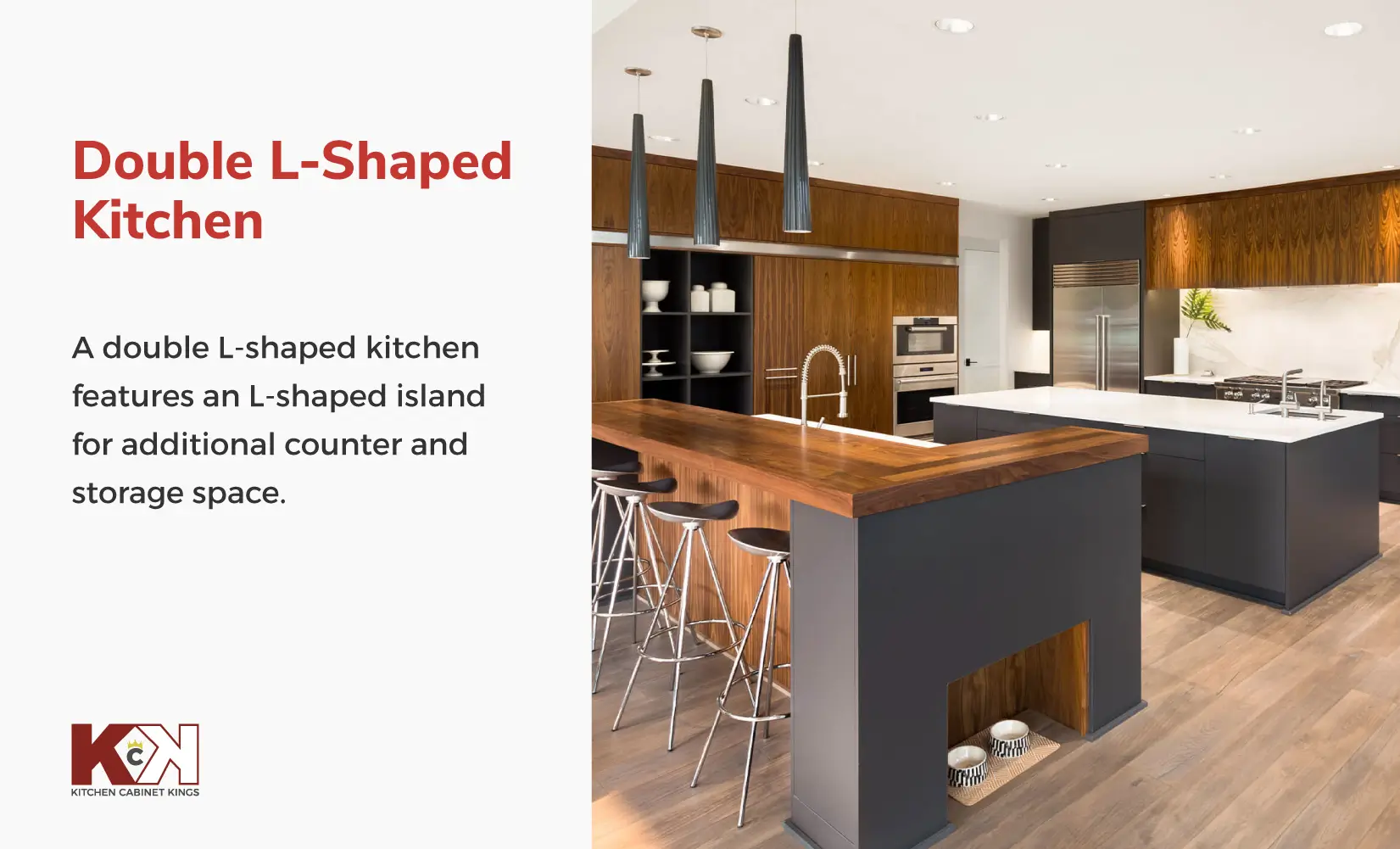
The double L-shaped kitchen design features a classic L-shape layout paired with an L-shaped kitchen island on the opposing side. This creates a rectangular shape with gaps for traffic flow. A double L-shaped layout works best in large kitchens that may need less of an open-concept design to maximize functionality.
L-Shaped Kitchen With Island
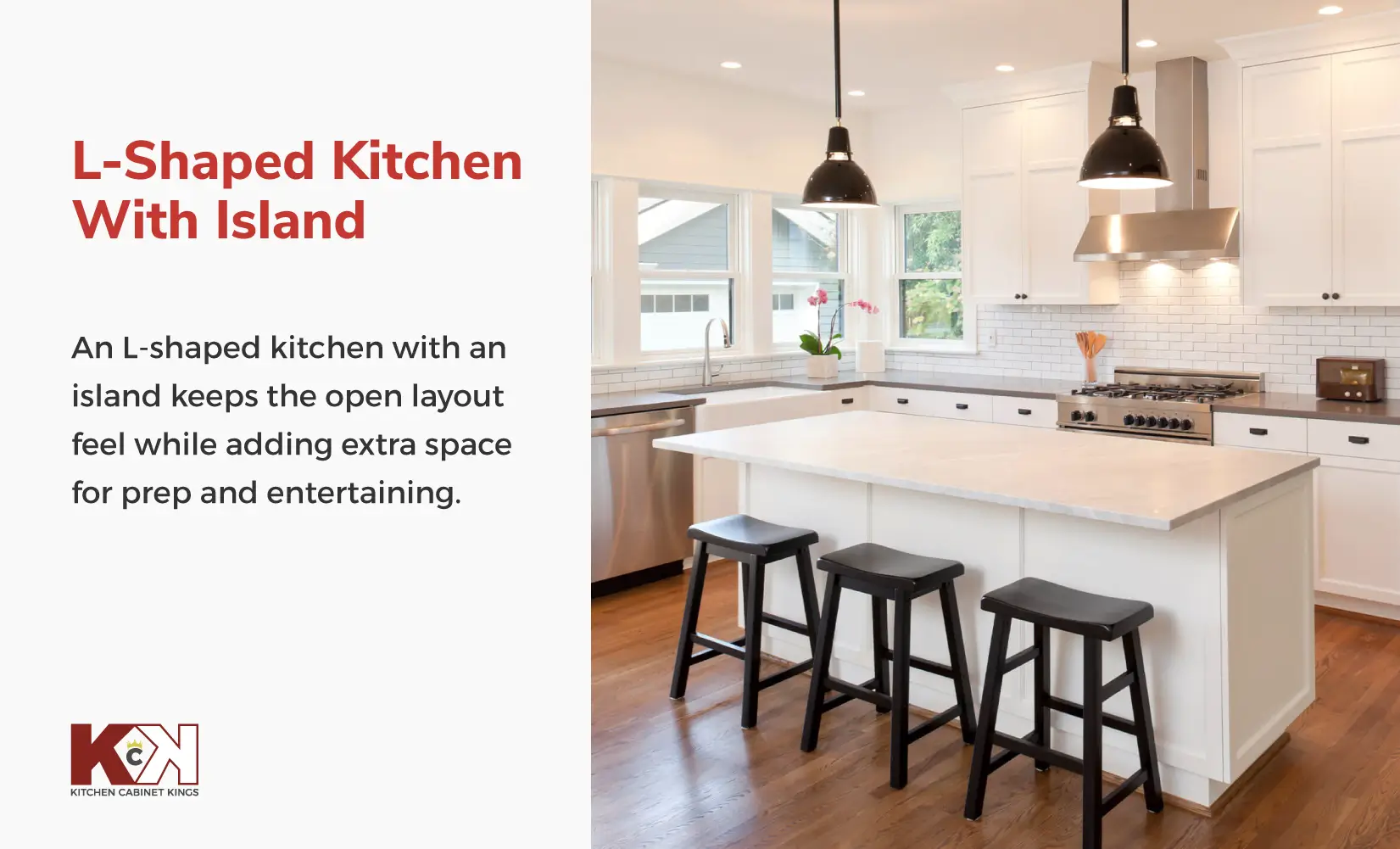
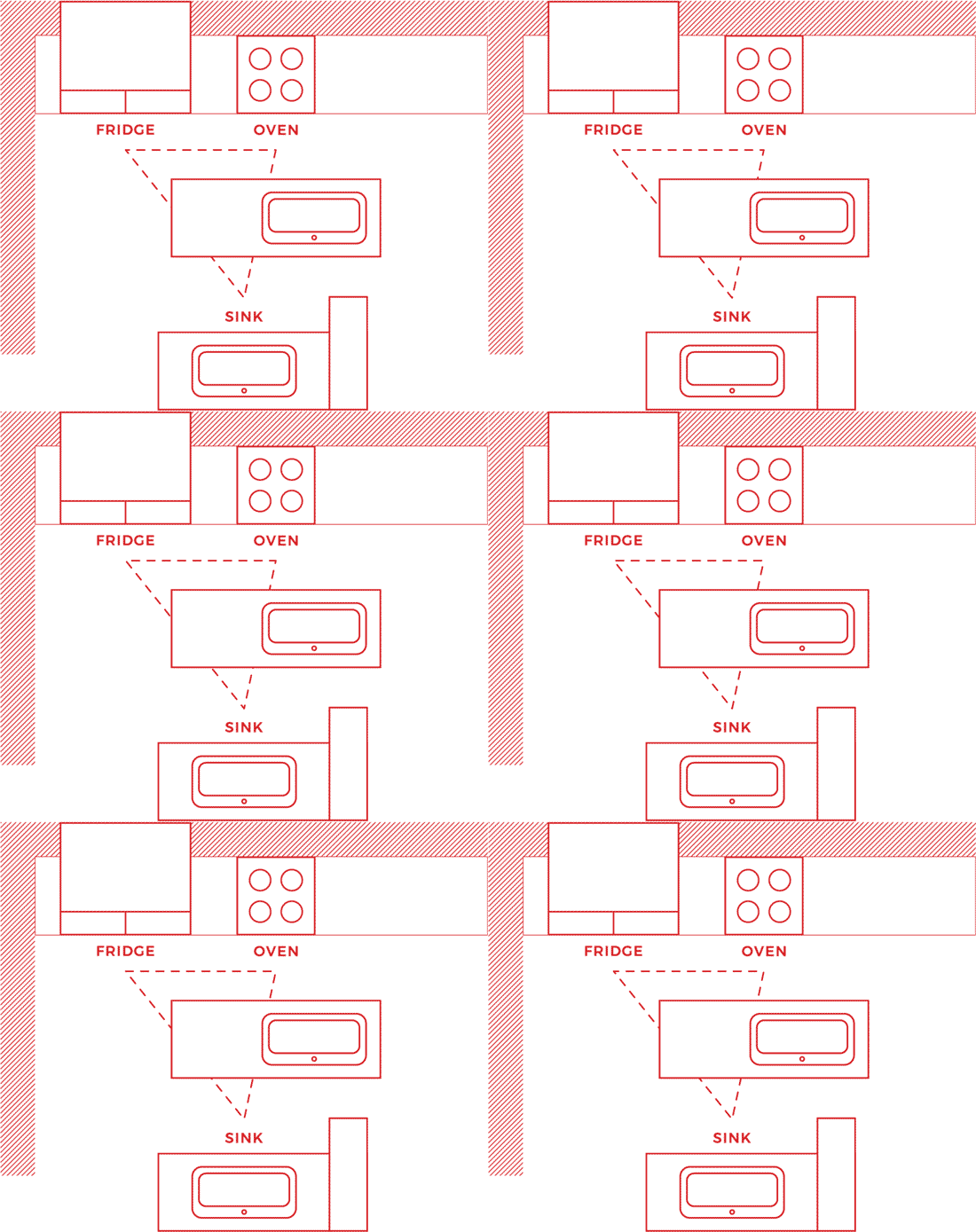
L-shaped kitchen layouts won't always work in large, open kitchens, but one way to make this layout more functional is by adding a kitchen island. An island offers even more cabinet and countertop space, plus an added seating area for quick meals and entertaining.
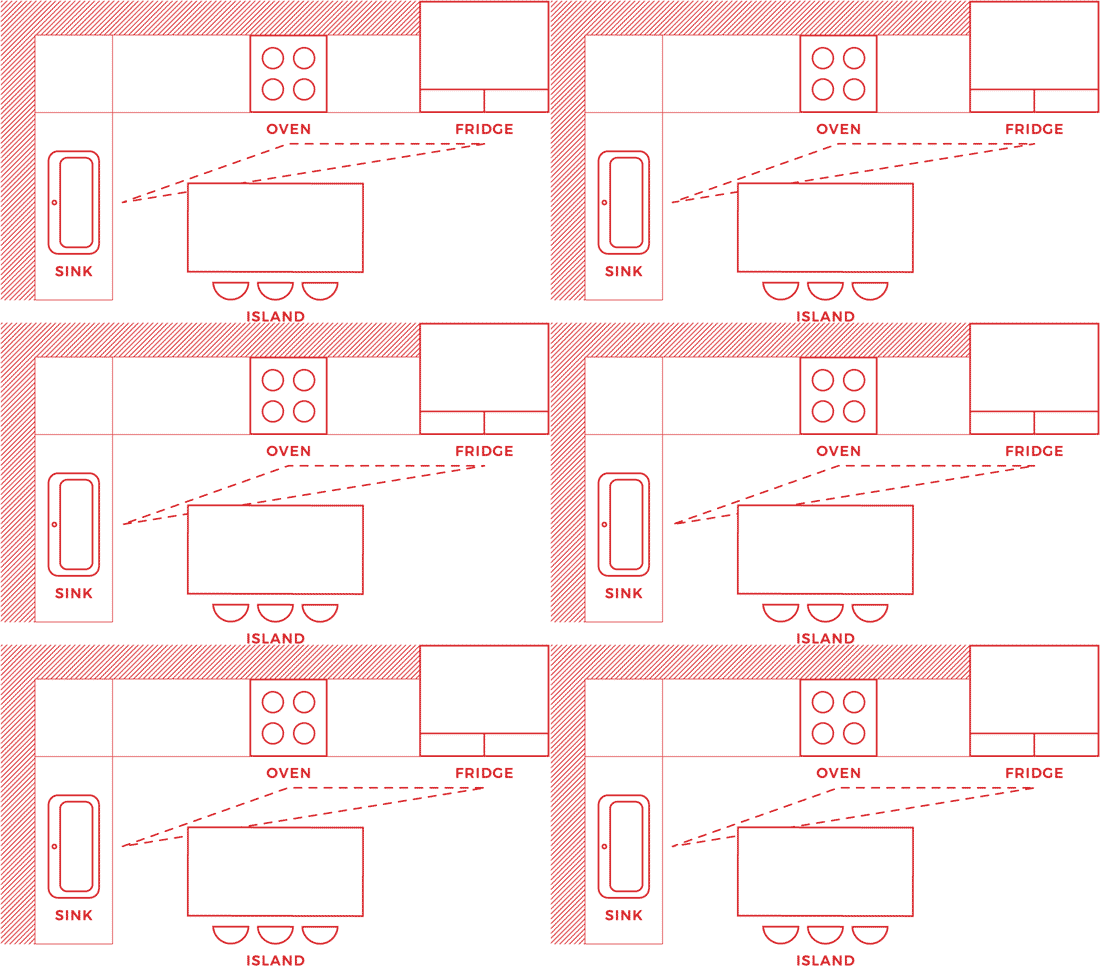
Broken L-Shaped Kitchen
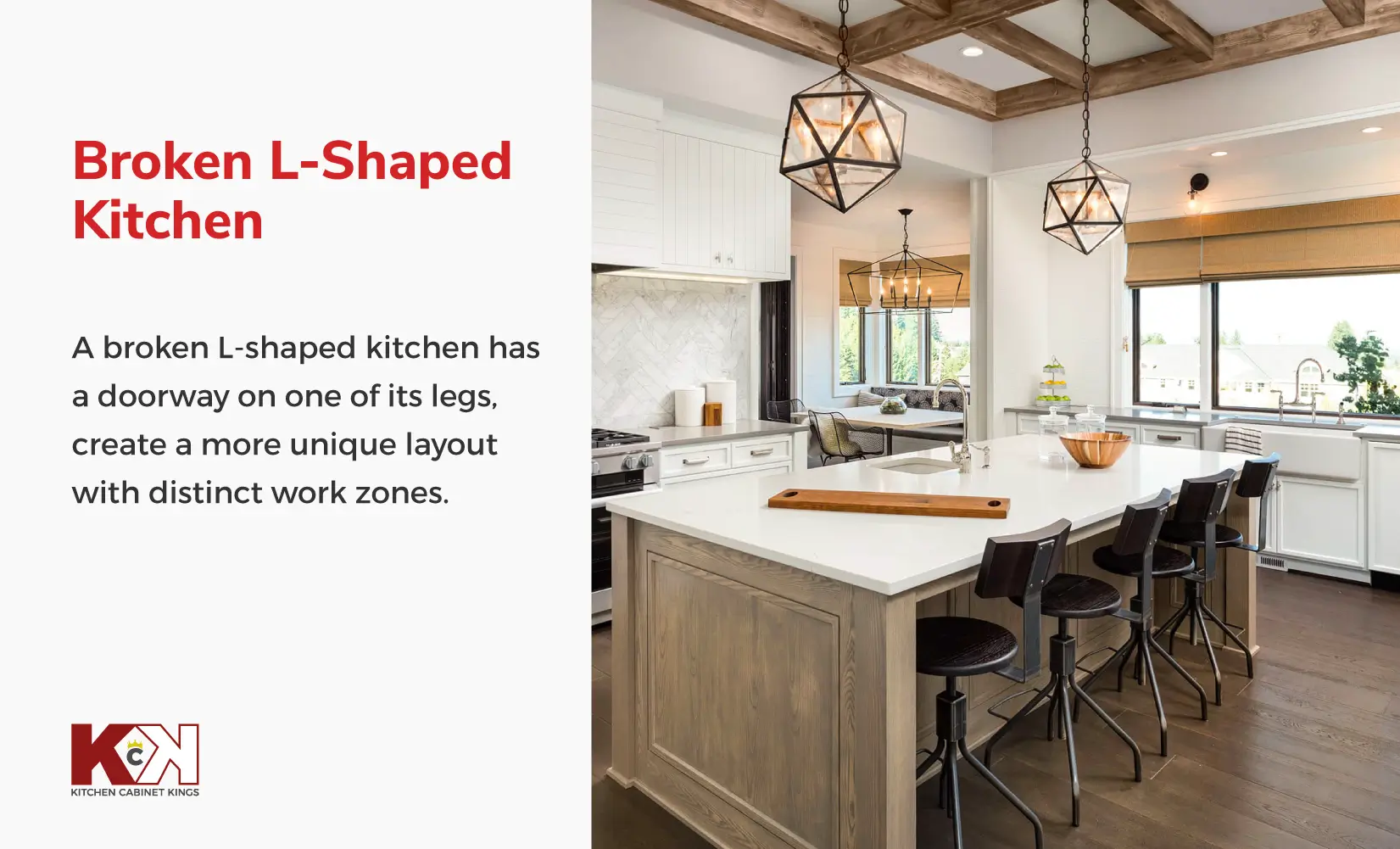
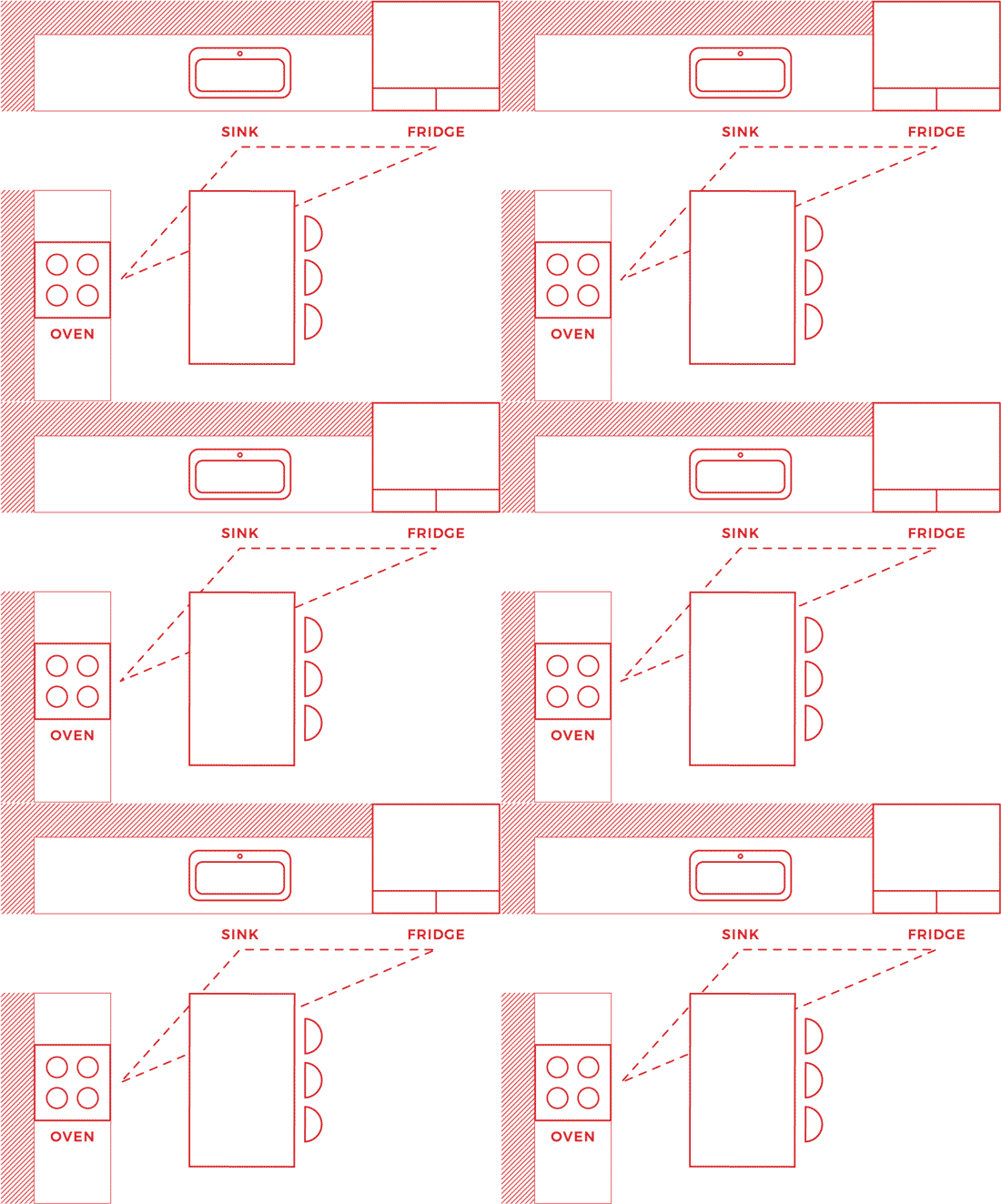
If you have multiple walkways through your kitchen area, a broken L-shaped kitchen might be the best choice for you. A broken L-shaped layout works around entry- and exitways by cutting off counter space and cabinetry, then adding it to adjacent but disconnected walls. This layout still gives you the ability to have a well-spaced work triangle without disrupting the traffic flow in your kitchen.
Pros and Cons of L-Shaped Kitchens
L-shaped kitchens offer numerous benefits for homeowners looking to optimize a small to medium floor plan, but this layout does have its drawbacks. The best kitchen configuration for you will depend on the type of kitchen space you need, how you will use the kitchen, and more. Here are the pros and cons of L-shaped kitchens to help you pick the right kitchen layout for your space.
Pros
- Efficient use of space
- Maximized countertop space
- Well-defined traffic flow
- Flexible layout
- Suitable for open-concept living
- Easy to zone work areas
- Social and interactive cooking environment
Cons
- Potential for wasted corner space
- Limited counter space in large kitchens
- Traffic flow challenges
- Less ideal for multiple cooks
Pros of L-Shaped Kitchens
L-shaped kitchens are one of the most popular kitchen layouts due to their versatility and functional floor plan. Some of the benefits you can expect from an L-shaped design include:
- Efficient use of space: L-shaped kitchens maximize counter and cabinet space, especially in smaller kitchens.
- Maximized countertop space: The two arms provide ample, uninterrupted workspace for food prep, cooking, and serving.
- Well-defined traffic flow: The layout promotes smooth traffic flow with a designated walkway between the counters.
- Flexible layout: L-shaped kitchens can easily incorporate islands or peninsulas for extra functionality.
- Suitable for open-concept living: They visually separate the kitchen while maintaining a connection to the living space.
- Easy-to-zone work areas: The L shape naturally divides the kitchen into designated prep, cooking, and cleaning zones.
- Social and interactive cooking environment: The open layout fosters conversation and connection between the cook and others in the kitchen.
Cons of L-Shaped Kitchens
If you're working with a large space or plan to have multiple cooks working at a time, you may want to consider a different kitchen layout. Some of the drawbacks of L-shaped kitchens include:
- Potential for wasted corner space: While L-shaped kitchens address some corner inefficiencies, awkward base cabinet access in the very corner can still occur.
- Limited counter space in large kitchens: The spread-out nature of the layout in overly spacious rooms might lead to excessive walking between work zones.
- Traffic flow challenges: If there's only one entrance and exit point, an L-shaped layout can create bottlenecks, especially with multiple cooks.
- Less ideal for multiple cooks: Depending on the configuration, there might not be enough workspace for two people to comfortably prepare food side by side.
L-Shaped Kitchen FAQs
Still wondering whether an L-shaped kitchen layout will work best in your space? We answered some of the most frequently asked questions to help you decide.
What is an L-shaped kitchen?
An L-shaped kitchen consists of two sides that come together at a right angle to form the letter "L," as the name suggests. Generally, this design features appliances on one leg of the "L" and a space for prep and storage on the other. An L-shaped kitchen floor plan is ergonomically designed to maximize storage, facilitate the work triangle, and make cooking, cleanup, and traffic as simple as possible in any size kitchen.
What are the advantages and disadvantages of an L-shaped kitchen?
L-shaped kitchens are great for homeowners looking for an efficient open-concept layout with flexible work zones. This layout is ideal for smaller spaces, but large kitchens can benefit from an added kitchen island for even more prep space and storage.
However, L-shaped kitchens aren't always the best solution for your needs. They offer far less countertop and storage space than U- or G-shaped kitchens, and the corner base cabinets can be difficult to work with. This layout also makes it difficult for multiple chefs to work in the same space.
Where do you put appliances in an L-shaped kitchen?
Ideally, your fridge and your oven should be placed in the longest portion of the capital "L" shape. The remaining sink and dishwasher will share the shorter portion of the "L."
Where should a fridge be in an L-shaped kitchen?
The best position for your fridge in an L-shaped kitchen is on either end of the counters. Whether you place your fridge on the long or short end of the "L" is entirely up to you.
L-shaped kitchens offer a compelling blend of practicality and style, making them a popular choice for homeowners. Whether you're captivated by their efficient use of space or drawn to the possibility for creating a social culinary hub, L-shaped kitchens can be tailored to suit your needs and preferences.
Ready to transform your L-shaped vision into reality? Kitchen Cabinet Kings boasts a vast selection of affordable RTA and assembled cabinets that'll match your style and budget. Shop kitchen cabinets online and find the perfect cabinets to elevate your L-shaped kitchen to new heights.
%20rotate(90)'/%3e%3cline%20class='cls-3'%20x1='40.78'%20y1='16.5'%20x2='40.78'%20y2='26.45'/%3e%3cline%20class='cls-3'%20x1='138.84'%20y1='7.58'%20x2='138.84'%20y2='48.52'/%3e%3cline%20class='cls-3'%20x1='178.45'%20y1='40.96'%20x2='138.84'%20y2='40.96'/%3e%3c/svg%3e)

%20rotate(-90)'/%3e%3cline%20class='cls-3'%20x1='62.77'%20y1='169.74'%20x2='62.77'%20y2='159.79'/%3e%3cline%20class='cls-3'%20x1='92.1'%20y1='178.49'%20x2='92.1'%20y2='137.51'/%3e%3cline%20class='cls-3'%20x1='33.43'%20y1='178.49'%20x2='33.43'%20y2='137.51'/%3e%3c/svg%3e)
%20rotate(90)'/%3e%3cline%20class='cls-3'%20x1='40.78'%20y1='17.05'%20x2='40.78'%20y2='27'/%3e%3cline%20class='cls-3'%20x1='138.84'%20y1='8.13'%20x2='138.84'%20y2='49.07'/%3e%3cline%20class='cls-3'%20x1='178.45'%20y1='41.51'%20x2='138.84'%20y2='41.51'/%3e%3c/svg%3e)