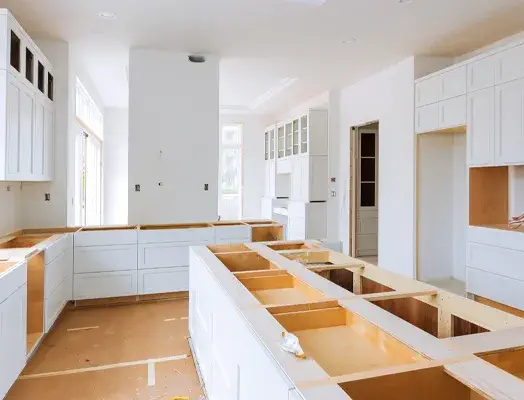

How Long Does a Kitchen Remodel Take? (Timeline + Scheduling Tips)
By: Andrew Saladino |  9 min
9 min
Last Updated: June 16th, 2024

The allure of a brand-new kitchen is undeniable. But between building your dream kitchen mood board and the first satisfied sigh after the project's completion lies the question: How long does a kitchen remodel take?
The answer isn't exactly simple. While some kitchen renovations can be whipped up in as little as a month, others involving major structural changes can stretch into six months or more. Keep reading to learn the factors that influence your kitchen remodel timeline and how to plan the roadmap to your perfect culinary space.
Table of Contents
How Long Does It Take To Remodel a Kitchen?
| Scope | Includes | Timeframe |
|---|---|---|
| Minor refresh | Updated hardware, paint, backsplash | 1-2 months |
| Moderate remodel | New appliances, countertops, flooring | 2-4 months |
| Major remodel | New kitchen layout, plumbing and electrical, custom cabinetry | 4-6+ months |
The timeframe for your kitchen remodel can vary widely depending on the project's scope, contractor availability, material shipping times, and more. Simple cosmetic updates might take as little as a month to complete, while major renovations can take upwards of six months or longer.
We broke down the average kitchen remodel timelines by scope for a better idea of how long your remodel could take.
Minor Kitchen Refresh (1-2 Months)

A minor remodel can breathe new life into your space in a relatively short timeframe. These projects typically take one to two months to complete, making them ideal for those seeking a quick update.
A minor kitchen refresh might include:
- New cabinet hardware
- Freshly painted walls and cabinets
- New cabinet doors and drawers, keeping the existing cabinet frame
- Updated backsplash
- Upgraded light fixtures, keeping existing wiring
Moderate Kitchen Remodel (2-4 Months)

A moderate remodel strikes a balance between refreshing the aesthetics and adding some much-needed functional improvements to your kitchen. This level of renovation typically takes two to four months to complete. During this time, you can expect to see significant changes in your space, but the kitchen layout will largely stay the same.
In addition to the updates involved during a minor refresh, a moderate kitchen remodel might also include:
- Upgraded appliances
- New countertops
- New cabinets and cabinet boxes
- Updated flooring
- Minor layout tweaks
Complete Kitchen Overhaul (4-6+ Months)

An extensive kitchen remodel tackles the core of your space, taking anywhere from four to six months (or longer) to complete. This level of remodeling involves a lot of moving parts that require careful planning and professional expertise to complete. You'll also need to apply for the proper permits for your project, which could take anywhere from a month to six weeks.
A major kitchen remodel includes:
- Major layout changes and walls moved
- Rerouted electrical and plumbing systems
- New custom cabinetry, countertops, appliances, and flooring
How To Set Your Remodeling Schedule

To navigate a significant or major renovation process as smoothly as possible, you'll need a thorough schedule. This section will guide you through setting a realistic timeline for your project, taking each design phase into account.
1. Planning and Design (2-3 Months)
The planning and design phase is the cornerstone of your kitchen remodel — it's where your dream kitchen takes shape on paper (or screen) before transforming into reality. Expect to dedicate two to three months to this crucial stage.
Here's a breakdown of the typical timeframe for each element:
- Initial consultation and measurements (1 week): Meet with contractors or designers to discuss your vision and get a baseline understanding of the project scope. They'll also take precise measurements of your kitchen.
- Develop design concept and mood board (2-3 weeks): Collaborate with your designer to brainstorm ideas, explore layouts, and finalize a design concept that reflects your style and needs.
- Refine design and create drawings (2-4 weeks): Work with your designer to refine the chosen concept and finalize the layout. Your designer will create detailed drawings to ensure everything fits perfectly in your space.
- Material selection and specifications (1-2 weeks): Select the specific materials for your kitchen, like cabinets, countertops, flooring, and appliances. This stage involves finalizing color schemes, finishes, and hardware selections.
- Permitting and HOA approval (varies): Depending on the complexity of your remodel, you might need permits from your local building department. Additionally, securing approval from a homeowners association (HOA) can add time if applicable.

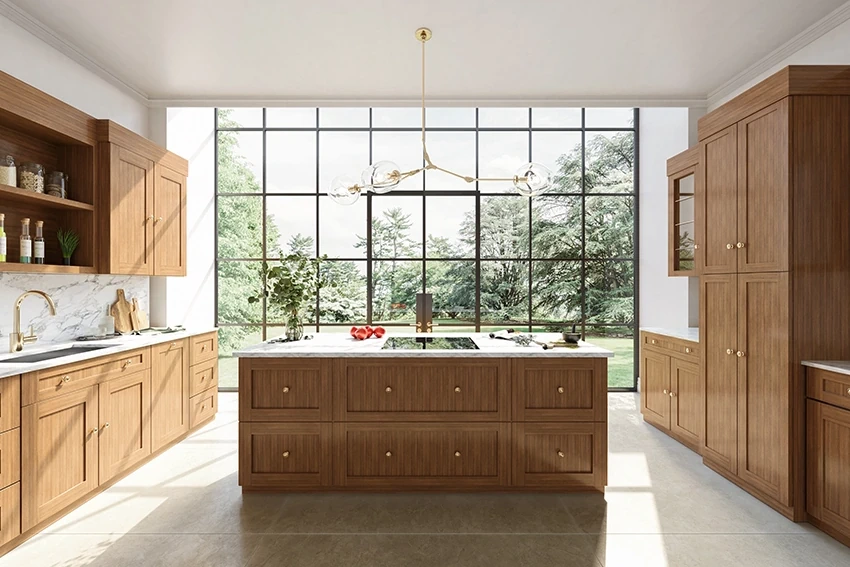
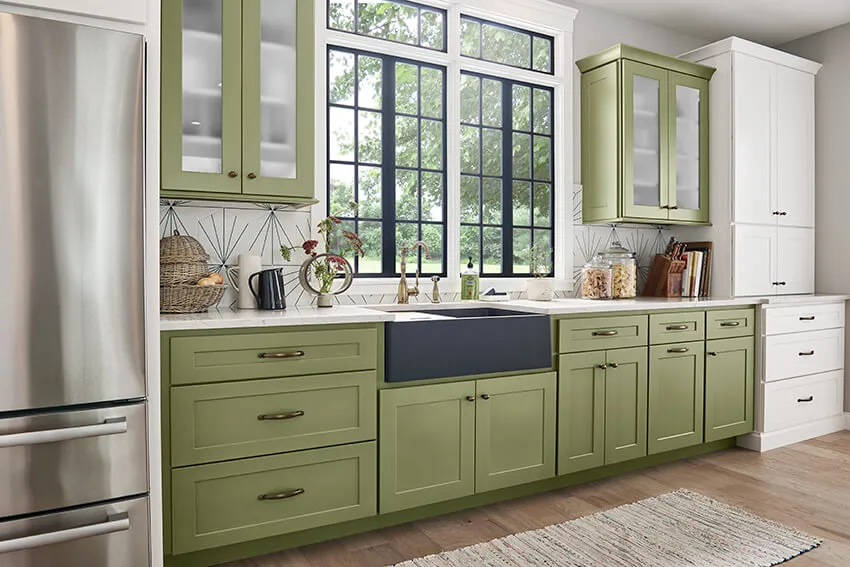
Looking for design ideas? Browse our kitchen and bathroom cabinet gallery.
Get Inspired2. Demolition (1-2 Weeks)
The demolition phase marks the transition from planning to action in your kitchen remodel. In this stage, you'll prep your old kitchen to make way for the new and improved one. This process typically takes one to two weeks, with the following contributing to the overall timeframe:
- Remove existing cabinets and countertops (2-3 days): Dismantle and haul away existing cabinets and countertops.
- Demolish flooring and backsplash (1-2 days): Remove the old flooring and backsplash to expose the subfloor and walls beneath.
- Disconnect plumbing and electrical (1-2 days): Shut off and disconnect the plumbing and electrical connections to your existing appliances and fixtures.
- Remove appliances (1 day): Carefully disconnect and remove appliances from the kitchen.
- Haul away debris (1-2 days): Haul away all the removed materials from the worksite, including cabinets, countertops, flooring, and appliances, for disposal.
3. Rough-in (1-2 Weeks)
The rough-in phase might not be the most glamorous stage of your kitchen remodel, but it sets the foundation for your new plumbing, electrical, and ventilation systems. This stage typically takes one to two weeks to complete the following:
- Install new plumbing lines (1-2 days): Install new plumbing lines for your sink, dishwasher, garbage disposal, and any other plumbing fixtures included in your remodel plan.
- Install new electrical wiring (1-2 days): Electricians will install new electrical wiring to accommodate your lighting plan, outlets for appliances, and any additional features like under cabinet lighting.
- Install ventilation system (1-2 days): A new ventilation system, or modifications to your existing one, may be necessary depending on your cooktop or range selection. This ensures proper ventilation to remove smoke and odors while cooking.
- Insulate walls and ceiling (varies): Insulation may be added to your walls and ceiling during this phase to improve energy efficiency. The timeframe for this can vary depending on the extent of insulation needed and the ease of access.
4. Installation (2-3 Weeks)
The installation phase is when your kitchen remodel truly starts to take shape. Here, the groundwork laid during the demolition and rough-in phases transforms into the beautiful and functional space you envisioned. This stage typically takes two to six weeks, depending on the complexity of your project.
Here's a breakdown of what's completed during installation:
- Cabinet installation (1-3 days): Carefully place and secure the new cabinets according to the finalized layout.
- Countertop installation (1-2 days): Measure, cut, and install the countertops on top of the new cabinets.
- Appliance installation (1-2 days): Professionals deliver and install new appliances.
- Flooring installation (2-4 days): Lay new flooring material, such as tile, hardwood, or laminate, throughout the kitchen space.
- Backsplash installation (1-2 days): Install backsplash tiles or panels. Intricate backsplashes may require more time.
5. Finishing Touches (1-2 Weeks)
Once installation is out of the way, it's time to add the cherry on top of your kitchen remodel. In this one-to-two-week stage, the final details come together to transform your newly installed elements into a cohesive and polished space.
Here's what you can expect:
- Paint and trim (2-4 days): Fresh paint on the walls and trim adds a finished look and complements your chosen color scheme.
- Hardware installation (1-2 days): Install cabinet knobs, pulls, drawer handles, and other hardware for both function and aesthetics.
- Sink and faucet installation (1 day): Carefully install and plumb the new sink and faucet for proper water flow and drainage.
- Light fixture installation (1 day): Install pendant lights, recessed lighting, or under cabinet lighting to illuminate your kitchen and create the perfect ambiance.
- Final touches (1 day): Add the final flourishes, such as organizing your new kitchen cabinets, displaying countertop decor, cleaning up debris, and ensuring everything functions flawlessly.
What To Keep in Mind When Planning Your Kitchen Renovation Timeline

Even the most meticulously planned kitchen remodel can encounter unforeseen delays. Here are some key factors that can impact your timeline:
- Project complexity: Extensive demolition, custom built-ins, or structural changes like moving walls or plumbing will naturally add significant time to your project.
- Lead times for materials: Certain materials, like custom cabinets or high-end appliances, may have longer wait times due to manufacturing or shipping delays. Factor this in when finalizing your selections.
- Contractor availability: Finding qualified professionals during peak renovation seasons (spring and summer) can be more challenging and may impact scheduling. Be flexible with your start date if possible, or consider starting the planning process well in advance of busy seasons.
- Unexpected issues: During demolition, hidden problems like mold, asbestos, or damaged wiring can come to light. Addressing these issues will take additional time, and you may need to make adjustments to your remodeling budget to cover unforeseen costs.
Tips for Sticking to Your Schedule
A well-defined schedule is your roadmap to a smooth kitchen remodel. Here are some key strategies to keep your project on track:
- Define your scope and timeline: Clearly identify the extent of your remodel and your desired timeframe for completion. This first step sets the foundation for realistic planning.
- Consider lead times and availability: Factor in potential wait times for materials and the availability of qualified contractors during your planning phase. You may be able to save time here by planning your renovation during the off-season (fall and winter).
- Build in buffer time: Unexpected issues are a reality in any renovation project. Including buffer time in your schedule allows you to address these unforeseen events without derailing your entire timeline.
- Prioritize clear communication: Maintain open and consistent communication with your contractor throughout the entire project. Discuss your expectations, potential roadblocks, and any adjustments that may be necessary to stick to your schedule.
Tip: Order high-quality RTA or assembled cabinets from Kitchen Cabinet Kings and receive your cabinets in as little as seven days.
Kitchen Remodel Scheduling FAQs
Still have a few lingering questions about how long it takes to remodel a kitchen? Here are answers to a few of the most common questions about remodeling timelines.
Can I shorten the remodel timeline?
There might be some wiggle room to expedite your remodel, but it depends on the specific factors impacting your timeline. For instance, opting for ready-to-assemble or pre-assembled stock cabinets instead of custom-made ones can reduce lead times.
However, significantly reducing the overall timeframe might be unrealistic. Rushing the process could compromise quality or lead to unforeseen issues down the road. Discuss these trade-offs with your contractor to find the best balance between speed and a high-quality finished product.
What should I do while my kitchen is under construction?
Living without a fully functional kitchen can be challenging. To make things easier, set up a temporary kitchen in another area of your home before your remodel. Use a microwave, toaster oven, and hot plate for basic cooking needs. Disposable plates and utensils can also come in handy during this time. If possible, plan meals around takeout or eating out occasionally.
What happens if my remodel takes longer than expected?
Even a well-defined schedule can't always protect against unexpected delays. Before you break ground on your project, put a communication plan with your contractor in your contract.
This plan should outline how you'll be notified of any delays and potential adjustments to the timeline. It should also cover potential financial implications of extended timelines, such as additional material storage costs or extended dumpster rental fees.
With a realistic understanding of your kitchen remodel timeline, you can build a comprehensive schedule that keeps your project on track and your dream kitchen within reach.
Our expert NKBA-certified designers can help you jump-start the planning process with a complimentary 3D kitchen design customized to your space. Simply send us your kitchen measurements and the cabinet door styles you have in mind, and we'll do the rest.