

Galley Kitchen Layout: 21+ Design Ideas and Tips
By: Andrew Saladino |  10 min
Last Updated: November 18th, 2024
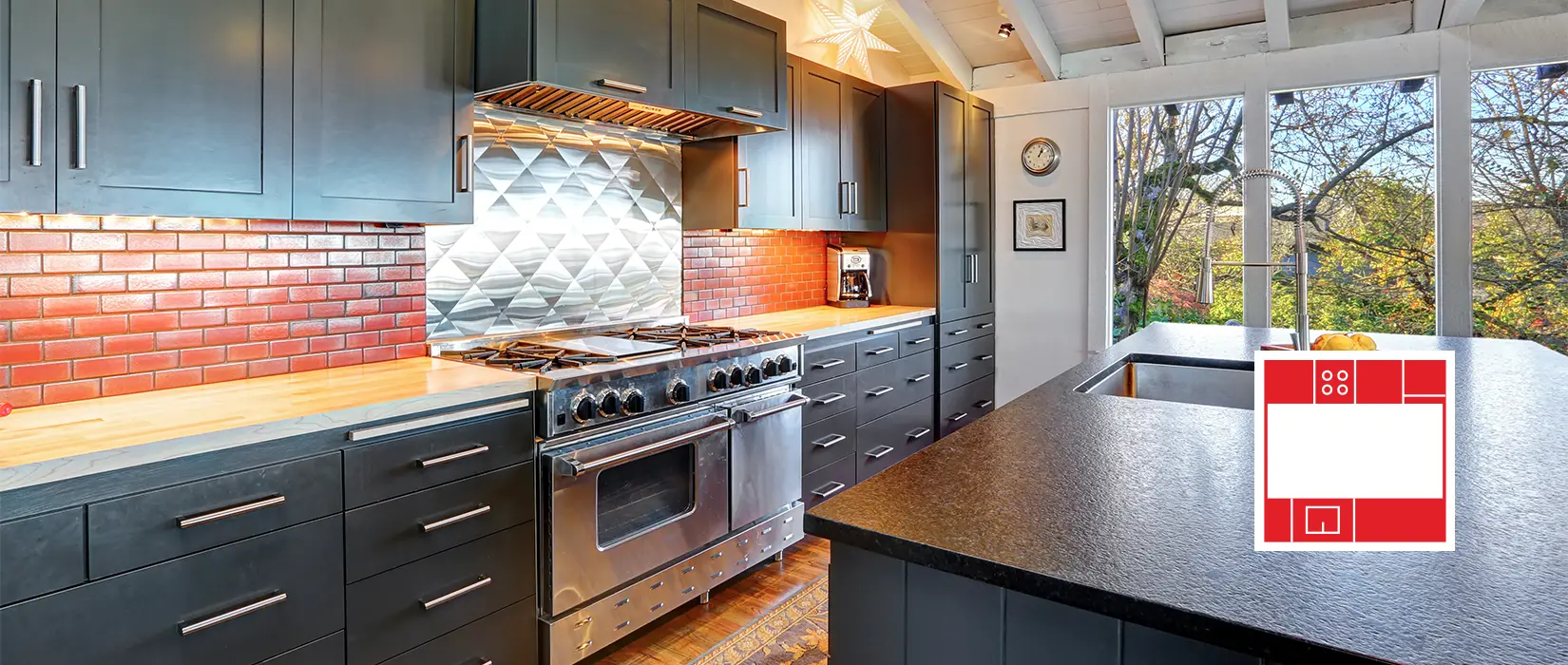
Ever dreamed of having a kitchen as efficient as a professional chef's workspace despite being limited on space? Look no further than a galley kitchen layout.
Defined by two parallel runs of countertops facing each other with a central walkway, galley kitchens maximize functionality in compact areas. Originally found on ships and trains, these clever layouts have become a popular choice for modern homes thanks to their emphasis on creating an efficient workflow.
This comprehensive guide dives into everything you need to know about galley kitchens, from design tips for both symmetrical and asymmetrical layouts to incorporating a kitchen island for a more open feel.
Galley Kitchen Design Ideas
Ready to unleash your inner designer and create a galley kitchen that's both stylish and functional? Check out these design ideas to elevate your galley kitchen, from maximizing storage solutions to incorporating space-saving tricks.
1. Skip the Wall Cabinets
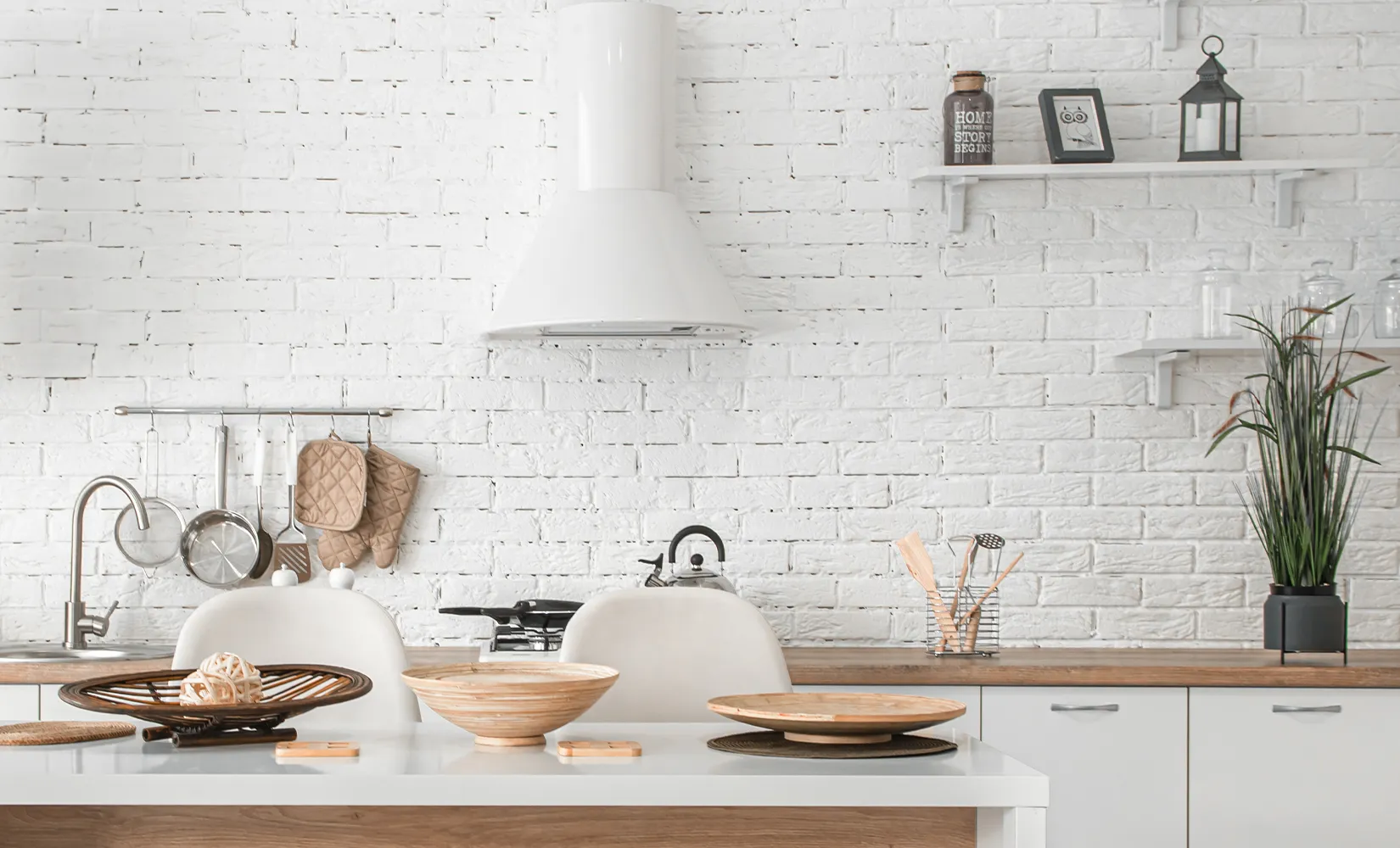
Keep your corridor kitchen feeling light and bright by omitting the wall cabinets and opting for crisp white walls instead. If you don’t mind losing a bit of storage space, reserving cabinets for the bottom half of your kitchen will keep it from feeling cramped and boxed in.
2. Hang Open Shelves
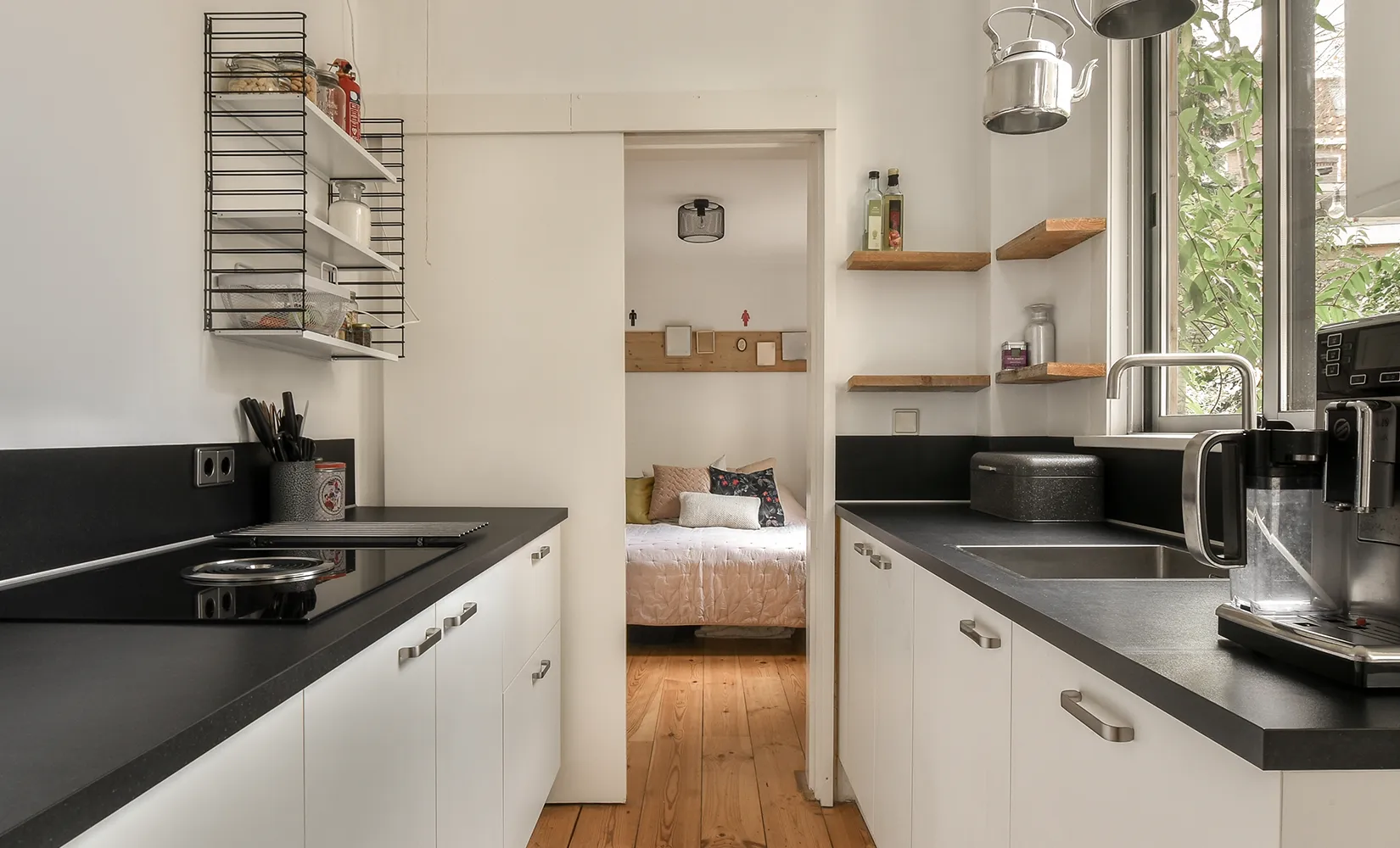
If you aren’t keen on totally doing away with upper wall storage, try installing open shelving instead. You’ll be able to display your most aesthetically pleasing cookware and dishes while keeping your layout looking spacious.
3. Let In All the Light
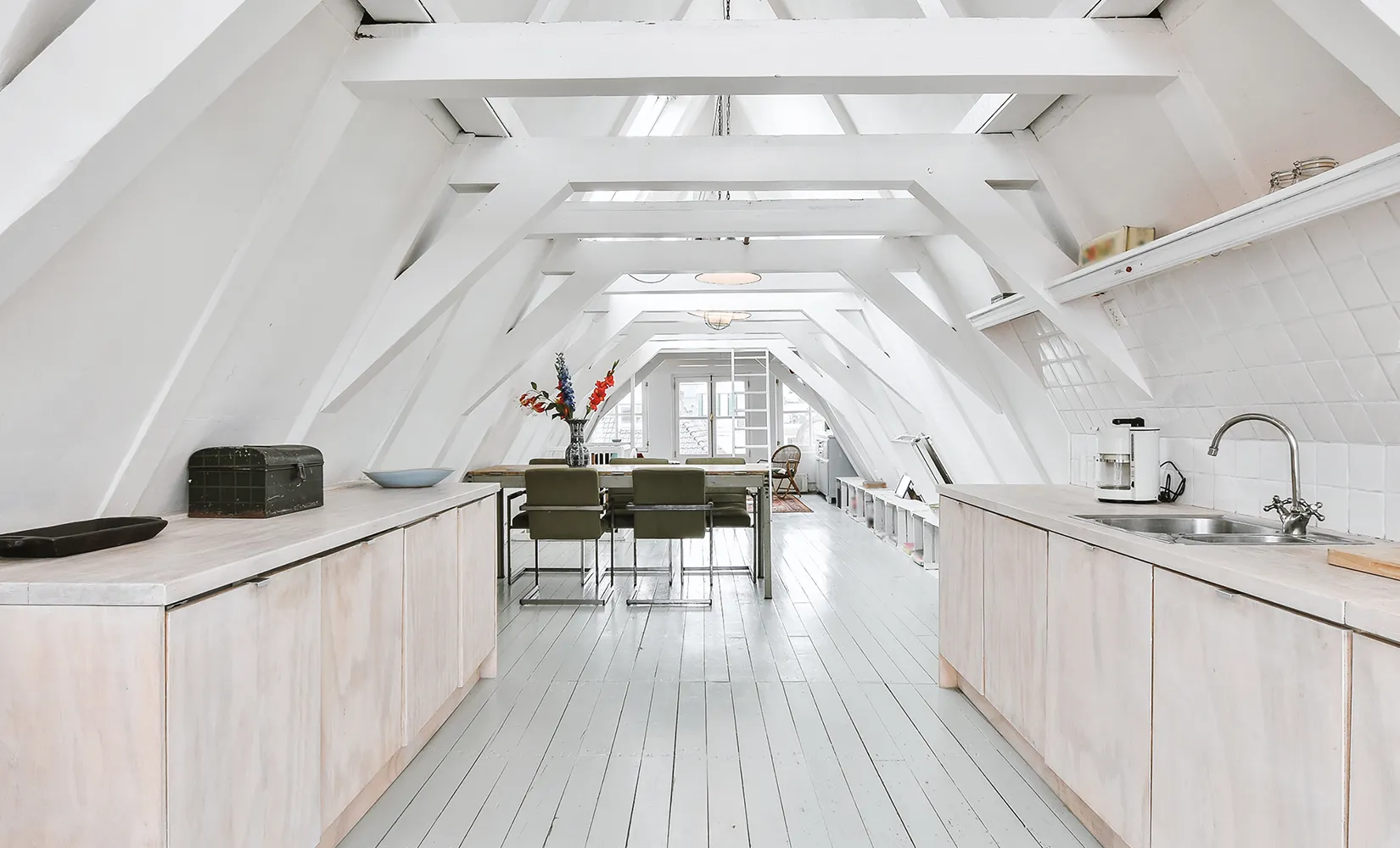
One of the best ways to make a narrow galley layout feel less constricting is by playing up your kitchen’s natural light. If you can’t incorporate a large central window, add peekaboo windows underneath your wall cabinets or skylights to let in light from above.
4. Keep It Minimal
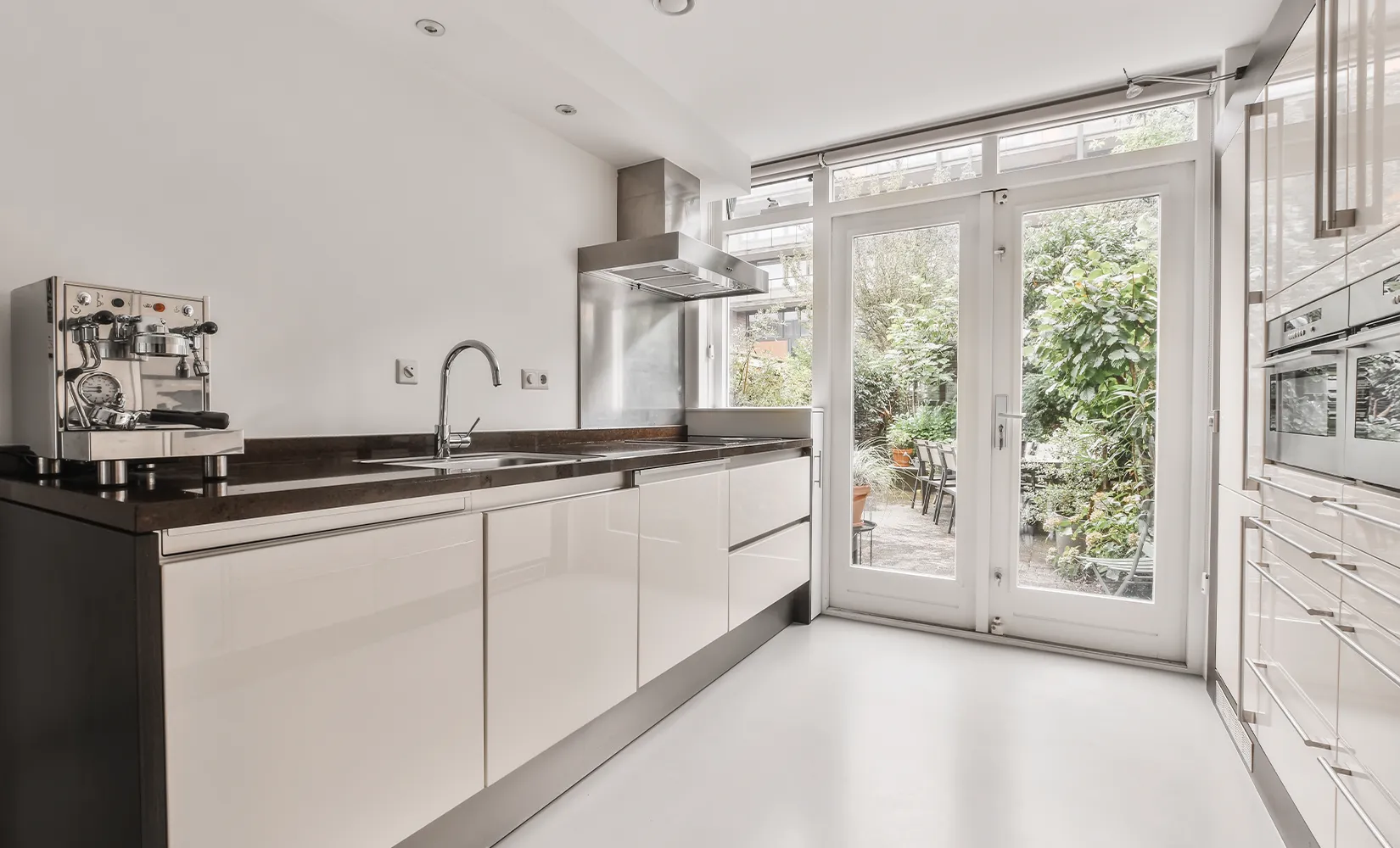
Nothing makes a space feel smaller than unnecessary clutter. Limit patterns, bright colors, and added decor to just one or two statement elements. Additionally, tuck small appliances away in an appliance garage or shelf to keep your counters clear and functional.
5. Add an Interior Window

Craving an open-concept layout without having to knock out a wall? Cut out an interior window or opt for a half wall so you can look out to the rest of your living area while you cook. An interior window will also allow you to construct a breakfast bar by placing stools on the other side.
6. Integrate Appliances
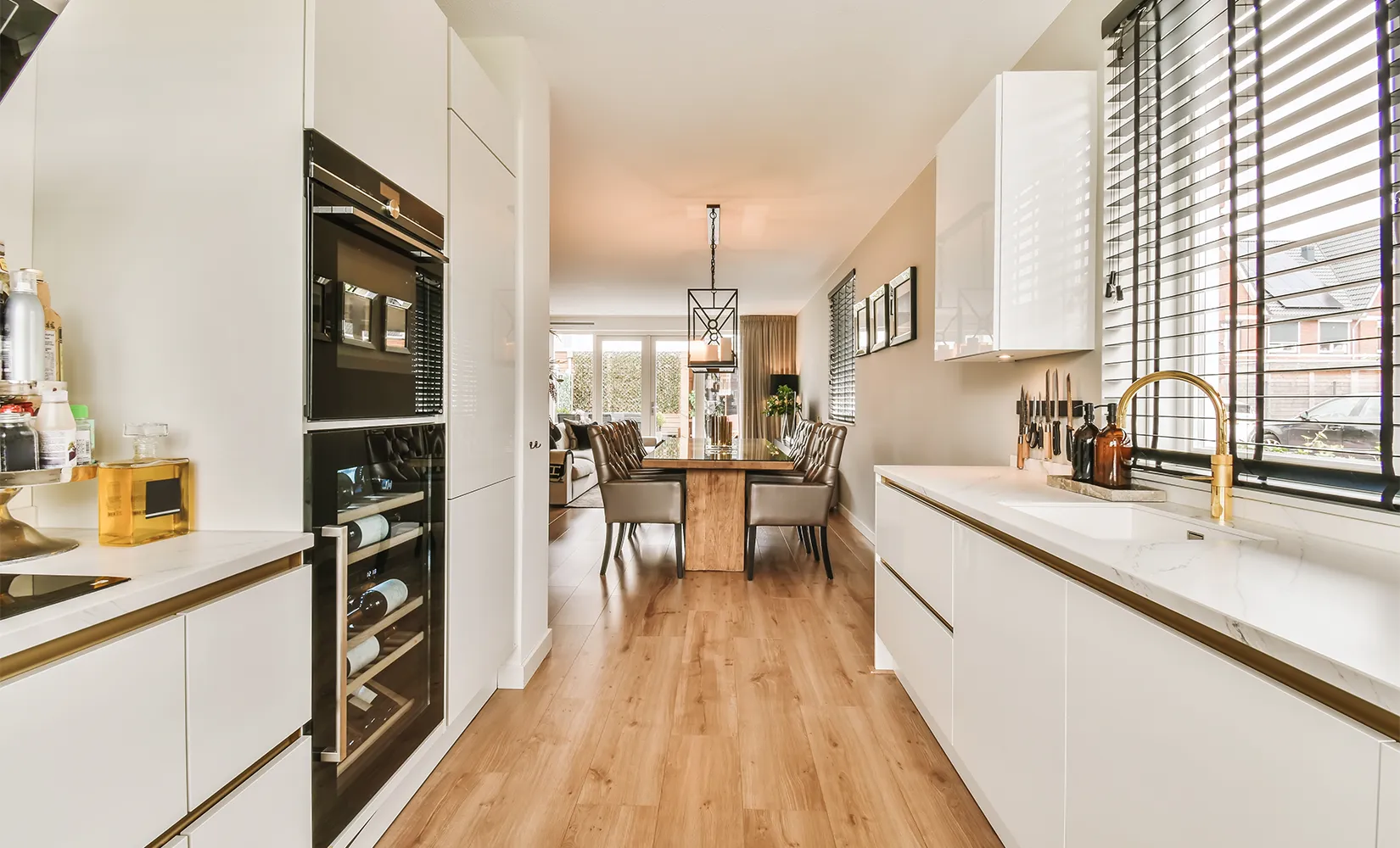
Create a sleek, seamless design by installing integrated kitchen appliances. These appliances sit flush with your kitchen cabinets, eliminating unsightly gaps and wiring. You can even choose the same panels used for cabinets to disguise large appliances as part of your cabinet configuration.
7. Think Safe
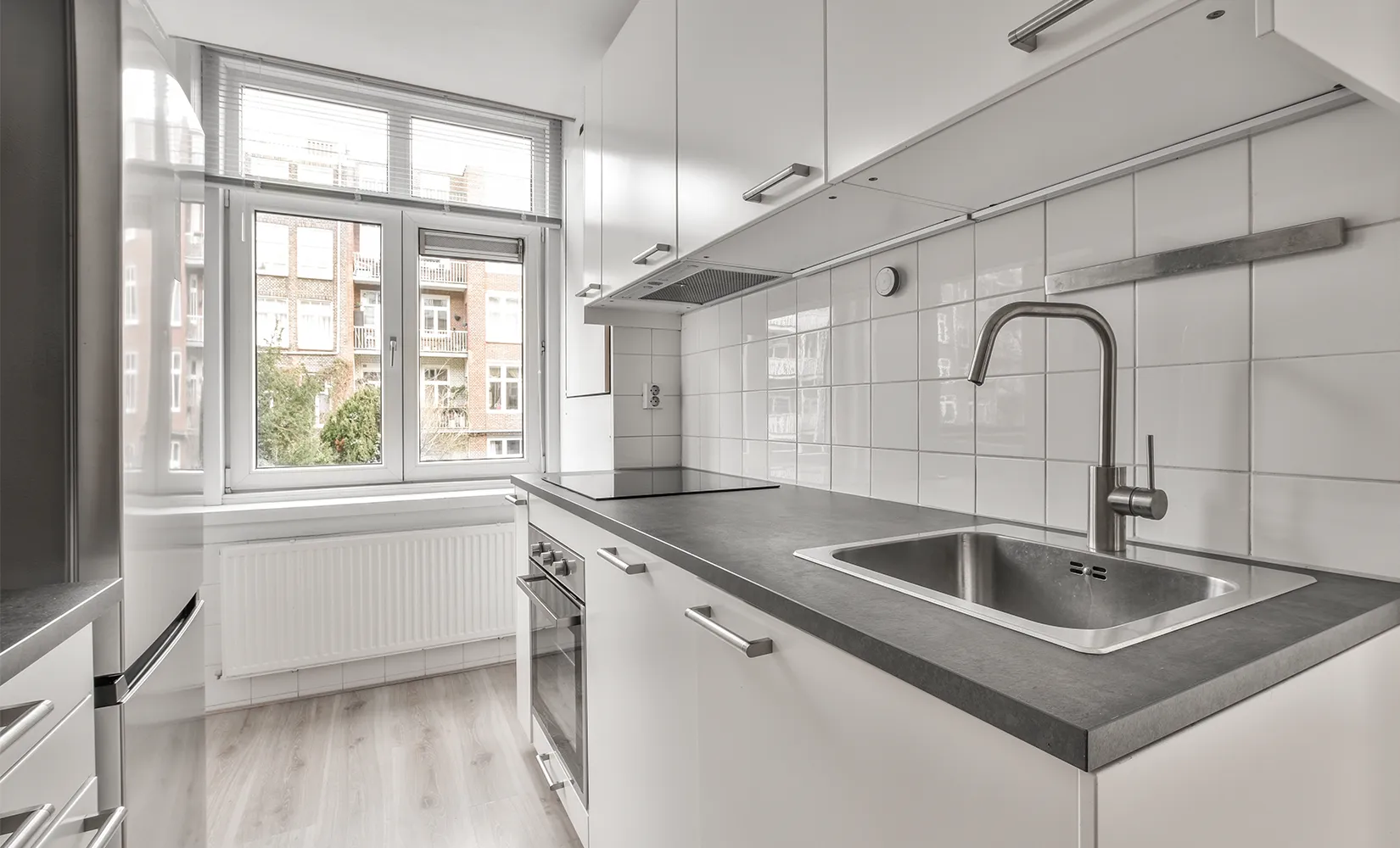
If you’re rearranging your layout, keep safety top of mind. Place your sink and cooktop on the same run so you won’t have to cross the corridor with sharp knives or pots of boiling water.
8. Illuminate Your Walkway
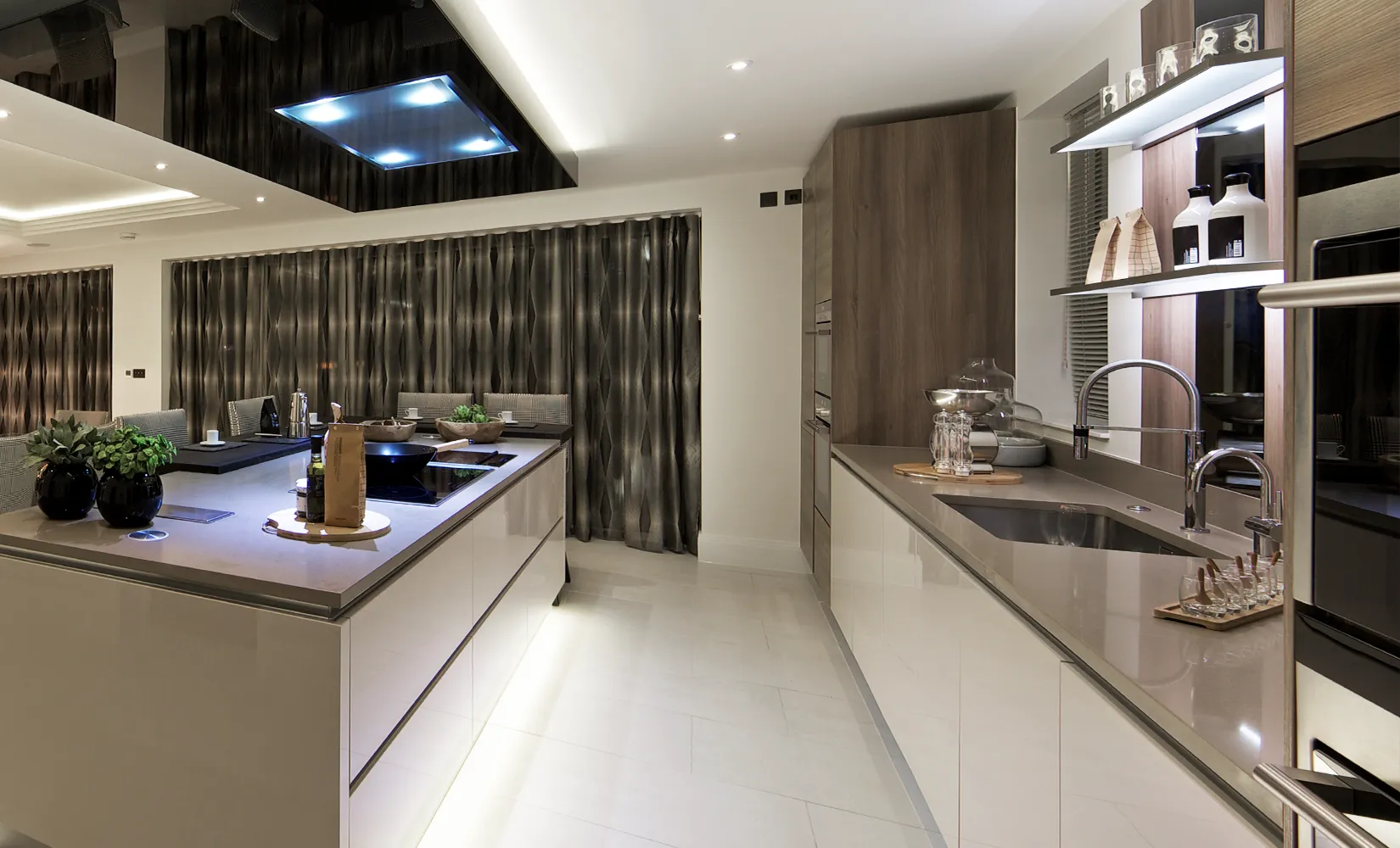
While most kitchen layouts focus statement lighting above the entertaining or eating areas, you’ll want to illuminate the corridor in a symmetrical galley kitchen design. This is especially important if your kitchen is closed off to the rest of the home or connects two rooms.
9. Play Up the Charm With Vintage Elements
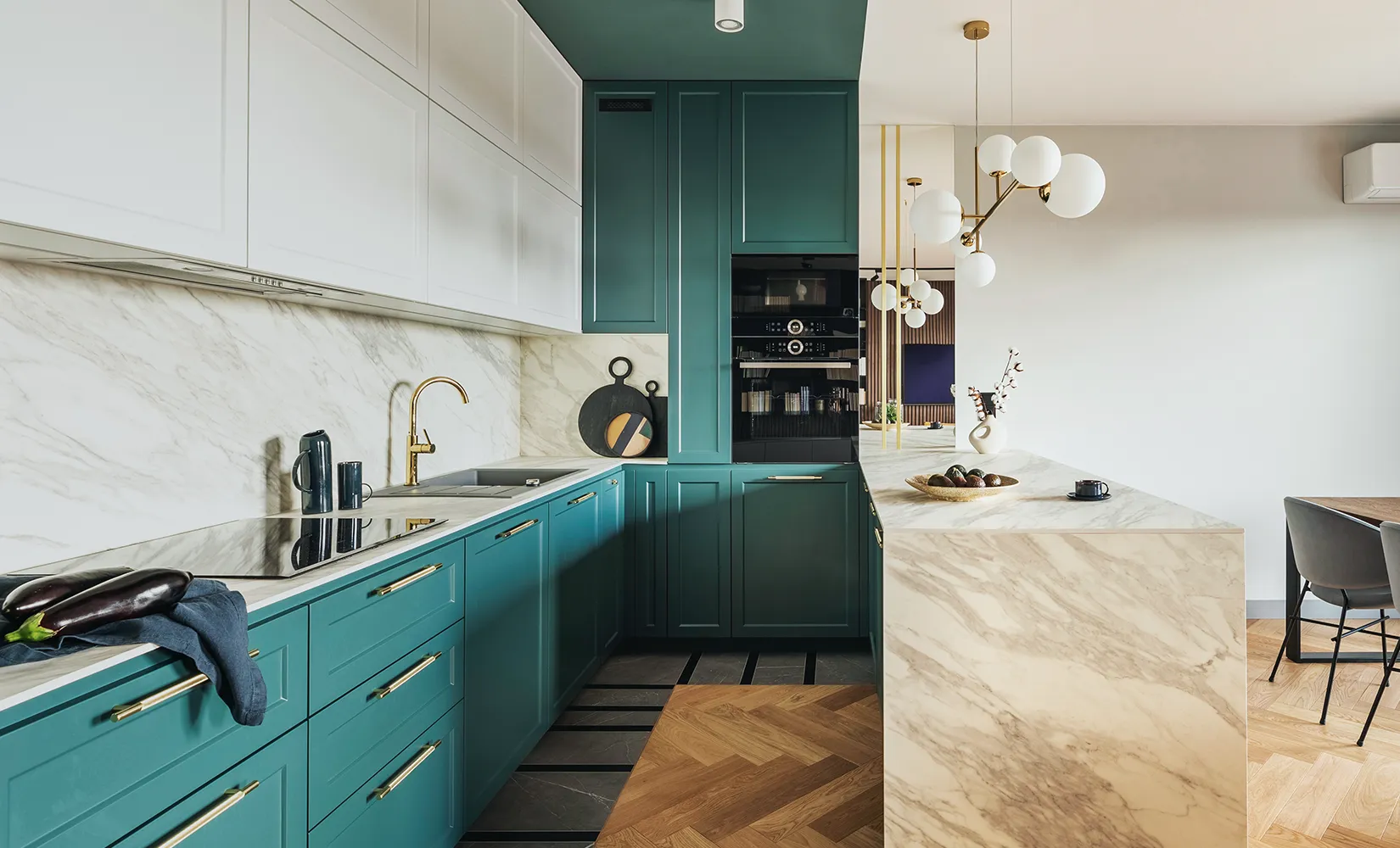
Symmetrical galley kitchen layouts are often found in homes built in the 1900s. While these kitchens could likely benefit from a modern facelift, preserve some of their original charm by opting for vintage-style cabinet hardware and appliances. Bonus points if you’re able to repurpose the original cabinets, hardware, molding, or floors!
10. Mix and Match Your Storage Units
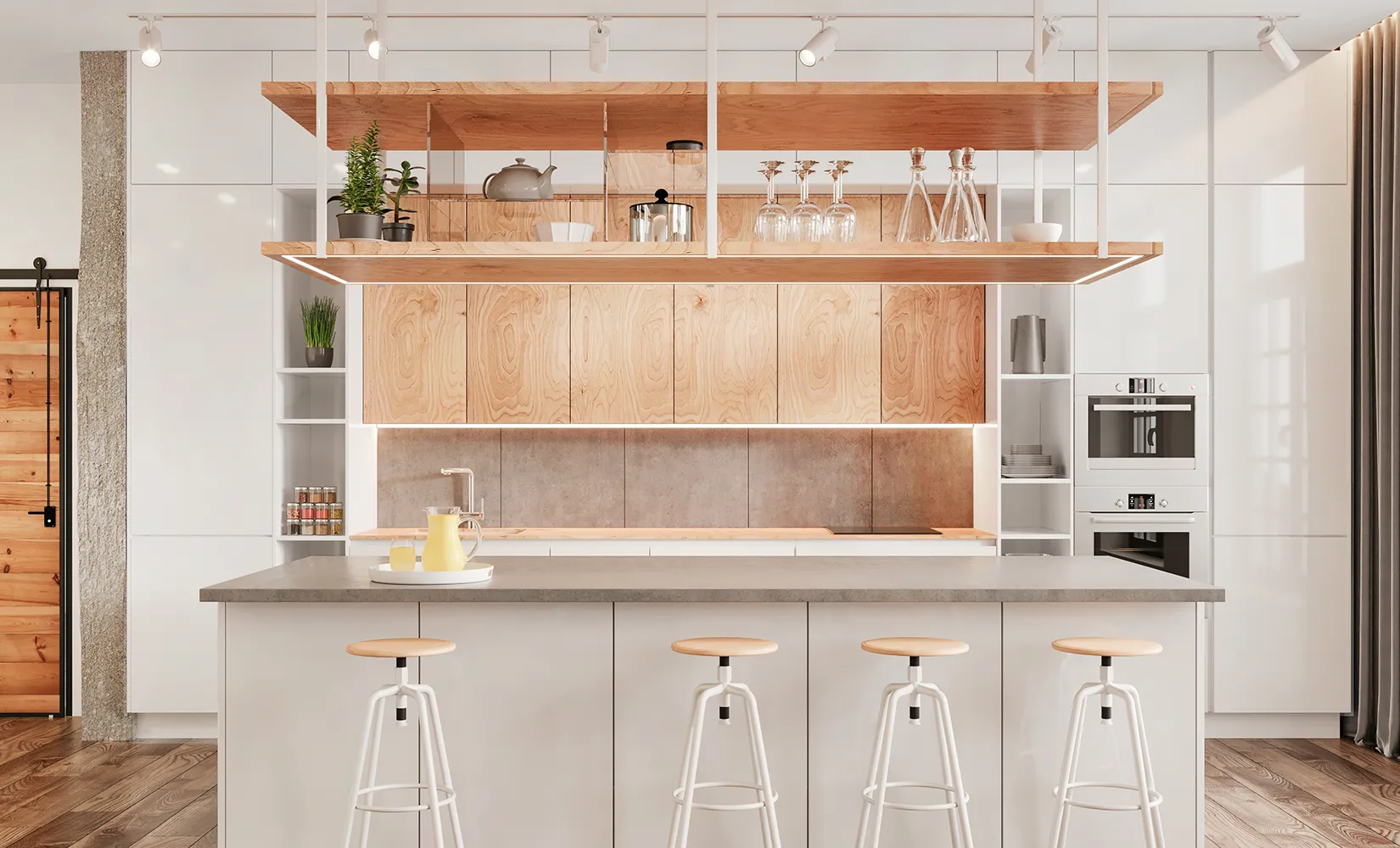
Symmetrical galley kitchen layouts don’t require both sides to mirror each other exactly. Avoid a “corridor look” by mixing different types of storage units. For example, instead of floor-to-ceiling cabinets on both sides, try replacing them with a mix of wall units and open shelves.
11. Add Cafe Style Seating
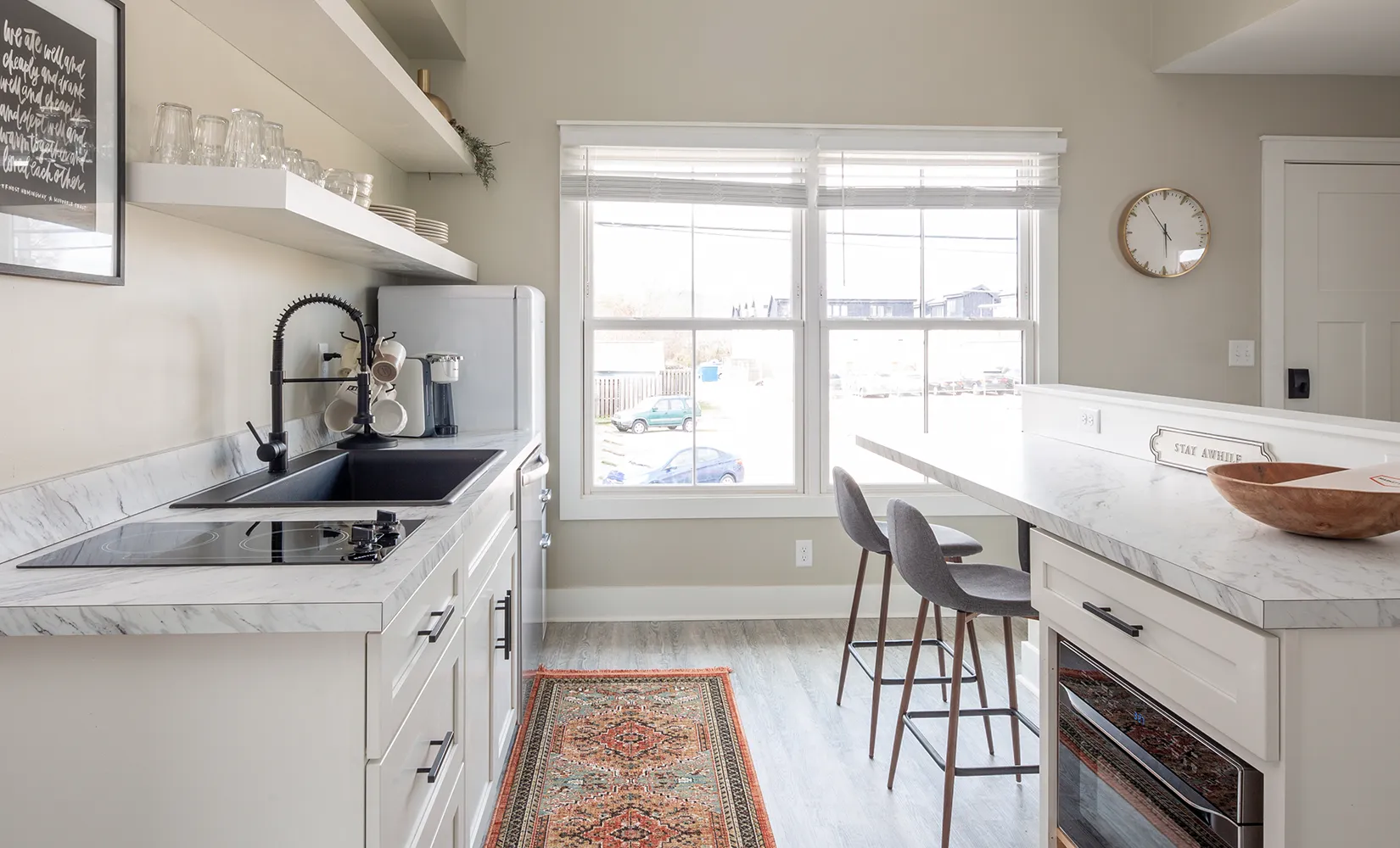
Have a gap between the shorter end of your layout and a wall or walkway? Consider extending the countertop to create an eat-in bar for two. This will also provide more space for food preparation and room for guests to interact while you cook.
12. Create Contrast With Dark Cabinets
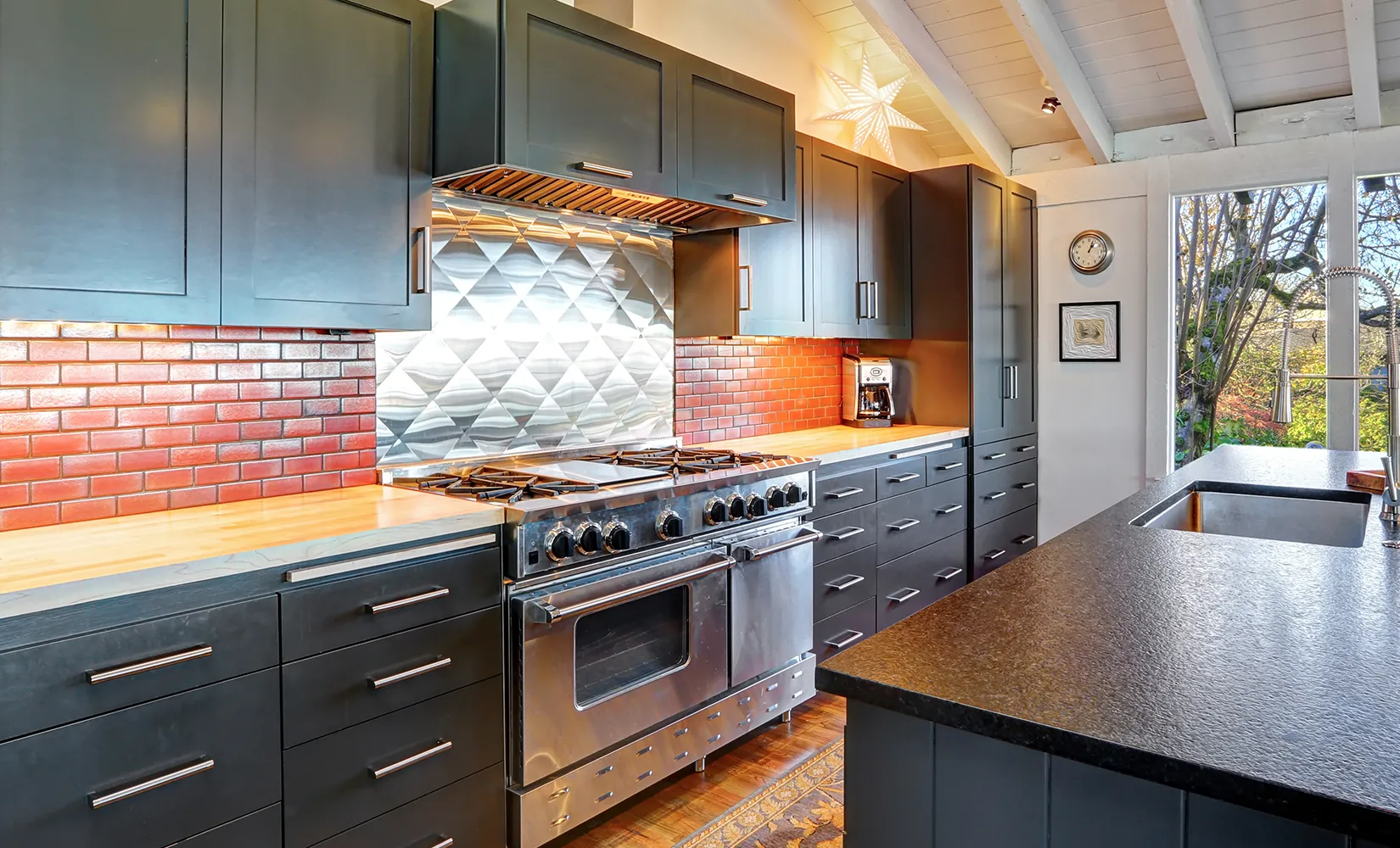
If your kitchen has ample natural light, a neutral color palette may appear washed out. This is your chance to experiment with dark, dramatic cabinet colors like deep plum or navy blue. The added contrast will pair well with natural light.
See what our cabinets will look like in your home.
Order a Kitchen Cabinet Sample Today13. Maximize Storage With Floor-to-Ceiling Cabinets
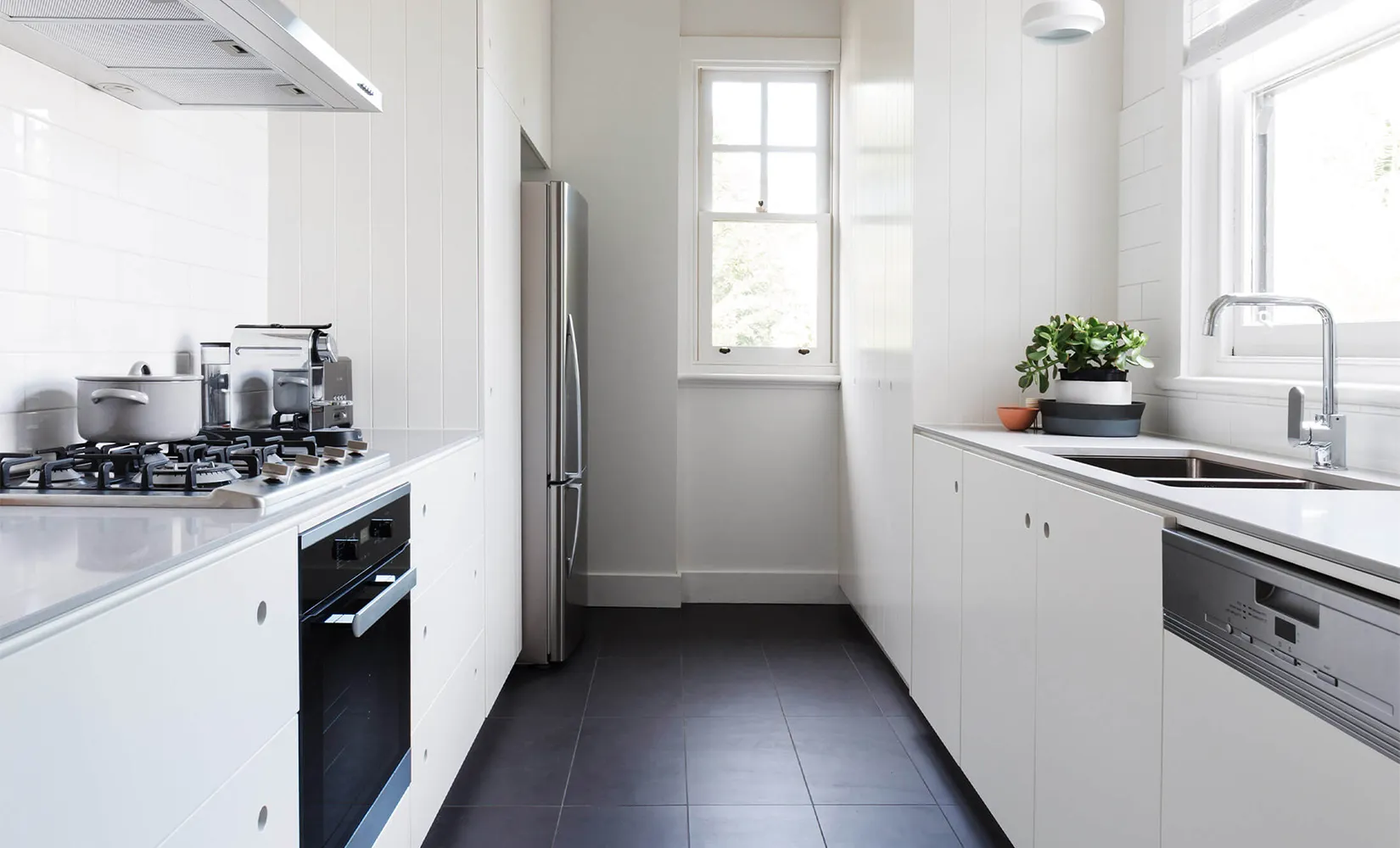
Asymmetrical galley kitchens present the perfect floor plan for implementing a few floor-to-ceiling cabinets. These giant cabinets are great for dry goods storage or a convenient place to conceal your kitchen mop and broom.
14. Add Under Cabinet Lighting
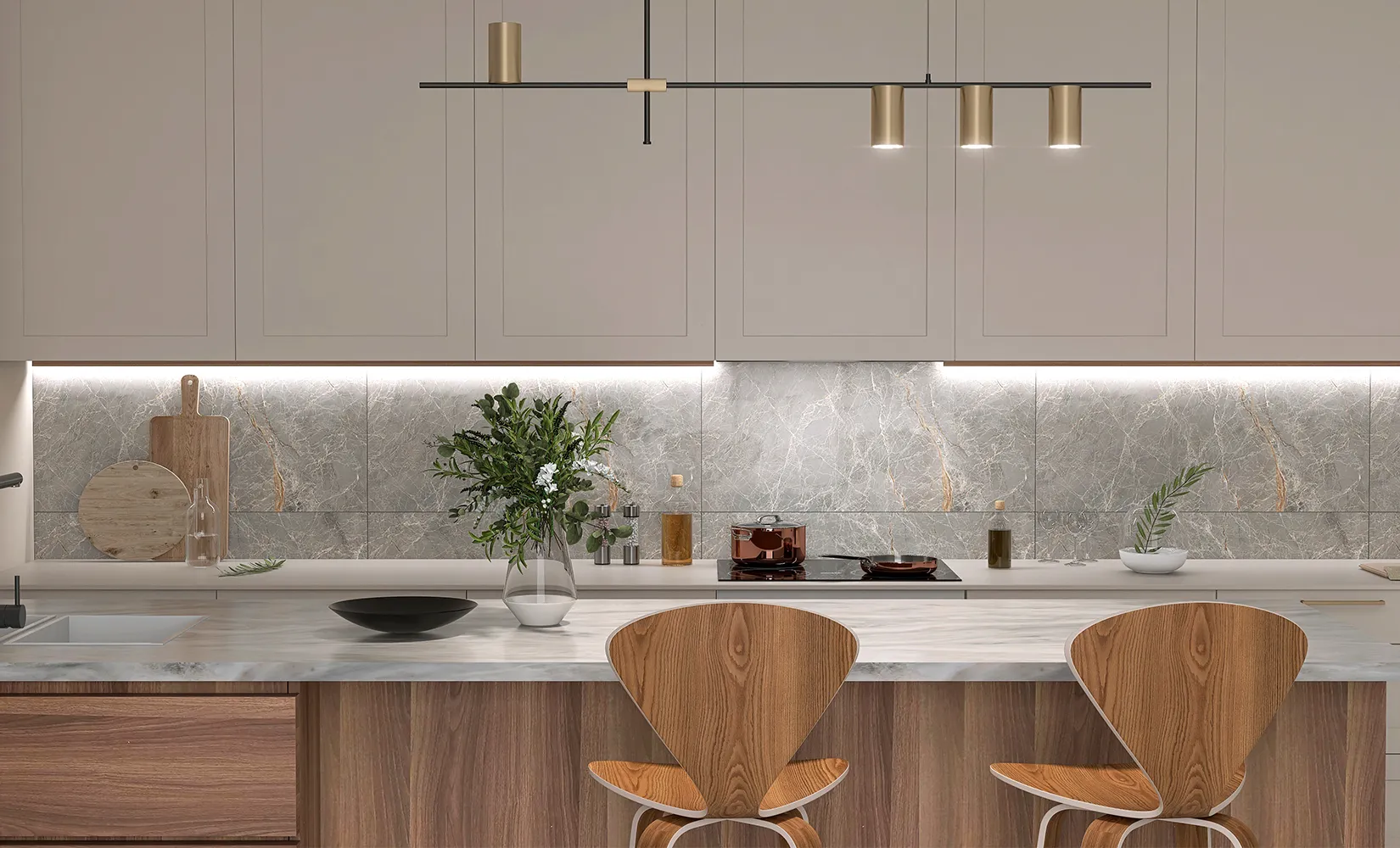
Make countertop space more functional by installing under-cabinet task lighting to illuminate your work area. Under cabinet lighting can be as simple as peel-and-stick light pucks to professional-grade LED strips.
15. Draw the Eye With Intricate Floor Tiles
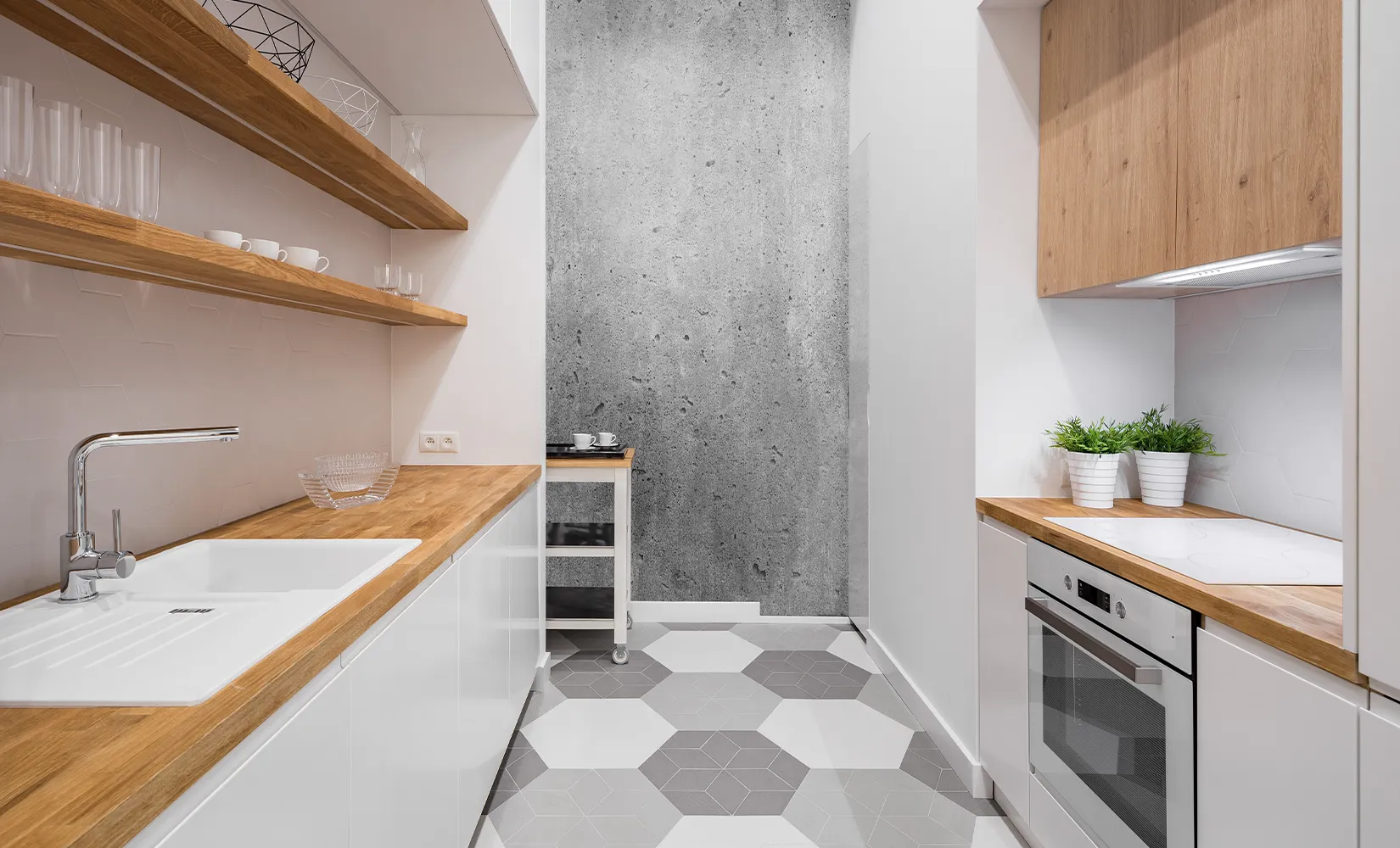
Colorful, patterned floor tiles coupled with a subtle color palette draws the eye outward, making your small galley kitchen seem longer and wider. Herringbone patterns work especially well for this effect.
16. Play With Two-Toned Cabinets
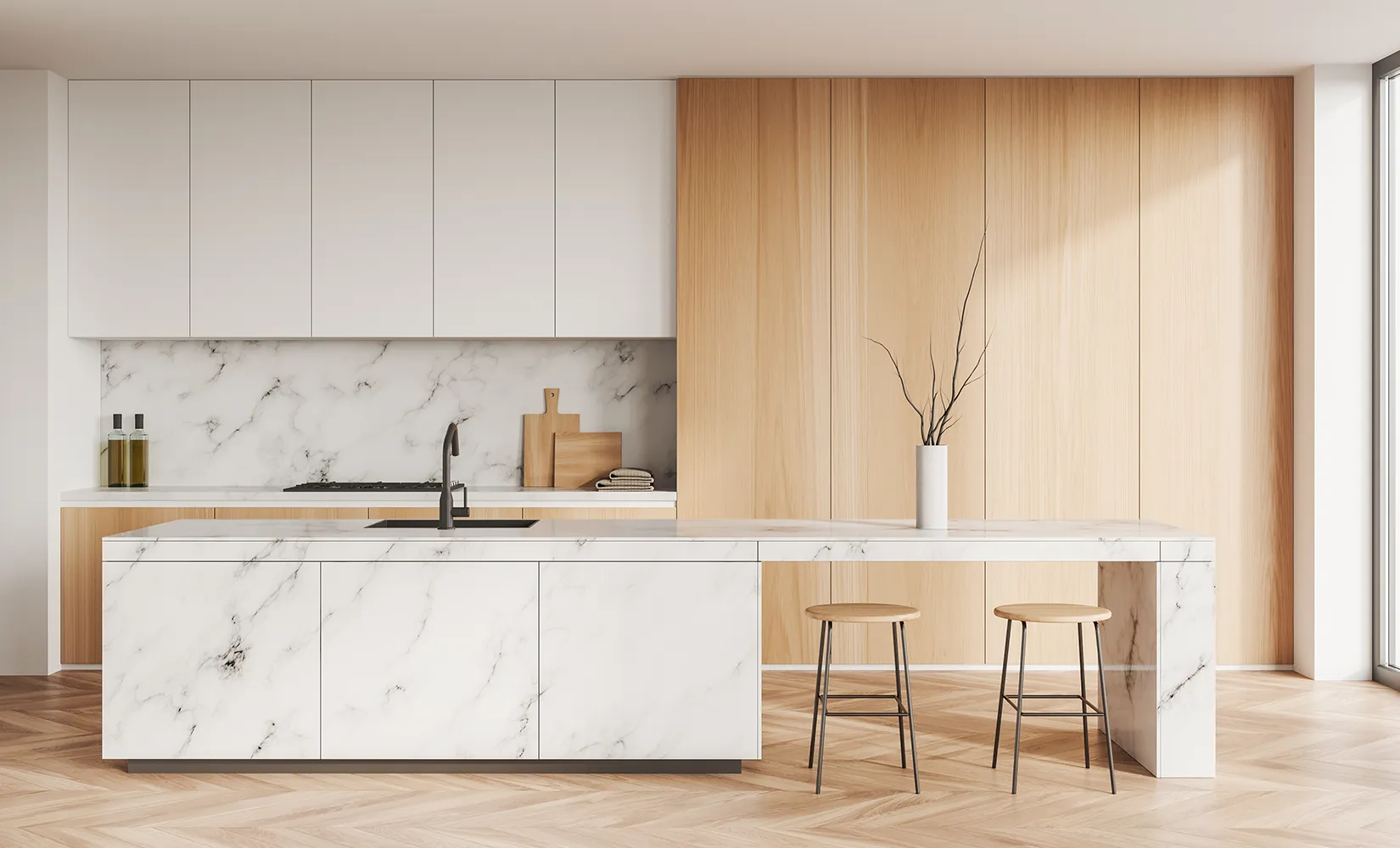
Add depth and dimension to your galley kitchen with two-toned cabinets. Painting your lower cabinets a darker color while keeping your wall cabinets or open shelves light will help ground your kitchen and trick the eye into believing your space is wider than it is.
17. Try an L-shaped Island

Want to create the galley layout look with a kitchen island? Opt for an unconventional island design with an L-shaped kitchen island. You’ll have all the storage and countertop space of a U-shaped layout without having to close off one side of your kitchen.
18. Install Your Sink or Stovetop in the Island
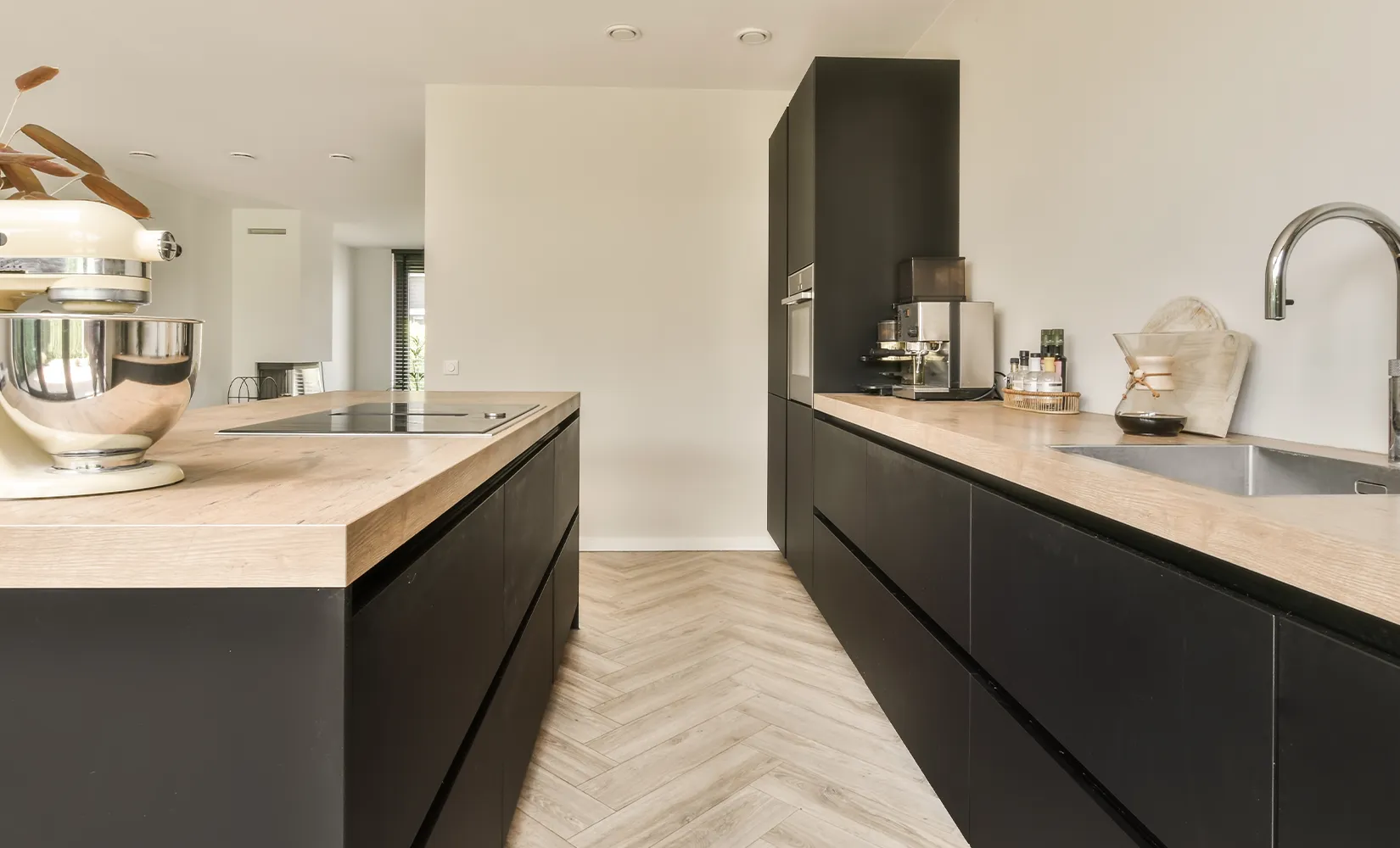
Designating one of your essential workstations to your island will allow you to form a functional work triangle and navigate between tasks easily and safely. Placing your sink or stove in the island can also create a focal point and conversation area in your kitchen, especially if you like to entertain.
19. Stagger Your Appliances
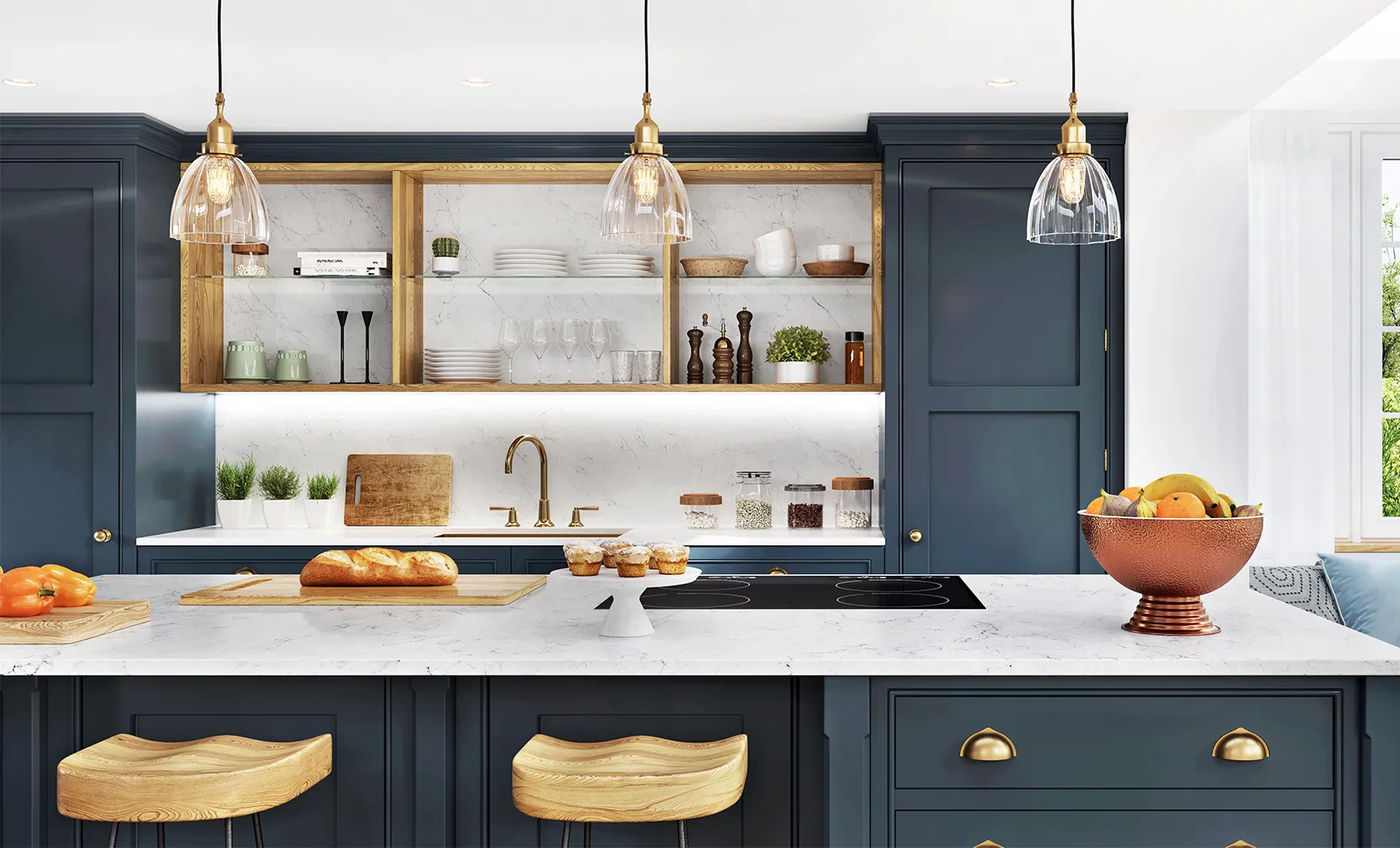
If you decide to install your stovetop or range on your kitchen island, stagger the other workstation on the opposing run rather than directly opposite. Staggering your appliances is safer and more efficient because it reduces the amount of turning required when moving between the sink and stove.
20. Illuminate the Island
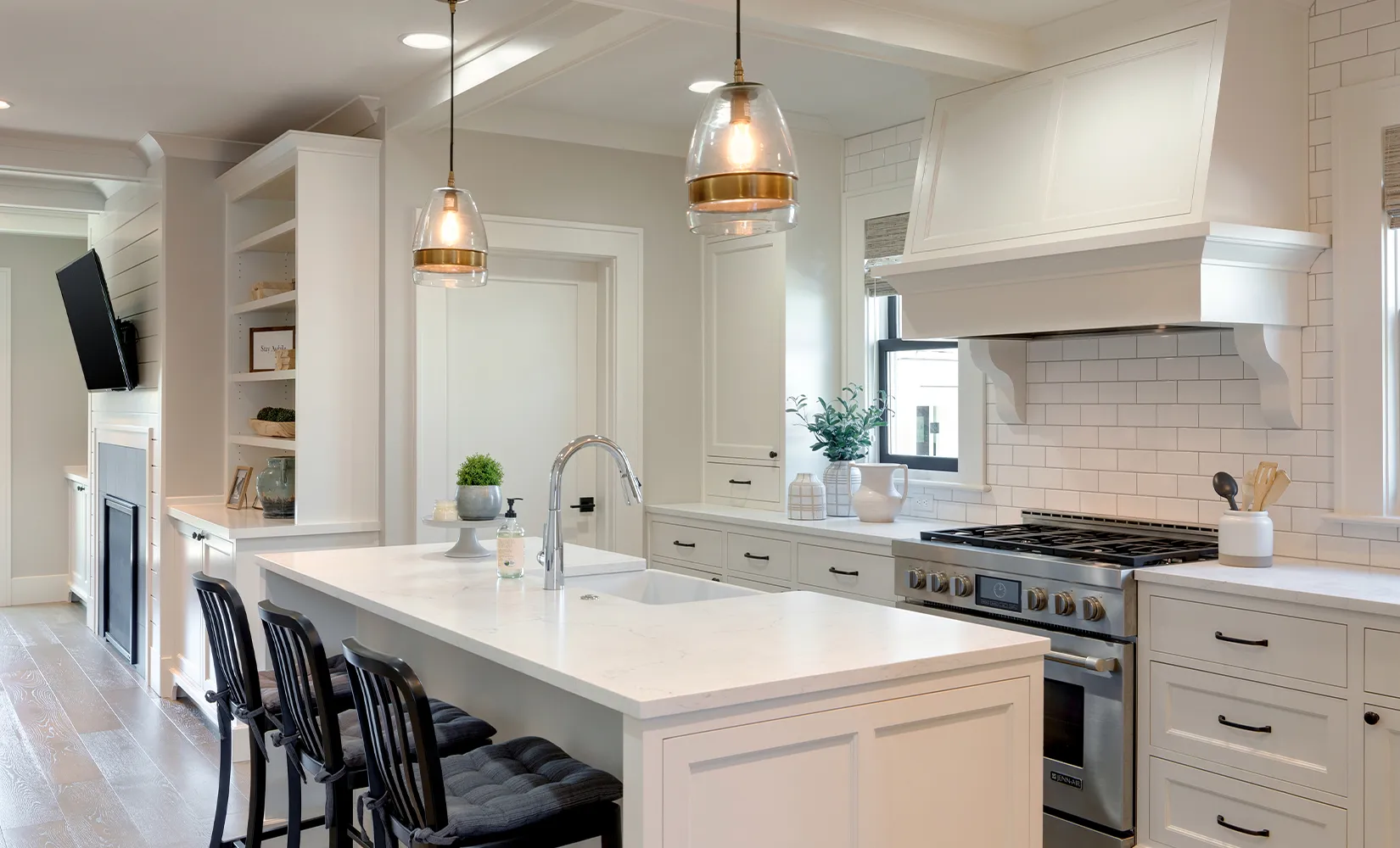
As opposed to a traditional galley kitchen layout with an illuminated corridor, you’ll want to place your statement lighting above your kitchen island. This will help designate the area as an entertainment space.
21. Incorporate a Third Wall

If you have an empty wall on either side of your kitchen, consider placing even more cabinet or countertop space against it. This extra bit of space can serve as a great place to store seasonal kitchen items or rarely used appliances.
Ready to start planning for the kitchen of your dreams? Our NKBA-certified designers can help you create the perfect 3D kitchen design for free. Send in your measurements and favorite cabinet door style, and we'll help you to create a custom layout, item list, and price quote.
Start Designing Your Dream KitchenTypes of Galley Kitchens
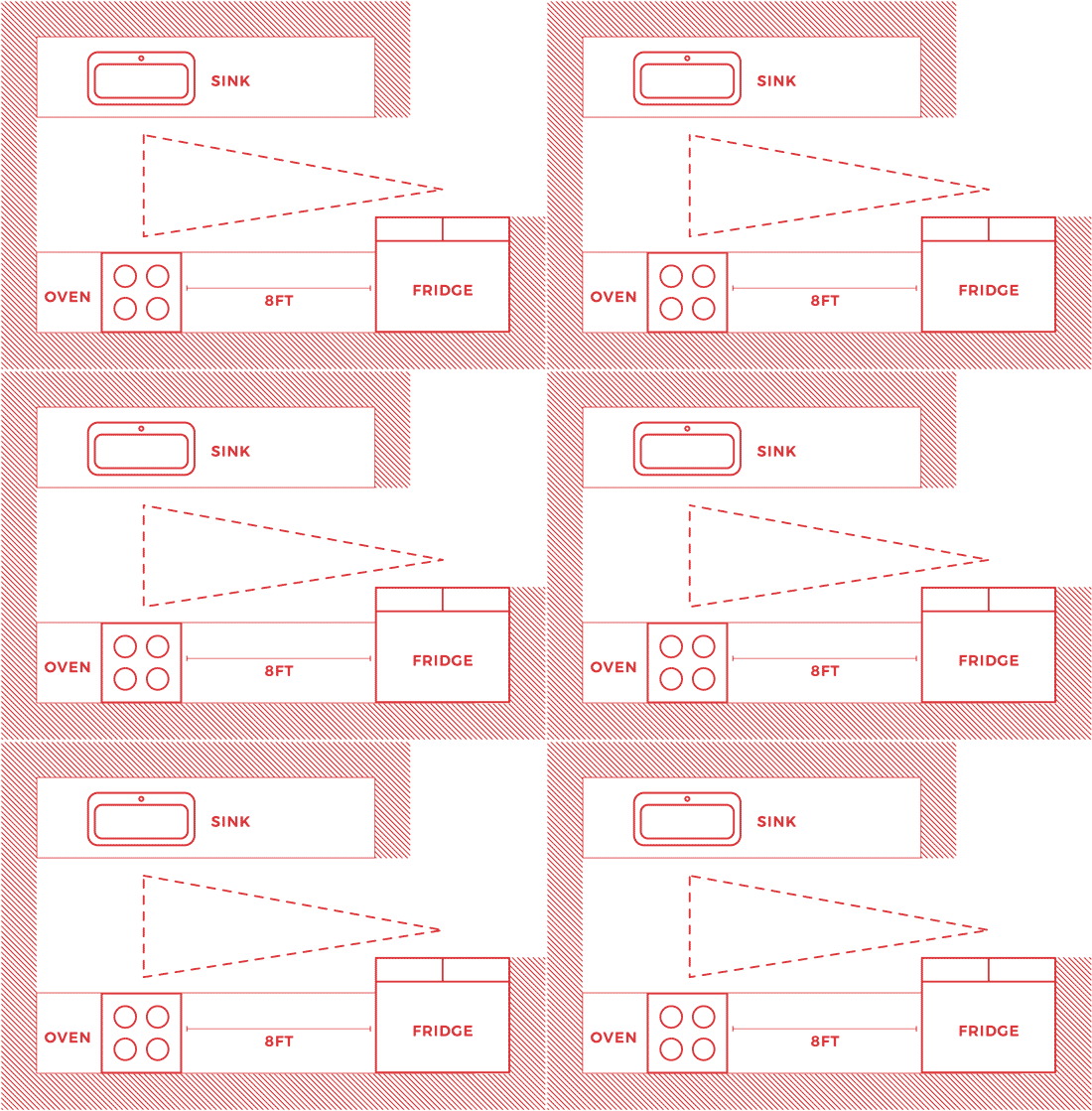
Galley kitchens consist of two parallel counters with a corridor running down the middle. Appliances are generally split up between the two sides, creating an effective work triangle between the fridge, stovetop, and sink. This layout helps streamline workflows by making it easy to navigate back and forth between work areas.
However, there are different types of galley kitchen layouts — namely symmetrical, asymmetrical, and island layouts. While the core principle remains the same — two countertops facing each other — the arrangement of cabinets and appliances can vary.
- Symmetrical galley kitchen: A symmetrical galley layout has the two sides mirror each other as much as possible.
- Asymmetrical galley kitchen: Asymmetrical layouts allow you to play with different countertop lengths, granting you more flexibility in small, tight spaces.
- Galley kitchens with an island: Replacing one cabinet run with a large kitchen island maintains an open-concept feel while optimizing workflow.
Symmetrical Galley Kitchen

The symmetrical galley layout features two facing countertops that mirror each other. That means that both sides will have the same base cabinetry set up, with countertops running equal lengths. Arranging the cabinets in a symmetrical design will help you achieve a balanced and consistent layout.
Symmetrical layouts work well in larger kitchens because you won't need to worry about creating the illusion of more space, but you may want more versatility if you’re designing a tiny kitchen. An asymmetrical galley layout with a strategic design works better in an area with limited space.
Asymmetrical Galley Kitchen

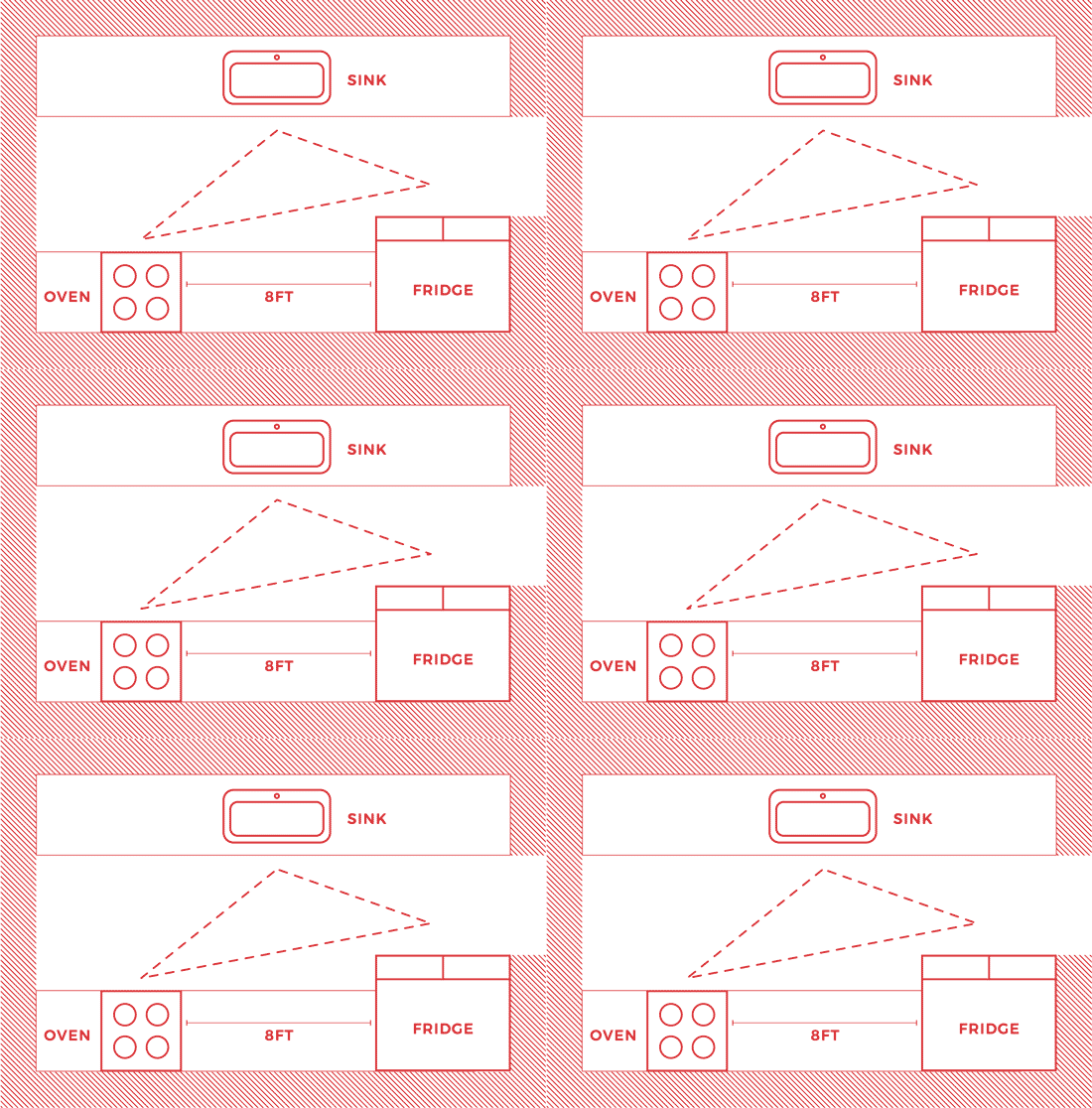
Asymmetrical galley kitchen layouts present the opportunity to experiment with different countertop lengths. They work well in small kitchens that require the flexibility to break up the counters and cabinets if needed.
There are numerous ways to style an asymmetrical galley kitchen, but a good rule of thumb is to use tall cabinets or a bank of appliances on one side of the run, with base cabinets and accessible cabinet space for food prep on the other.
Galley Kitchen Layout With Island

If you want to mimic the style and functionality of a galley kitchen in an open-concept layout, you can pair one run along a wall with a large, parallel kitchen island. Adding an island instead of opting for an L-shaped or U-shaped kitchen layout preserves the flow of the kitchen corridor while providing additional workspace and room to entertain.
Having an island in your galley kitchen in lieu of an L- or U-shaped layout may require you to sacrifice storage space, so consider this option only if you have full-wall cabinets on one side or are open to having less storage space.

Pros and Cons of Galley Kitchens
Galley kitchens are one of the most efficient kitchen layouts for serious chefs working with a small space, but this layout does have its drawbacks. The best kitchen configuration for you will depend on the type of kitchen space you need, how you will use the kitchen, and more. Here are the pros and cons of galley kitchen layouts to help you choose the right cabinet configuration for your needs.
Pros
- Efficient and functional
- Ideal for small spaces
- Optimized work triangle
- Contemporary design
- Potential for open-concept feel
- Cost-effective
Cons
- Limited traffic flow
- Storage limitations
- Less countertop space
- Not ideal for multiple cooks
- Claustrophobic feel
- Limited appliance placement
Pros of Galley Kitchens
There’s a reason galley layouts migrated from narrow navy ship kitchens to the homes of professional and aspiring chefs. This kitchen design maximizes storage and work areas in a compact space, making it ideal for serious cooks. Pros of galley kitchen layouts include:
- Efficiency and functionality: The core benefit of galley kitchens is their efficient use of space. With everything within easy reach on either side of the walkway, you can move between tasks smoothly, minimizing wasted steps.
- Ideal for small spaces: Galley kitchens maximize functionality in a compact area, making them perfect fit for smaller homes, apartments, or studios. They make the most of limited square footage without sacrificing functionality.
- Work triangle optimization: The layout naturally creates a compact work triangle, placing the refrigerator, sink, and stovetop in close proximity. This minimizes travel time between these essential stations during food prep and cooking.
- Contemporary design: Galley kitchens offer a clean, modern aesthetic. The sleek lines and focus on functionality create a minimalist, stylish look that complements contemporary design trends.
- Potential for open-concept feel: Incorporating a kitchen island can give galley layouts a more open feel. The island can serve as a social hub while maintaining the efficient workflow of the galley design.
- Cost-effective: Since galley kitchens require less cabinetry than layouts like U-shaped or L-shaped kitchens, they can be a more budget-friendly option for renovation projects.
Cons of Galley Kitchens
In many homes, you won’t have an option when choosing a galley kitchen layout. In older homes especially, the two walls that form a galley kitchen provide necessary structural support that may be difficult to renovate. Closed-concept galley kitchens can have these drawbacks:
- Limited traffic flow: With countertops on either side, galley kitchens can feel cramped, especially in very narrow spaces. This can lead to traffic jams, particularly if multiple cooks are using the kitchen or if it connects two rooms.
- Storage limitations: Due to the smaller footprint, galley kitchens often have less storage space than other layouts. This can be a challenge for those with extensive cookware or kitchen appliances.
- Less countertop space: Similar to storage, galley kitchens generally have less countertop space available for food preparation and appliance use. This can be inconvenient for cooks who require ample prep space.
- Not ideal for multiple cooks: The narrow layout of galley kitchens makes it difficult for multiple people to work comfortably side-by-side. This can be a drawback for families who enjoy cooking together.
- Claustrophobic feel: The proximity of countertops on either side can create a closed-in feeling, especially in kitchens with limited natural light. Opting for light colors and open shelving can help mitigate this.
- Limited appliance placement: The layout might restrict your options for appliance placement. For example, space constraints can make it difficult to incorporate a side-by-side refrigerator or a large oven.
Galley Kitchen Layout FAQs
Still wondering whether a galley kitchen layout will work best in your space? We answered some of the most frequently asked questions to help you decide.
What defines a galley kitchen layout?
Galley kitchens, sometimes referred to as corridor kitchens, consist of two parallel counters with a corridor running down the middle. Appliances are generally split up between the two sides, creating an effective work triangle. Galley layouts work best for small kitchens, but they can be adapted for larger areas as well.
What are the advantages and disadvantages of a galley kitchen layout?
Galley kitchen layouts focus on efficiency and function, but they’re not the best choice for every home. While this layout is a great option for small or medium-sized spaces, galley kitchens lose efficiency if the two runs are too far apart. Additionally, this layout does not offer as much storage or countertop space as other kitchen designs, such as U-shaped kitchens or G-shaped kitchens.
How do you arrange a galley kitchen?
Galley kitchens feature two parallel runs of countertops facing each other with a walkway in between. Appliances and cabinets are typically divided between the two sides, creating a compact and efficient workspace.
You can arrange them symmetrically for a balanced look or asymmetrically for more flexibility in smaller spaces. Some galley kitchens even incorporate a central island for extra counter space and a more open feel.
Where should a refrigerator be placed in a galley kitchen?
The refrigerator's placement depends on your workflow and available space in a galley kitchen. Ideally, place it near an open end of the kitchen for easy access.
If you have a symmetrical layout, position it on one side with the sink and dishwasher on the opposite side to maintain a balanced work triangle. In asymmetrical layouts, place it on the side with the most counter space for unloading groceries and prepping food nearby.
How do you make a galley kitchen feel more open?
You can make a galley kitchen feel larger and more open by opting for white cabinets and bright paint on the walls. Open shelving makes great extra storage in galley kitchens, and patterned floors help draw the eye forward and make the space feel larger.
Looking to master your cooking skills in a kitchen suited for a professional chef? A galley kitchen may be the best kitchen layout for you. This design places function first, but a modern galley kitchen with streamlined cabinets and appliances, plenty of natural light, and a trendy color palette can help your kitchen look just as stylish as it is efficient.
Ready to bring your dream galley kitchen to life? Check our selection of quality, ready-to-assemble and pre-assembled kitchen cabinets to find the perfect match for your new space.
%20rotate(90)'/%3e%3cline%20class='cls-3'%20x1='40.78'%20y1='16.5'%20x2='40.78'%20y2='26.45'/%3e%3cline%20class='cls-3'%20x1='138.84'%20y1='7.58'%20x2='138.84'%20y2='48.52'/%3e%3cline%20class='cls-3'%20x1='178.45'%20y1='40.96'%20x2='138.84'%20y2='40.96'/%3e%3c/svg%3e)

%20rotate(180)'/%3e%3cline%20class='cls-3'%20x1='171.13'%20y1='92.77'%20x2='161.22'%20y2='92.77'/%3e%3ccircle%20class='cls-3'%20cx='84.34'%20cy='20.74'%20r='4.72'/%3e%3ccircle%20class='cls-3'%20cx='101.54'%20cy='20.74'%20r='4.72'/%3e%3ccircle%20class='cls-3'%20cx='84.34'%20cy='36.44'%20r='4.72'/%3e%3ccircle%20class='cls-3'%20cx='101.54'%20cy='36.44'%20r='4.72'/%3e%3cline%20class='cls-3'%20x1='145.8'%20y1='137.38'%20x2='145.8'%20y2='178.35'/%3e%3cline%20class='cls-3'%20x1='178.45'%20y1='137.38'%20x2='136.91'%20y2='137.38'/%3e%3cline%20class='cls-3'%20x1='70.84'%20y1='7.54'%20x2='70.84'%20y2='48.62'/%3e%3cline%20class='cls-3'%20x1='137.38'%20y1='119.07'%20x2='178.45'%20y2='119.07'/%3e%3cline%20class='cls-3'%20x1='137.38'%20y1='66.93'%20x2='178.45'%20y2='66.93'/%3e%3cline%20class='cls-3'%20x1='115.16'%20y1='7.54'%20x2='115.16'%20y2='48.62'/%3e%3c/svg%3e)
%20rotate(90)'/%3e%3cline%20class='cls-3'%20x1='40.78'%20y1='17.05'%20x2='40.78'%20y2='27'/%3e%3cline%20class='cls-3'%20x1='138.84'%20y1='8.13'%20x2='138.84'%20y2='49.07'/%3e%3cline%20class='cls-3'%20x1='178.45'%20y1='41.51'%20x2='138.84'%20y2='41.51'/%3e%3c/svg%3e)