
Cabinet Pull Placement: A Guide for Homeowners
By: Andrew Saladino |  7 min
7 min
Last Updated: May 28th, 2024
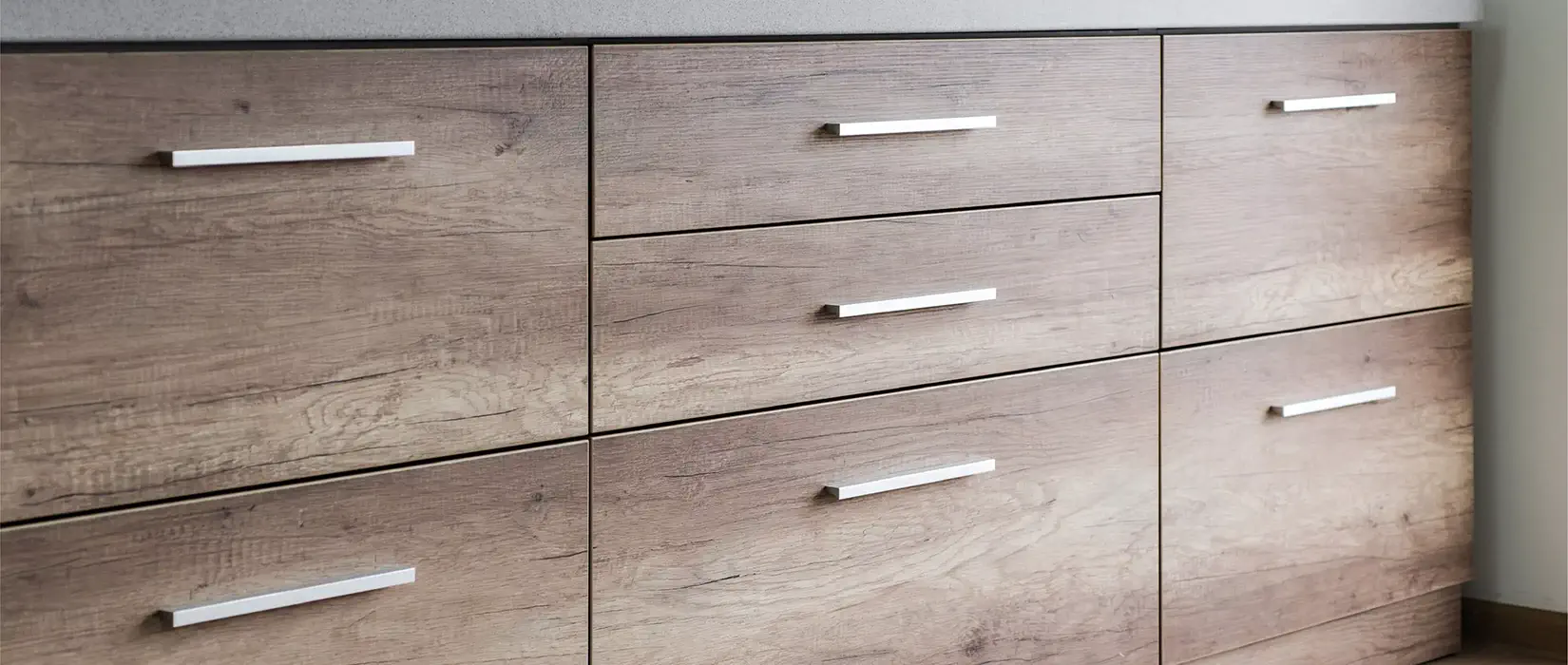
Even the most perfectly crafted cabinets won't make the best impression without the perfect finishing touch: hardware. But if you're a DIYer who's looking ahead to kitchen cabinet hardware, knowing where to put knobs and handles on kitchen cabinets can be a head-scratcher.
Beyond just changing how a kitchen looks, cabinet pull placement changes the functionality and ergonomics of the room. So if you want to ensure your kitchen is as easy to use as it is beautiful, weigh your options carefully.
This cabinet pull placement guide will look at the differences between knobs and pulls, popular configurations, and expert insights to elevate your kitchen project.
Table of Contents
Knobs vs. Pulls: Choosing Cabinet Hardware
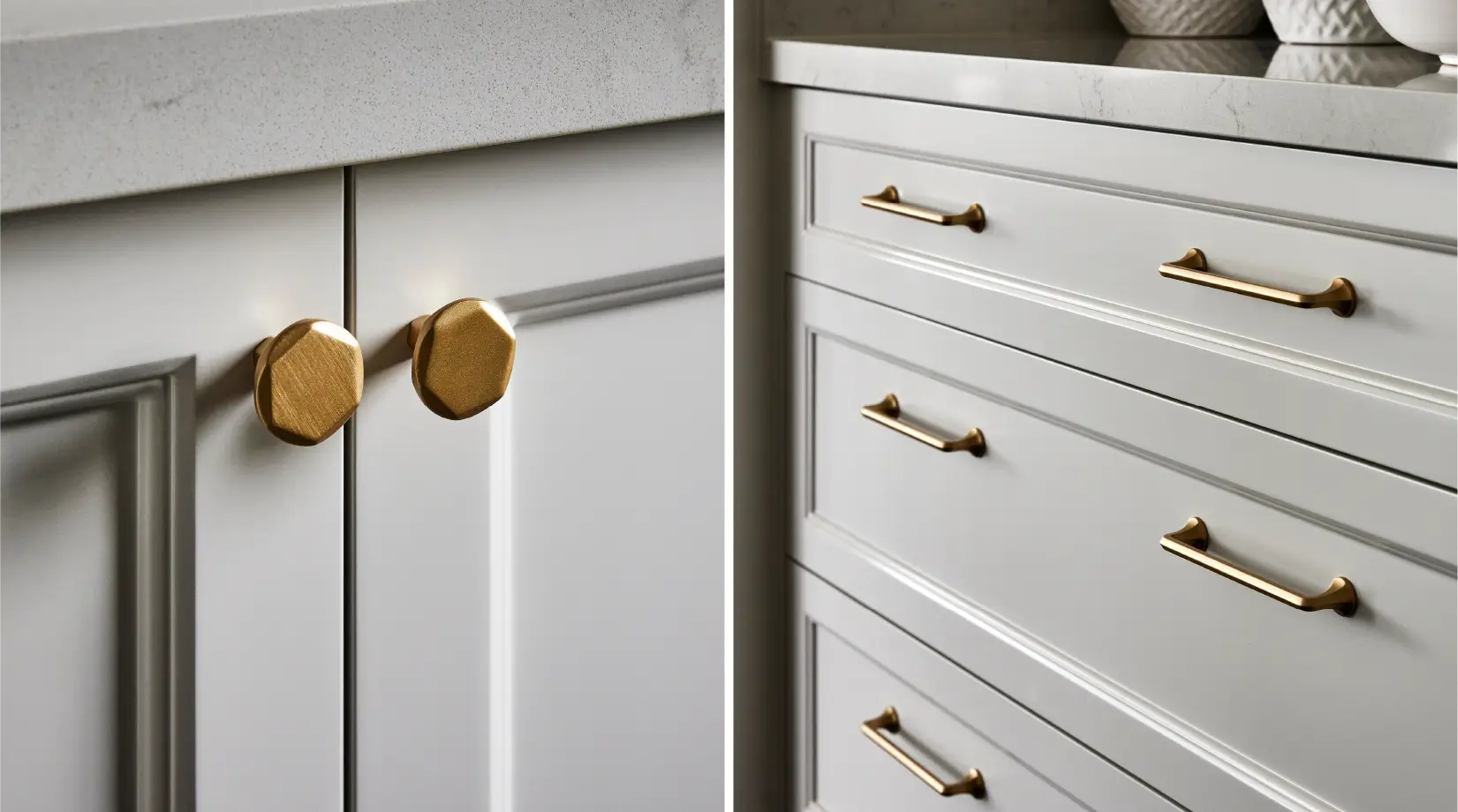
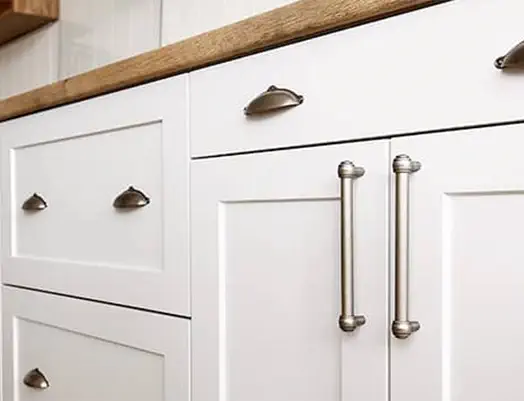
While knobs and cabinet pulls both help you open cabinets and drawers, they each have their advantages and drawbacks.
Cabinet knobs are most commonly found on paneled cabinets in:
- Traditional kitchens
- Farmhouse kitchens
- Cottage kitchens
- Rustic kitchens
- Some transitional kitchens
Cabinet pulls are more common on slab cabinets in:
- Modern kitchens
- Contemporary kitchens
- Industrial kitchens
- Minimalist kitchens
For kitchen remodels on a budget, knobs are going to be your best bet. They use less materials and only require one screw for installation.
On the other hand, pulls offer slightly easier opening for wider drawers, and their increased size makes them easier to grab on lower cabinets.
| Knobs | Pulls | |
|---|---|---|
| Installation | Uses 1 screw | Uses 2+ screws |
| Looks | Round | Long, bar-shaped |
| Cost | Less expensive than pulls | More expensive than knobs |
| Usability | Easy opening for most cabinets | Easier opening for wide drawers and lower cabinets |
| Design style | Traditional, rustic, and transitional | Modern, contemporary, and industrial |
Pull Placement on Upper Cabinets

With upper cabinets, you'll want to prioritize making it easy to access the pulls with a balanced look. Depending on the style of cabinets in your kitchen, where you place the pulls will change.
Forcabinets with recessed panels, like shaker style,mount the pull vertically on the stile about 2 to 2.5 inches above the bottom of the cabinet door. A shortcut is to try centering the bottom of the pull with the bottom of the recessed section or in line with the cabinet rail for an easy grip and a balanced look.
For slab (flat-front) cabinets, mount the pull vertically, approximately 2 to 2.5 inches above the bottom of the cabinet door and about the same distance from the side. This position will make it easier to reach the pull, and it will look good, too. Some contemporary kitchens can work with horizontal pulls on upper cabinets, especially if the panels open up instead of out.
Pull Placement on Lower Cabinets

While you might not use your lower cabinets as frequently as drawers and upper cabinets, they still play a big part in how your kitchen functions and looks. When placing pulls on lower cabinets, keep ease of access top of mind.
Lower cabinet pulls on paneled cabinets should be placed on the stile about 2 to 4 inches from the top and about 2 to 2.5 inches from the edge. That position allows you to easily reach the pulls whether you're standing or crouched.
For slab cabinet faces, install pulls 2 to 2.5 inches from the top and the edge of the cabinet face. If you want to make your lower cabinets stand out, you can use a longer pull. The larger size of the cabinet will make a larger pull look balanced. Keep enough distance between drawers above the lower cabinets to prevent contact or pinched fingers, especially with frameless cabinets.
Pull Placement on Drawers

There are two main placement options for your drawer pulls: centered and high. Centered pulls are placed horizontally in the middle of a cabinet face, regardless of style. This option gives you a nice, symmetrical look and will make opening drawers easy.
High placement is when you install the pulls horizontally, approximately 2 inches from the top of the drawer. For panel cabinets, this means the pull will be on the upper stile. This is a modern and stylish look that also makes reaching the pulls easier.
Drawer size can play a big part in where you install your pulls. For smaller drawers, a single pull is all you need, but if you have drawers that are wider than 24 inches, multiple pulls (or an extended pull) may look better and offer better functionality.
Knob Placement on Upper Cabinets

If you've chosen knobs for your upper cabinets, you have two main options. The first is to align the knob with the edge of the cabinet rail. This look is more modern (and easier to line up). The classic option is to center the knob on the stile and move the knob above the rail by 1 to 2 inches.
If you're installing knobs on slab doors, 2 inches from the bottom and 2 inches from the side is a good placement. Feel free to adjust this if you have knobs that are oversized or not completely round. If you have frameless cabinets, you may want to experiment with placing knobs farther from the edge.
Knob Placement on Lower Cabinets

On slab and paneled lower cabinets, center the knob on the stile about 2 to 4 inches down and 2 to 2.5 inches from the edge of the cabinet face for easy grabbing. This placement aligns with the natural bend of your hand when opening cabinets and allows for good leverage.
Knob Placement on Cabinet Drawers

Similar to pulls, drawer knobs can be centered or installed higher. For center installations, attach the knob in the center of the drawer. This works for paneled or slab cabinets.
For high installation, install the knob about 2 inches from the top of the drawer. On a cabinet with a paneled front, the knob will be on the stile.
If you have drawers larger than 24 inches, you might want to think about installing two knobs on each drawer. This can make it easier to open and will add more visual flair. For paneled cabinets, measure the cabinet and divide it into thirds. Install the knobs with the middle third between them.
Cabinet Pull Placement Tips
There are no real rules for choosing cabinet pulls or knobs. If something looks good to you or makes it easier for you to cook, clean, and organize your kitchen, go for it! But if you want your cabinets to look and function as effectively as possible, here are a few cabinet door pull placement tips to make the process go smoothly.
- Consider combinations. Traditional and modern kitchens have exceptions to every rule, so have fun considering mixing and matching pulls and knobs. Try all pulls on your lower cabinets and drawers and all knobs on upper cabinets or another combination.
- Think about mixing metals. Using the same metals and finishes keeps your space consistent, but it's OK to mix things up if that reflects your style.
- Measure twice, drill once. Cabinets are an investment, and refacing them can be costly, too. So before you start drilling holes, double-check your measurements to avoid any mistakes.
- Keep your hardware consistent. While you can use a mix of pulls and knobs in your kitchen, keeping the hardware the same style (size, shape, material) will make your kitchen look unified and intentional.
- Experiment with different options. Use a cabinet pull placement template or painter's tape in the size and shape of your cabinet hardware to see what looks best and what feels most natural when you reach for the handle or knob. This will help you avoid any mistakes when installing cabinet hardware.
Whether you're still deciding on the perfect RTA cabinets or you're giving your existing cabinets a new life with a fresh coat of paint and new hardware, you can find exactly what you need at Kitchen Cabinet Kings. From how-to guides and trend reports to RTA or assembled cabinets, we're ready to make your dream kitchen a reality.
Cabinet Pull Placement FAQs
Are knobs or pulls better?
They're both great! It comes down to your personal style preferences. If you aren't sure what you like, check out what some of your favorite designers are using, or take a look at online galleries and blog posts about the latest design trends. For example, knobs might be perfect for a farmhouse kitchen, while sleek pulls could really transform an industrial style kitchen.
What is the one-third rule for pulls?
The one-third rule for cabinet pulls says that a pull that is one-third the total length of the drawer's face will look best. The rule is a good starting point, but many people use full-length pulls on their cabinets and drawers, and the results look great. Going smaller is when it might feel “off.” Use painter's tape to approximate the size of different pulls to see what looks best.
Can I use pulls on arch cabinet doors?
Absolutely! Just because knobs have traditionally been used on that cabinet door style doesn't mean you can't go against the norm. Mixing and matching hardware or going against the grain can make your kitchen look unique.
Is it OK to mix knobs and pulls on cabinets?
Yes, you can mix hardware on cabinets. Using a combination of pulls and knobs can improve the functionality of your cabinets, and it can create a unique style that feels eclectic and fun. If you are going to mix, keep the styles consistent so it feels intentional. For example, use all stainless pulls and a single style of knob.