

15 Ideas for That Awkward Space Above Your Refrigerator Cabinets

by Andrew Saladino
July 27, 2026
That gap above your fridge doesn’t have to collect dust and cereal boxes. With the right approach, it becomes real storage, a design feature, or both.
The trick is understanding what makes this spot awkward in the first place. Once you know why standard cabinets don’t work well here, the fixes are straightforward. Some take an afternoon. Others belong in a full remodel. All of them beat staring at a greasy gap every time you walk into the kitchen.
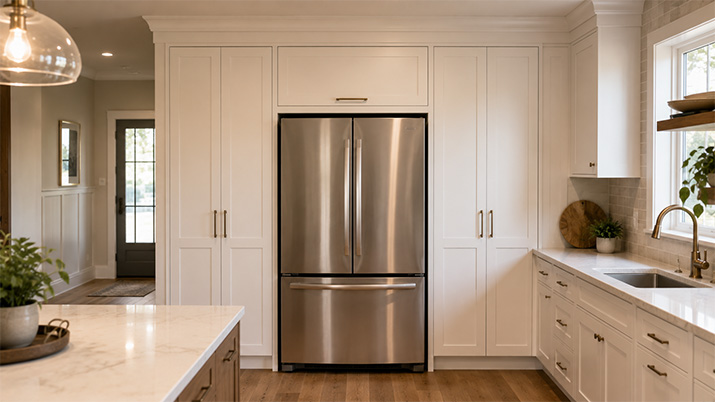
Why the Space Above the Refrigerator Is So Hard to Use
The problem usually isn’t the cabinet. It’s the refrigerator underneath it.
Standard wall cabinets are too shallow. Most wall cabinets are 12 inches deep. That’s fine over a countertop, but above a full-depth fridge, the cabinet face sits several inches behind the front of the appliance. You’re reaching over a big appliance into a shallow box you can barely see into. Switching to a 24-inch-deep cabinet brings the storage forward and gives the wall a cleaner, built-in look. If you’re comparing depths across your kitchen, our guide to standard cabinet sizes covers how the standard options fit together.
The fridge blocks comfortable reach. Even if the cabinet isn’t high, you’re leaning over a large appliance every time you open it. That makes this location better for things you grab a few times a year, not every morning.
Door clearance and ventilation matter. Refrigerators need airflow to run efficiently, and the doors need room to swing open fully. Installing cabinets too tight can reduce performance, increase energy use, and shorten the appliance’s lifespan. Before making any changes, check your fridge’s installation specs for the recommended clearances. Whirlpool’s refrigerator dimensions guide is a good starting point.
Counter-depth vs standard-depth changes the answer. A counter-depth refrigerator sits roughly 24 to 25 inches deep. A 24-inch cabinet above it sits nearly flush, which makes it easy to reach. A standard-depth fridge runs 30 to 35 inches deep with the doors, so that same 24-inch cabinet still sits several inches behind the appliance face. If you have a standard-depth fridge, plan on using this cabinet for occasional items only.
Ceiling height shapes the best solution. In kitchens with 8-foot ceilings, extending cabinets to the ceiling or finishing the gap with crown molding creates a cleaner look and eliminates the dust ledge. Taller ceilings give you more flexibility: stacked cabinets, an open niche, or a decorative feature can fill the extra space without making the wall feel top-heavy.
Common Mistake: Storing heavy appliances above the refrigerator looks like a clever use of dead space right up until you’re lowering a stand mixer from shoulder height while balanced on a step stool. Keep anything heavy in base cabinets or on the counter.
15 Ideas for the Space Above Your Refrigerator
These are grouped by how much effort they take. The first five are weekend projects you can do with what’s already on your wall. The next six involve new cabinetry and belong in a remodel conversation. The last four are for kitchens where storage isn’t the priority.
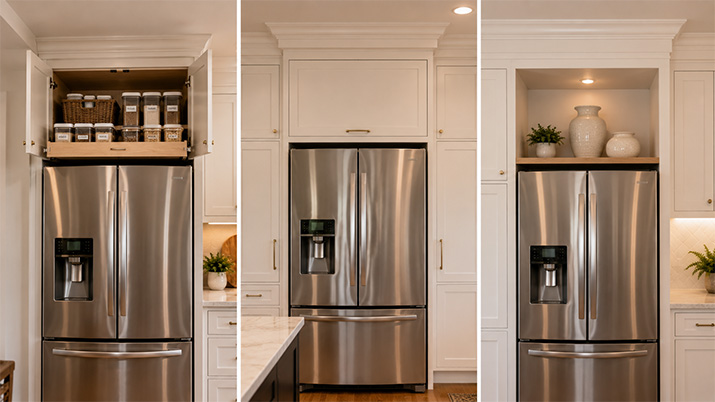
Weekend Fixes (No New Cabinets Needed)
1. Add Vertical Dividers for Trays and Cutting Boards
Stacking baking sheets means moving four of them to get the one you want, over your head, at arm’s length. Vertical dividers stand each piece upright so you can pull out exactly what you need. It’s the cheapest change on this list and probably the one you’ll notice most.
Effort level: One trip to the hardware store, 20 minutes to install.
2. Install a Pull-Out Shelf
Deep cabinets swallow whatever gets pushed to the back. A pull-out shelf or sliding tray brings the contents to you instead of making you reach blindly over the fridge. Especially useful if your cabinet is already 24 inches deep.
Effort level: Basic tools, under an hour.
3. Use Labeled Baskets
Decorative baskets corral smaller items (paper products, reusable containers, holiday supplies) and labels make it easy for everyone in the house to find what they need without digging through the cabinet blind.
Effort level: No tools, 15 minutes.
4. Store Seasonal Servingware
Holiday platters, gravy boats, punch bowls, and oversized serving dishes are ideal for this spot. They’re bulky, lightweight, and you only grab them a few times a year. That’s exactly the profile this cabinet handles best.
Effort level: Zero. Move things around.
5. Create Cookbook Cubbies
If your cookbook collection has taken over the counter, give it a home above the fridge. You’re not reaching for cookbooks every day, and up here they’re out of the way but still easy to find when you want them.
Effort level: Zero. Stack and go.
Remodel-Level Changes (New Cabinetry Required)
6. Install a Deeper Over-Refrigerator Cabinet
If you’re replacing cabinets anyway, swapping the standard 12-inch-deep cabinet for a 24-inch-deep one is the single most practical upgrade for this wall. It brings storage forward, holds more, and gives the wall a built-in look. You can see the range of depths and styles across our kitchen cabinet collections, available in both shaker and other door styles.
Effort level: Part of a cabinet order. Plan it with your layout.
7. Add Vertical Tray Dividers Inside the New Cabinet
If you’re ordering a deeper cabinet (idea #6), add tray dividers at the same time. The combination of a 24-inch-deep box with vertical organization inside it turns this from the worst cabinet in your kitchen into one of the most useful.
Effort level: Specify when ordering.
8. Install a Matching Bridge Cabinet
A bridge cabinet spans the space above the fridge and connects the cabinets on either side into one continuous run. It’s more about design than storage, but it gives the entire refrigerator wall a cleaner, more custom appearance.
Effort level: Part of a full cabinet layout.
9. Build a Full Refrigerator Surround
For the most polished result, design the entire refrigerator wall as one unit: matching side panels, fillers, a deep upper cabinet, and crown molding tying it all together. A fridge panel on each side hides the unfinished appliance case and lets the refrigerator sit inside the cabinetry rather than beside it. The effect is strongest with a counter-depth fridge.
Effort level: Full cabinet layout. Design it before you order.
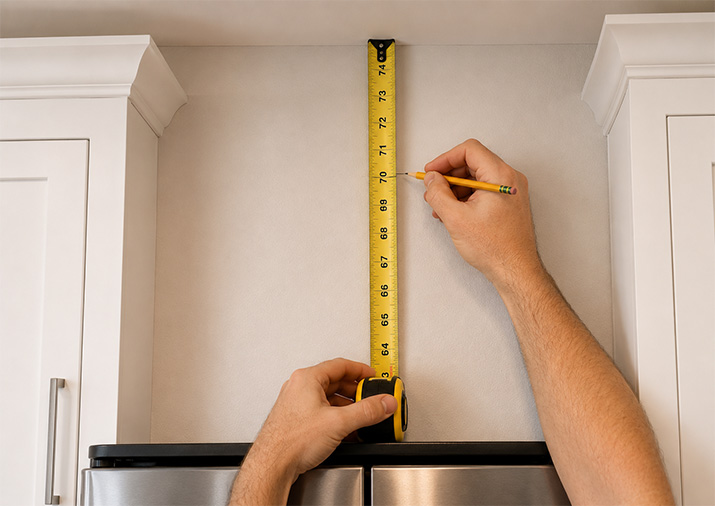
Pro Tip: Plan the surround before you order anything. Your fridge dimensions, ventilation clearances, door swing, and cabinet sizing all need to work together. Our measuring guide walks through every dimension you need to capture, and our free 3D design service can finalize the layout for you.
10. Take Cabinets to the Ceiling
If your upper cabinets stop short of the ceiling, extending them upward eliminates the dust-catching gap, creates a more custom look, and gives you a perfect spot for seasonal or rarely used items. Works best in kitchens with 8- or 9-foot ceilings.
Effort level: Requires new cabinet boxes or extensions.
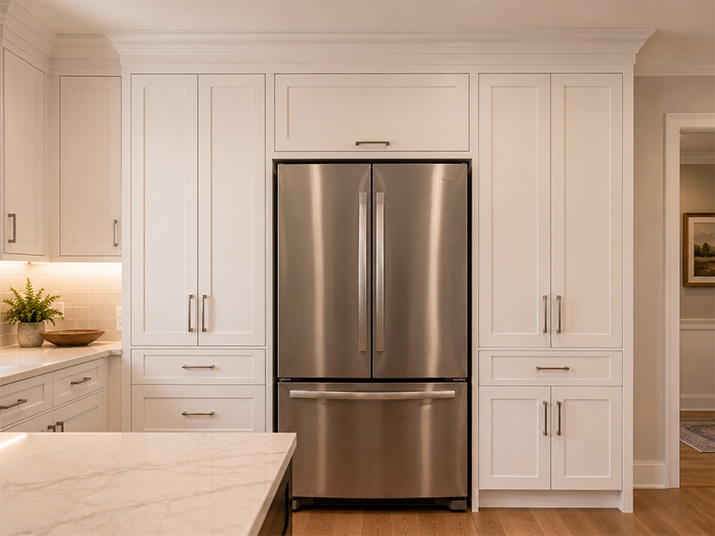
11. Finish the Gap with Crown Molding
If there’s only a small gap between your cabinets and the ceiling, extending the crown molding can close it without adding another cabinet. You lose a bit of potential storage but gain a much cleaner look and one fewer surface to collect grease and dust.
Effort level: Trim carpentry. A few hours for a pro.
When Storage Isn’t the Goal
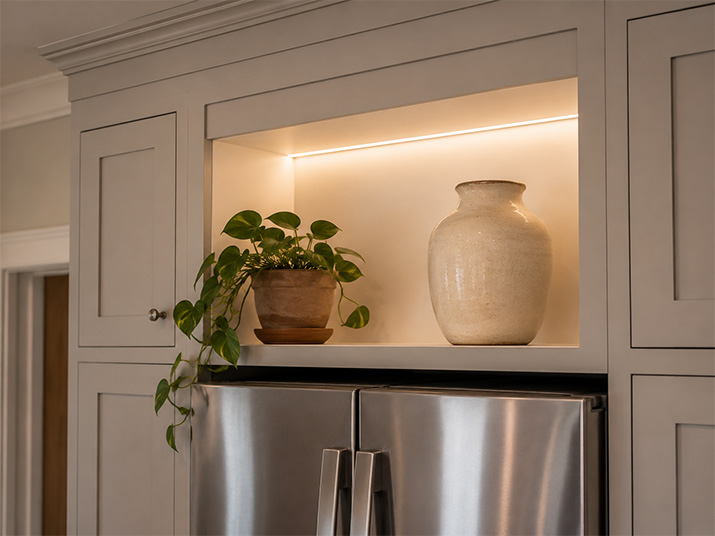
12. Create an Open Niche or Display Shelf
Sometimes the best move is skipping the cabinet entirely. An open niche or shallow shelf breaks up a long run of cabinetry and gives you a spot for a few favorite pieces: pottery, a trailing plant, framed art. The key is restraint. One or two objects look curated. Six look cluttered.
Effort level: Depends on existing layout. Could be a simple swap or part of a remodel.
13. Add Wine Cubbies (With One Caveat)
Built-in wine cubbies add warmth and break up a flat cabinet face. The caveat: refrigerators generate heat while running, and fluctuating temperatures aren’t great for wine long-term. If you love the look, use it for decorative bottles or short-term storage. For anything you’re actually aging, find a cooler spot.
Effort level: Part of a cabinet layout.
14. Use Art or a Single Decorative Object
If you don’t need the storage, one well-chosen piece up there does more than a cabinet would. A framed print, a large ceramic vessel, a piece of pottery with some weight to it. Keep it to one thing. A single object reads as a choice. Three small ones read as a junk shelf you dusted.
Effort level: Zero. One trip to wherever you buy nice things.
15. Leave It Intentionally Empty
You don’t have to fill every inch of a kitchen. In rooms with high ceilings or a spare, modern look, an empty space above the fridge makes the whole wall feel lighter. The trick is finishing it properly: clean drywall, matching paint, molding that lines up. Done right it reads as a decision. Done halfway it reads as a project you gave up on.
Effort level: Zero, or a coat of paint.
What to Store Up There (and What to Keep Out)
Good choices: Serving platters, holiday dishes, baking sheets, cutting boards, extra paper products, cookbooks, specialty bakeware, cake stands, seasonal entertaining supplies. Light, bulky, and used a few times a year at most.
Better stored elsewhere: Stand mixers, cast iron, heavy appliances, everyday dishes, daily-use pantry staples. Anything you’d have to lift down from shoulder height or reach for every morning belongs in a base cabinet or on the counter.
Heat is the other thing to think about. The area above a running fridge stays warmer than the rest of your kitchen, so chocolate, cooking oils, and anything else that’s temperature-sensitive should live elsewhere. And whatever you store up there, plan on wiping down the cabinet top once or twice a year. It collects dust and airborne cooking grease faster than anywhere else in the room, and our guide to getting grease off kitchen cabinets covers the fastest way to handle it.
Plan the Refrigerator Wall Before You Order Cabinets
The best refrigerator walls get designed as one unit rather than one cabinet at a time. Side panels, fillers, upper cabinet depth, crown molding, and the landing space beside the appliance all need to work together, and it’s far cheaper to sort that out on paper than after the boxes arrive.
Before placing your order, confirm your fridge’s exact dimensions, including hinge clearance, required ventilation, and door swing. Then plan the entire wall as one piece. If you’re replacing the fridge later, size the opening to fit the standard range (roughly 36 inches wide by 70 to 73 inches tall) so a new model doesn’t force a cabinet redo.
If you want to see how other homeowners have handled this wall, our kitchen cabinet collections show real configurations across a range of styles and budgets. And when you’re close to choosing a finish, order a few door samples and hold them up against your appliances and flooring. They’re full-size doors rather than color chips, which matters more than you’d think when you’re trying to match a stainless finish.
When you’re ready to plan the whole room, our free 3D design service will lay out your kitchen, refrigerator wall included, so you can see how the cabinet sizes work together before you order anything.
Frequently Asked Questions
What should I put in the cabinet above my refrigerator?
Store lightweight, occasional-use items like serving trays, platters, holiday dishes, baking sheets, and extra paper products. Avoid heavy appliances or anything you use every day.
What size cabinet goes above a refrigerator?
Most over-refrigerator cabinets are 30, 33, or 36 inches wide and 12, 15, 18, or 24 inches tall, with a 24-inch depth rather than the 12-inch depth used elsewhere in the kitchen. Width should match your refrigerator opening, height depends on your ceiling and how much room sits above the appliance, and the deeper box is what brings the cabinet face forward where you can reach it.
How much space should be between the refrigerator and the cabinet above it?
Most manufacturers ask for one to two inches of clearance above the refrigerator for airflow, plus roughly half an inch on each side. Check your model’s installation specifications before you finalize anything, because requirements vary by brand and by whether the unit vents from the top or the back.
Should cabinets above a refrigerator touch the ceiling?
Often, yes. Ceiling-height cabinets create a finished appearance, eliminate dust-collecting gaps, and provide additional storage. The best solution depends on your ceiling height and cabinet layout.
Do you need a cabinet above the refrigerator at all?
No. An open niche, a shallow display shelf, or nothing at all can all look deliberate, especially in kitchens with taller ceilings. A cabinet makes sense when you want the extra storage and want the refrigerator wall to read as built-in rather than as an appliance parked against a wall.
What should you never store above a refrigerator?
Skip stand mixers, cast iron, and anything else heavy enough to be awkward to lower from shoulder height. Also avoid chocolate, cooking oils, and other heat-sensitive items, since the area above a running refrigerator stays warmer than the rest of the kitchen.
Can wine be stored above a refrigerator?
Generally, no. Refrigerators produce heat, and fluctuating temperatures can affect wine quality. Decorative bottles are fine, but long-term wine storage belongs in a cooler, more stable environment.
Is it safe to put things on top of the refrigerator?
Lightweight items are fine, but the top of a refrigerator collects heat, dust, and airborne cooking grease, so anything stored there needs regular cleaning. Never block a top-mounted vent, and keep anything breakable or heavy off the surface entirely.
Can you put a regular wall cabinet above a refrigerator?
Yes, but standard 12-inch-deep wall cabinets can be difficult to reach over a full-depth refrigerator. A deeper over-refrigerator cabinet is often a more practical choice.
What happens to my cabinets if I replace the refrigerator later?
Refrigerator dimensions vary by a couple of inches between models, so an opening built tightly around your current appliance can quietly rule out most replacements. Leaving a little breathing room in both width and height means you can swap appliances later without cutting into cabinetry.
How do you make a refrigerator look built in?
Use matching side panels, a properly sized bridge cabinet, fillers, and consistent crown molding while maintaining the manufacturer’s required ventilation and door clearances.

Andrew Saladino
Andrew Saladino co-founded Kitchen Cabinet Kings in 2010, and the company has since delivered cabinets for more than 110,000 kitchens. Named to the NKBA 30 Under 30 in 2013 and 2014, he writes about cabinet styles, construction, finishes, costs, lead times, and the ordering details that are easy to miss until the cabinets arrive.