

One Sink or Two? How to Choose the Right One

by Andrew Saladino
October 5, 2026
Two sinks are now somewhat of a shorthand for “upgraded primary bathroom.”
But if you only have 54 or 60 inches of wall, squeezing in a second basin can leave you with two sinks, almost no counter space, fewer useful drawers, and two people elbowing each other anyway.
A better rule of thumb: below roughly 60 inches of available vanity width, a single sink is usually the better use of the space. Once you get beyond 60 inches, a double sink becomes more practical. At 72 inches and up, you have considerably more room to make two sinks work without sacrificing everything around them.
So when you’re comparing a double sink vs. a single sink bathroom, start with the wall width, not the number of people using the room.
The Short Answer Below 60 inches, a single sink almost always gives you more counter space, more drawers, and more elbow room. From 60 to 71 inches, either layout can work, although the single sink still wins on storage. At 72 inches or wider, a double vanity has enough room to feel comfortable. Start with your wall width and one honest question: do two people regularly need a sink at the same time? If not, one good sink beats two cramped ones.
Start With the Width You Actually Have
Before choosing one sink or two for your bathroom, measure the actual wall space available for cabinetry. Account for trim, toilets, tubs, showers, and anything else that limits the vanity run.
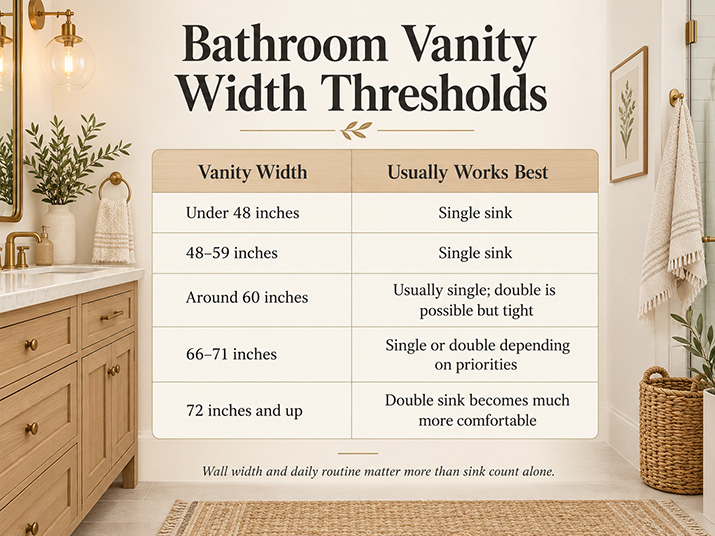
Then compare that usable width with common bathroom vanity sizes. If you’re looking for a practical starting point, the chart below can help. These aren’t building-code minimums or hard rules, but a way to think realistically about what happens after you install the sinks.
| Vanity width | Usually works best |
|---|---|
| Under 48 inches | Single sink |
| 48 to 59 inches | Single sink |
| Around 60 inches | Usually single; double is possible but tight |
| 66 to 71 inches | Single or double depending on priorities |
| 72 inches and up | Double sink becomes much more comfortable |
What Actually Happens on a 60-Inch Wall?
Picture the same 60-inch vanity two ways. With one sink, you get more uninterrupted counter space and room for wider drawers or cabinets below. Add a second sink, and both the countertop and storage have to make room for another basin and another set of plumbing.
On a wider vanity, that trade can be worth it. But on a 60-inch run, you may end up with two sinks and not much usable space around either one.
Storage Is Where a Second Sink Gets Expensive
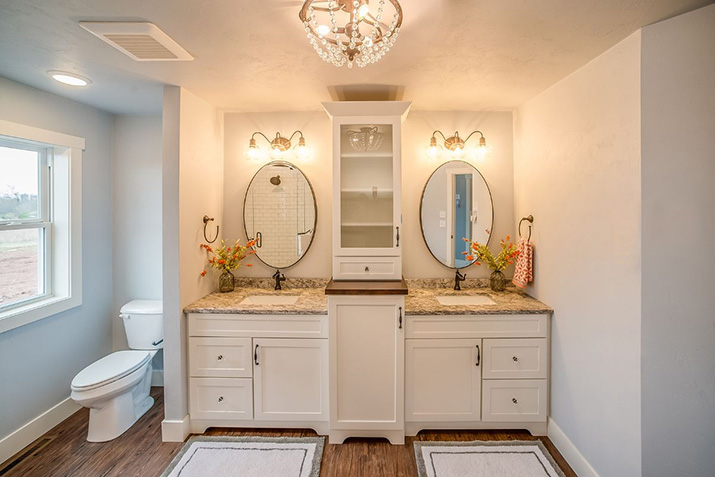
The strongest case for a single sink bathroom vanity often comes down to storage.
Wide drawers are some of the most useful space in a bathroom, especially for brushes, skincare, hair tools, toothpaste, and other small essentials. Add a second sink, and the basin and plumbing take over space that could have held a drawer stack.
On a wider vanity, you may still have room for drawers between the sinks or at the ends. On a 60-inch run, that flexibility disappears quickly. If storage is already tight, another sink may cost you more than it gives in return.
Two Sinks Work Best When Two People Actually Need Them
A double vanity makes the most sense when two people actually need the sink at the same time.
If you’re both brushing teeth, shaving, or getting ready on the same schedule, a second basin can ease the morning rush. But if one person showers while the other gets dressed, or your routines barely overlap, two sinks may solve a problem you don’t have.
If you rarely compete for the basin now, you may get more value from extra counter space and storage.
Consider the Third Option: One Sink Plus a Makeup Station
The choice doesn’t have to be one sink or two. For many primary bathrooms, a better compromise is one generous sink plus a seated makeup or grooming station. You can use part of the vanity run for the basin, then turn the remaining space into a lower counter with knee room and drawers.
You still get two separate getting-ready zones, but only one needs plumbing. The seated section can handle makeup, skincare, brushes, and hair tools while keeping the main sink area clearer. If that sounds more useful for your routine, see these bathroom makeup vanity ideas.
Remember That a Second Sink Means More Plumbing
A second sink also means a second set of plumbing. If you’re replacing an existing double vanity, that infrastructure may already be in place. But converting a single-sink setup can require new supply lines, drainage, and additional work behind the wall or inside the cabinet.
That adds cost even if the vanity itself fits the same footprint. Plumbing varies too much by house and location for a useful universal price, so the important thing is to include it in the plan from the start.
Pro Tip
Converting a single sink to a double usually adds $500 to $1,500 in plumbing costs, depending on how far the new drain and water lines need to run. Keeping the second sink close to the existing plumbing usually keeps the job toward the lower end of that range. Longer runs and harder wall access can push the cost higher.
Counter Space Deserves More Credit
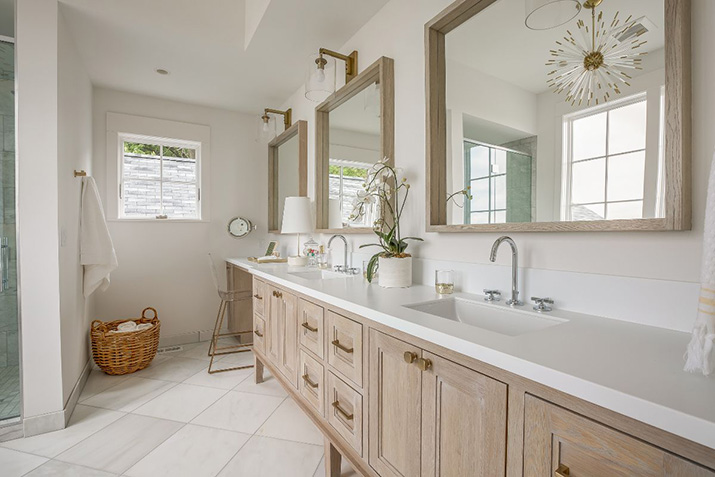
Counter space is easy to underestimate when you’re focused on the number of sinks. A single vanity leaves more uninterrupted surface for skincare, hair tools, toiletry bags, or the coffee you’re pretending counts as part of the morning routine.
That difference is particularly prominent on narrower walls. If your counters already feel crowded, adding a second basin may make the vanity less useful, not more.
Think About Elbow Room, Too
A vanity can technically fit two sinks and still feel cramped for two people.
If both people will use it at once, leave enough room to open drawers, use the mirror, and move without bumping elbows. That’s why a 72-inch double usually feels far more comfortable than a 60-inch one.
Width does most of the work here, but height plays a role too. When comparing layouts, check the standard bathroom vanity height along with the overall width.
Where a Double Sink Usually Doesn’t Make Sense
Again, a second sink earns its keep in a roomy primary bathroom where two people regularly use the vanity at once.
In a guest bath, narrow primary, or smaller kids’ bathroom, that extra basin can eat up counter space and storage without adding much convenience. Sometimes one larger sink with better drawers is the more useful choice.
Think about the whole room, not only the vanity. These bathroom remodel ideas can help you compare storage, circulation, fixtures, and cabinetry before you commit.
Are Double Sinks Still in Style?
Yes. Double sink bathroom vanities are still common in primary bathrooms, especially where the room and wall width comfortably support them. But “in style” isn’t the same thing as “right for every bathroom.”
A cramped double vanity can look more dated and less considered than a generous single vanity with good storage and well-planned counter space.
Ask yourself whether the second sink improves how the room works. If it does, use it. If it merely lets you check “double vanity” off a remodeling wish list, use the space for something you’ll notice every day.
Does a Double Sink Increase Home Value?
Possibly, but this benefit is easy to overstate.
There’s no universal dollar value attached to adding a second basin. The National Association of REALTORS estimated about 50% cost recovery for a broader bathroom renovation in its 2025 Remodeling Impact Report.
And layout is still generally more important than the sink count. A generous 72-inch double can feel like an upgrade; two basins squeezed into a tight vanity with little storage or counter space can feel like a compromise.
If resale is a priority, look at comparable homes in your market instead of assuming two sinks automatically add value.
Single vs Double Vanity: Which Should You Choose?
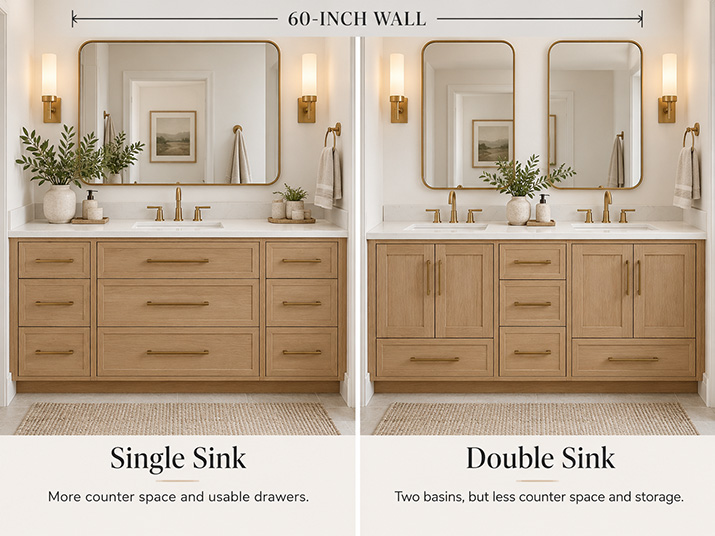
Choose a single sink if you’d rather have more counter space, drawers, and elbow room. Below about 60 inches, that’s usually the better use of the vanity.
Choose a double sink when the wall is wide enough, and two people actually need separate basins at the same time.
There’s also a useful middle ground: one sink plus a seated makeup or grooming area. That gives you two getting-ready zones without giving up quite as much storage.
In the end, the best layout comes down to your wall width and your routine, not the idea that two sinks automatically make a bathroom better.
See Both Layouts Before You Choose
A few inches can completely change whether a double vanity feels spacious or squeezed. That makes this a layout decision worth seeing before you order cabinetry.
Send Kitchen Cabinet Kings the width of your vanity wall, and our free 3D design can show you how the same space works with one sink and with two. You can compare the counter space, drawer storage, and overall proportions before deciding which version belongs in your bathroom.
Frequently Asked Questions
Is a single or double sink better for a bathroom?
It depends primarily on vanity width and how many people regularly use the sink at the same time. A single sink generally offers more counter and storage space, while a double sink gives two people separate basins.
What size vanity do I need for a double sink?
Sixty inches is the practical minimum, but 72 inches is where two sinks start to feel comfortable. At 60 inches, the basins fit, but counter space and drawer storage are limited. At 72 inches or wider, each sink gets useful counter space, and there is usually room for drawers between them.
Is a 60-inch vanity big enough for two sinks?
Yes, but it will be tight. Depending on sink size and placement, a 60-inch double vanity may leave only 6 to 8 inches of counter between them and less drawer space below. If counter space and storage matter more than using two sinks at once, the same 60-inch vanity will work better with one sink.
What’s the best vanity width for a single sink?
A 48-inch single-sink vanity works well in many bathrooms. It gives you useful counter space on both sides of the basin and can fit a full drawer stack alongside enclosed cabinet storage. It also adds storage without overwhelming a standard bathroom.
How much space do you need between two bathroom sinks?
Allow at least 30 inches from the center of one sink to the center of the other. With less room, two people are more likely to bump elbows, and the vanity may feel cramped even though both sinks technically fit. Local requirements can vary, so confirm the final layout with your contractor or plumber.
Can two people share a single-sink vanity?
Absolutely. If both people don’t need the basin at the same time, a wide single vanity can provide plenty of counter space and storage. A single sink paired with a separate grooming or makeup station can work particularly well.
Can I replace a single-sink vanity with a double?
Usually, yes, if the wall is wide enough and a plumber can extend the drain and water lines. Plan on $500 to $1,500 in added plumbing costs. Jobs close to the existing lines tend to fall at the lower end of that range, while longer runs and harder wall access cost more.
Does a double sink add value to a home?
It may appeal to buyers in a spacious primary bathroom, but adding a second sink doesn’t guarantee a specific increase in home value. Overall layout, storage, condition, and buyer expectations in your local market all affect resale appeal.
Are double vanities going out of style?
No. Double vanities still make sense in shared bathrooms where two people use the sinks at the same time. What is changing is the idea that two sinks are always better. In a tighter room, one sink with more counter space and storage often looks better and works better than two sinks squeezed into the same footprint.

Andrew Saladino
Andrew Saladino co-founded Kitchen Cabinet Kings in 2010, and the company has since delivered cabinets for more than 110,000 kitchens. Named to the NKBA 30 Under 30 in 2013 and 2014, he writes about cabinet styles, construction, finishes, costs, lead times, and the ordering details that are easy to miss until the cabinets arrive.